Maserati: Back to Modena, Back to Premium
By Jérôme Marchon
Before leaving Stellantis, Maserati’s parent company, Carlos Tavares described the brand as «a blend of grand touring, performance, and dolce vita.» It is fair to say that this definition has barely resonated with customers in recent years.
Production dropped from roughly 26,600 units in 2023 to 11,300 in 2024. And 2025 looks even more challenging, with just 6,000 cars built in the first nine months, compared to 8,600 in the same period of 2024.
A Shrinking Lineup
These figures need some nuance: the Ghibli and Levante, both high-volume models, disappeared from the Maserati lineup almost simultaneously with the Quattroporte between late 2023 and early 2024, leaving no direct successors.
Still, the brand suffers from a long-standing image gap due to unfavorable price-performance comparisons, reliability concerns on certain models, and an after-sales network that leaves room for improvement.
A Fast Move Back to Modena
Maserati CEO Jean-Philippe Imparato has now delivered on a promise made at the end of 2024: production of the GranTurismo and GranCabrio has left Mirafiori, where the new Fiat 500 Hybrid will be built, and returned to Maserati’s historic site in Modena. The relocation cost around 4 million euros, took just 45 days, involved more than 200 employees, required 300 technical operations, and included 3,500 hours of training to transfer know-how, adapt assembly lines, and integrate new logistics flows.
The historic 48,000-square-meter Modena facility on Viale Ciro Menotti now builds the MC20, MC20 Cielo, and GT2 Stradale alongside the GranTurismo and GranCabrio, both in combustion-engine and electric versions. Peak output will reach seven vehicles per day, a deliberately limited figure that aligns with the brand’s new strategy.
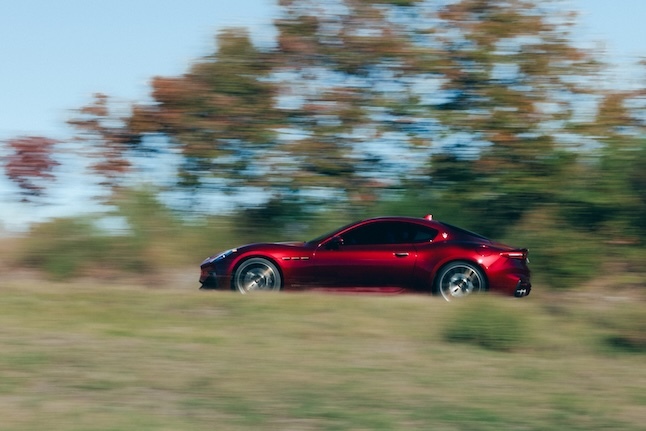
Two One-Offs: GranTurismo Meccanica Lirica in Rosso Velluto... (Image: Courtesy)
The Grecale Stays in Cassino
For completeness: the family SUV Grecale, Maserati’s highest-volume model, continues to be produced alongside the Alfa Romeo Stelvio and Giulia at Stellantis’ Cassino plant.
The previous volume-driven strategy created large inventories that depressed margins, strained quality, and diluted positioning and residual values. Maserati is now changing course entirely and, in a sense, returning to its origins. Analysts expect the brand to stabilize at a controlled volume of 15,000 to 20,000 cars per year, with higher unit economics and a more selective, build-to-order commercial approach.
End of «Push the Metal»
Santo Ficili, Maserati COO, stresses the urgent need to rebuild strong and trusting relationships with both customers and dealers. Bringing the GranTurismo and GranCabrio back to Modena symbolizes this new philosophy: a more artisanal production environment, very low in automation (only three robots across the facility), and fully focused on quality and product integrity.
During the first half of 2026, Antonio Filosa, the new CEO of Stellantis, will present an updated product plan for all the group’s brands. This will be decisive for Maserati, clarifying renewal timelines, the addition of new models, the electrification strategy, and the expansion of the Fuoriserie personalization program and the Maserati Classiche heritage division.
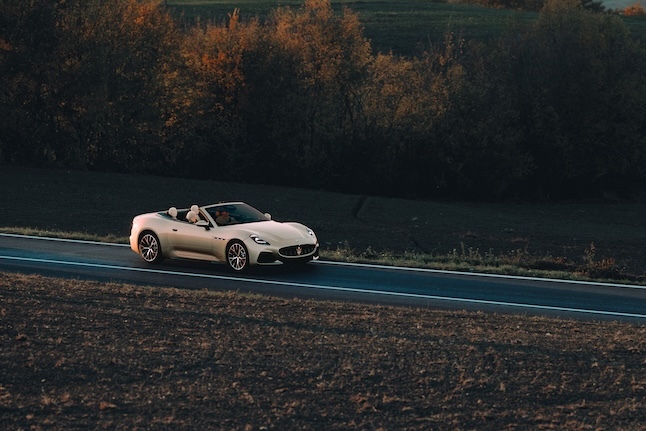
... and GranCabrio Meccanica Lirica in Oro Lirico. (Image: Courtesy)
A Crucial Product Plan Ahead
The primary goal will be to make Maserati a profitable, coherent contributor within Stellantis, capable of generating operating margins in line with segment expectations.
The future of the Giorgio platform, previously uncertain with the arrival of the new multi-energy STLA architectures, now appears secured. Developed during the FCA era under Sergio Marchionne for Alfa Romeo and Maserati, and considered one of the best rear-wheel-drive platforms in the market, Giorgio will continue for both brands as long as regulations allow.
Giorgio Lives On
Its rigidity, dynamic precision, and modularity — including compatibility with electrification, as seen in the Maserati Folgore range — give it strategic value. Now certified for Euro 7, the platform ensures technical continuity for the next generation of both Italian brands.
Maserati is also expanding two important revenue-generating programs. The first, Fuoriserie, offers customers extensive personalization options. These range from optional packages integrated during vehicle production to fully bespoke configurations, whether exclusive paint colors or tailor-made interiors in leather, Alcantara, or both. Customers can design their car at a dealership or directly at the dedicated Fuoriserie studio in Modena.
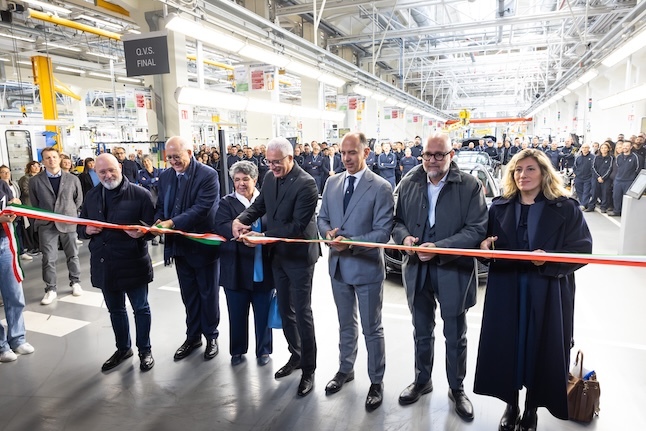
Cutting the Ribbon at the New Production Site. (Image: Courtesy)
Fuoriserie and Classiche
The aim is for roughly 25 percent of annual production to include either packaged or bespoke Fuoriserie elements. Meanwhile, Maserati is also strengthening its Classiche department, which offers full restorations, authenticity certification, and, thanks to 3D printing, the reproduction of previously unavailable parts.
To celebrate these developments, Maserati unveiled two Fuoriserie one-offs: the GranTurismo Meccanica Lirica in Rosso Velluto and the GranCabrio Meccanica Lirica in Oro Lirico. Inspired by Modena’s cultural heritage, including opera, both models showcase the brand’s personalization expertise.
Two One-Off Statements
They feature complex new paints, unique finishes, leather-and-Alcantara interiors (a first on these models), and recalibrated exhaust notes. They also act as demonstrators for the new Meccanica Lirica Pack, available across the GranTurismo and GranCabrio ranges.
The Modena plant, once again at the heart of Maserati’s identity, now anchors a more compact, more flexible, and more coherent industrial model — one that reflects the brand’s renewed high-end ambitions.
Jérôme Marchon is a freelance automotive journalist from western Switzerland. He is the editor-in-chief of Roadbook Magazine and author of the «Watts On» automotive section on the news platform «Watson.ch.»