
J.P. Morgan AM EMEA-CEO: «Switzerland Offers Something Many Countries Have Lost»
Patrick Thomson, when we last met a year ago, you emphasized how strategically important Switzerland is for J.P. Morgan Asset Management and that you were targeting further growth. How would you assess the situation today?
Very positively. We have an outstanding Country Head in Switzerland with Laura Geiger-Pancera, who, together with the team, is doing an excellent job.
Our business has continued to grow. We remain the number one player in cross-border net inflows in Europe. Both our fund business and our institutional business have developed particularly strongly.
We have also seen significant success in infrastructure investing in Switzerland recently. Infrastructure is a very good example of how asset management can simultaneously deliver attractive solutions for pension funds while also addressing broader societal challenges, such as Europe’s energy transition.
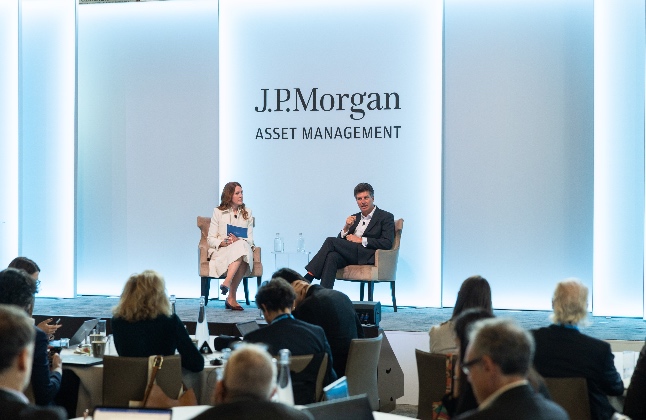
«Many investors today are looking for stability and predictability — and that is exactly what Switzerland stands for,» says Patrick Thomson. (Image: provided)
Where do you see the biggest opportunities in Switzerland over the coming years?
Switzerland remains a highly attractive growth market. Wealth levels continue to rise, the economy is developing solidly, and at the same time, consolidation in private banking is fundamentally reshaping the market. The integration of Credit Suisse into UBS is the most prominent example.
For us, this creates a significant opportunity. We have the necessary scale to serve wealth managers and institutional clients efficiently. At the same time, our market share in Switzerland remains relatively small — at around 3 percent. That highlights the amount of untapped potential that still exists.
How do you assess Switzerland’s financial center today — particularly after the end of Credit Suisse?
Switzerland offers something that has unfortunately become increasingly rare: political predictability. Thanks to its federal system, the country benefits from a high degree of stability and consistency — whether in taxation, regulation, labor law, or real estate policy.
«Thanks to its federal system, the country benefits from a high degree of stability and consistency. For asset managers, that is enormously valuable.»
For asset managers, that is enormously valuable. In a world characterized by uncertainty, geopolitical tensions, and abrupt political shifts, Switzerland offers clear rules, a strong regulator, and reliable framework conditions. That is precisely why Switzerland remains a highly attractive location for financial services.
Is Switzerland also benefiting from geopolitical conflicts such as the current tensions in the Middle East?
I believe so. Over recent years, a significant amount of wealth flowed into the Middle East, particularly into Dubai, which has developed exceptionally well. Long term, we remain very optimistic about the region.
In the short term, however, geopolitical conflicts tend to encourage wealth to remain in — or flow back to — stable jurisdictions. Switzerland continues to benefit strongly from its safe-haven status. Investors today are looking for stability and predictability — and that is exactly what Switzerland represents.
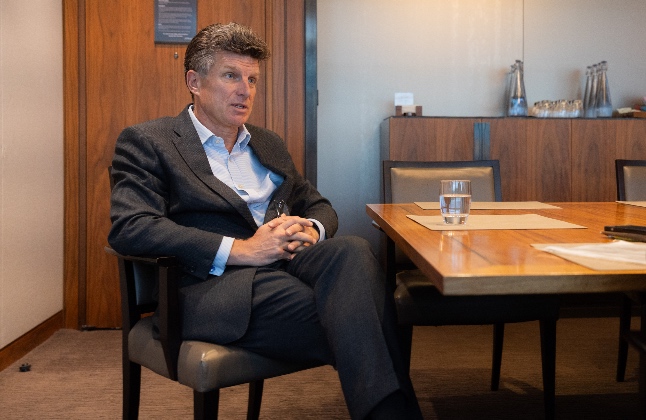
Patrick Thomson: «Regulation must always strike a balance: protecting clients without preventing innovation.» (Image: provided)
At the Media Summit, you also sounded surprisingly optimistic about Europe. Could you elaborate on that?
Europe is currently initiating a number of important reforms. Germany is seriously discussing pension reform, and France is doing the same. At the same time, governments are investing heavily in defense and infrastructure.
Those are the right priorities. Europe needs to generate more productive growth. Given demographic trends, governments will no longer be able to finance everything on their own in the future. Individuals will therefore need to take greater responsibility for retirement provision — and that is exactly what these reforms are about.
That is why I am significantly more optimistic about Europe than many other observers.
At the same time, many companies complain about excessive regulation in Europe. Do you share that view?
To some extent, yes. Regulation always needs to strike a balance: protecting clients while not stifling innovation. Europe is moving in the right direction, for example with the Savings and Investment Union.
«We closely monitor the development of neo-banks. They have fundamentally transformed the client experience.»
That said, Europe remains highly fragmented. In the United States, there is one market with a unified regulatory framework. In Europe, we still have 27 different regulatory approaches. That continues to slow innovation and capital-market integration.
Particularly in areas such as defense financing or capital markets union, greater harmonization would make a great deal of sense.
One major topic today is the historic transfer of wealth from baby boomers to the next generation. How is that changing the asset-management industry?
Massively. The next generation expects completely different products and services. Younger clients do not necessarily want to visit a branch and speak with an advisor. They expect digital solutions, intuitive apps, and real-time information.
That is why we closely monitor the development of neo-banks. They have fundamentally transformed the client experience. The asset-management industry can learn a great deal from that.
In what way, specifically?
Client interaction. I personally use a digital banking account. Whenever I pay with my card, I immediately see the transaction on my smartphone. That is a far better experience than traditional bank statements.
The same principle can also be applied to investments. For example, if a client is holding excess cash in an account, the app could proactively notify them and suggest alternative investment opportunities.
How significantly will artificial intelligence change the industry?
Fundamentally. AI will make analysts and portfolio managers substantially more efficient. Today, an analyst may cover 40 companies. In a few years, that number could easily double or even triple.
«You can survive with poor technology; you cannot survive with poor portfolio managers.»
AI will dramatically improve research, data analysis, and decision-making processes. At the same time, the required investments are extremely expensive: data, infrastructure, computing power, and talent all come at a very high cost.
Will that lead to further consolidation within the industry?
Yes — particularly in the middle tier of the market. Large firms have the necessary scale and financial resources. Smaller boutiques will also survive because they tend to be innovative and agile.
The greatest pressure will fall on mid-sized providers trying to serve the same clients as the largest firms without having access to the same technological capabilities. That is why we are currently seeing so many mergers across the asset-management industry.
What will matter more in the future: technology or people?
People. Technology is critically important, but talent remains decisive. You can survive with poor technology; you cannot survive with poor portfolio managers.
The future belongs to firms that can combine both: exceptional talent and strong technology.
The interview was conducted at the Media Summit 2026 hosted by J.P. Morgan Asset Management in London.