
Pictet Study: Fighting the Downturn with Robots
Demographic decline is typically portrayed as an unavoidable drag on economic growth. By 2050, all major economies will face shrinking workforces and rising dependency ratios.
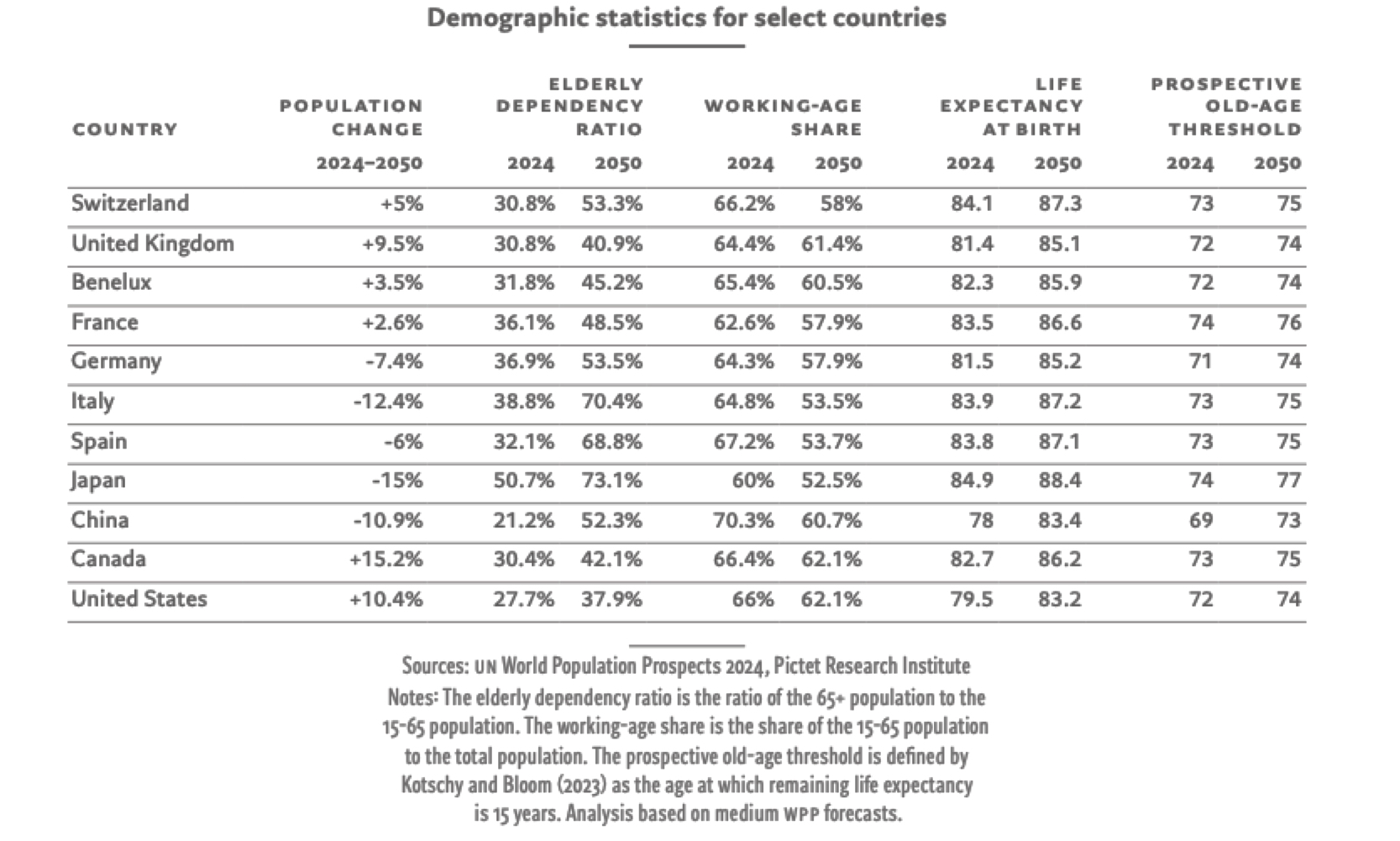
Die demographische Entwicklung ausgewählter Länder. (Image: provided)
But according to «Demographics and Technology,» a new report by Maria Vassalou of the Pictet Research Institute, technological progress—especially in automation, robotics, and AI—can more than offset these headwinds, provided governments and corporations act decisively.
Turning Demographic Weakness Into Competitive Advantage
Robots are often viewed as job killers, yet the study finds they are essential to sustaining and enhancing productivity in aging societies. Economies that manage to evolve from using «substitution robots»—machines that merely replace labor—to «productivity robots» that boost efficiency and value creation can turn demographic burdens into competitive strengths.
Japan already benefits from this shift, while Europe, the study notes, continues to lag due to underinvestment.
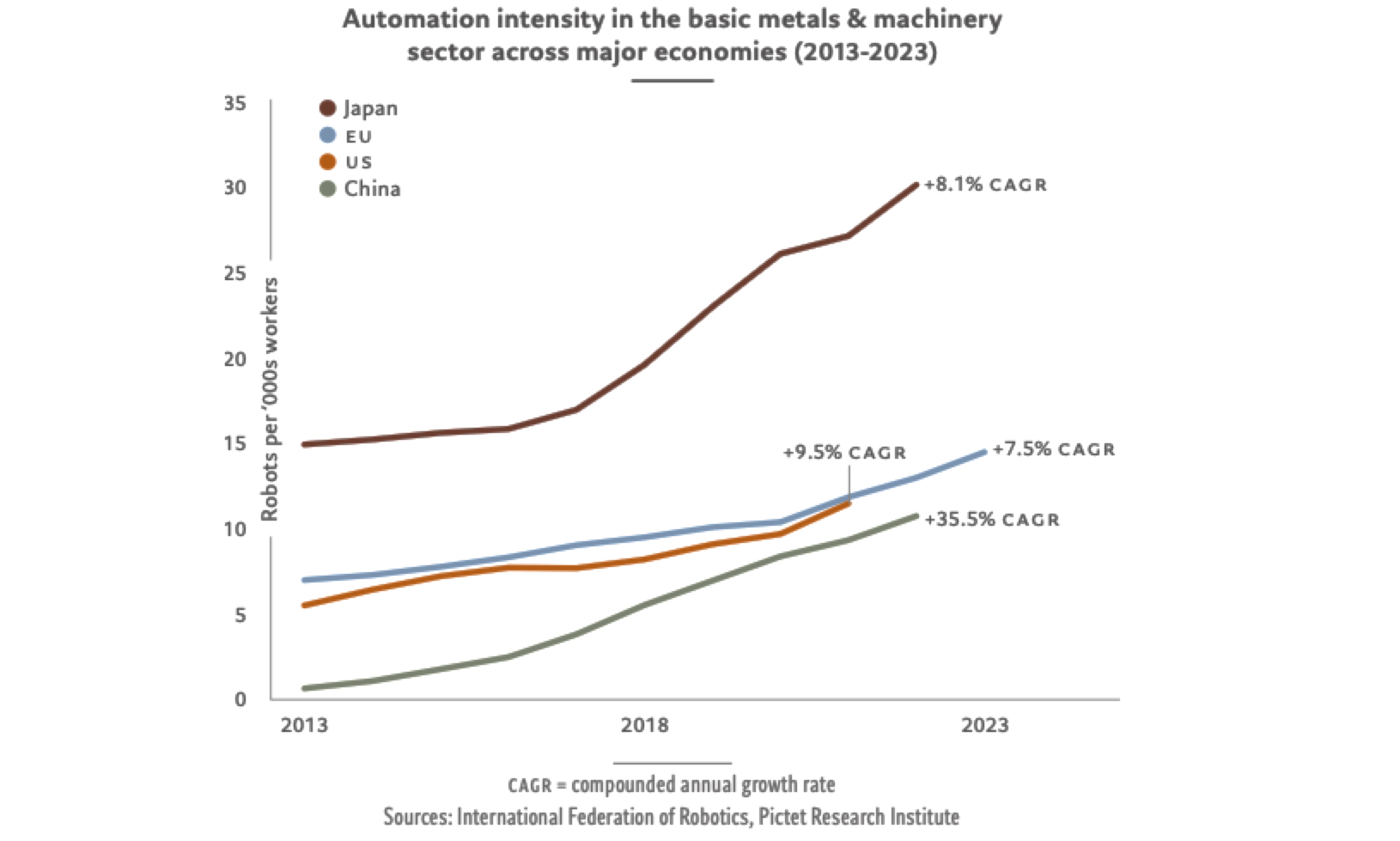
Automatisierungsintensität im Bereich Grundmetalle und Maschinenbau in den wichtigsten Volkswirtschaften (2013–2023). (Image: provided)
Consumer behavior also changes dramatically with age. What people buy depends heavily on life stage and varies by region. For investors, this creates opportunities in sectors that are both automatable and aligned with the needs of older consumers—such as healthcare, financial services, and technology-enabled lifestyles.
Courage and Patience Required
Vassalou identifies three key criteria for investment decisions at the intersection of demography and technology:
- Automation potential: Can the sector generate productivity gains through AI or robotics?
- Demand shift: Does it cater to products and services that become more important across age groups?
- Technological maturity: Does the economy have the digital infrastructure needed to translate innovation into productivity?
According to the study, Europe suffers from a substantial productivity gap compared to the U.S. and Asia—a key factor behind its weak growth. However, with consistent investment in automation and AI, the continent could unlock untapped potential. «Europe has the opportunity to reignite growth,” says Vassalou. “But it will take courage—and time is of the essence.»
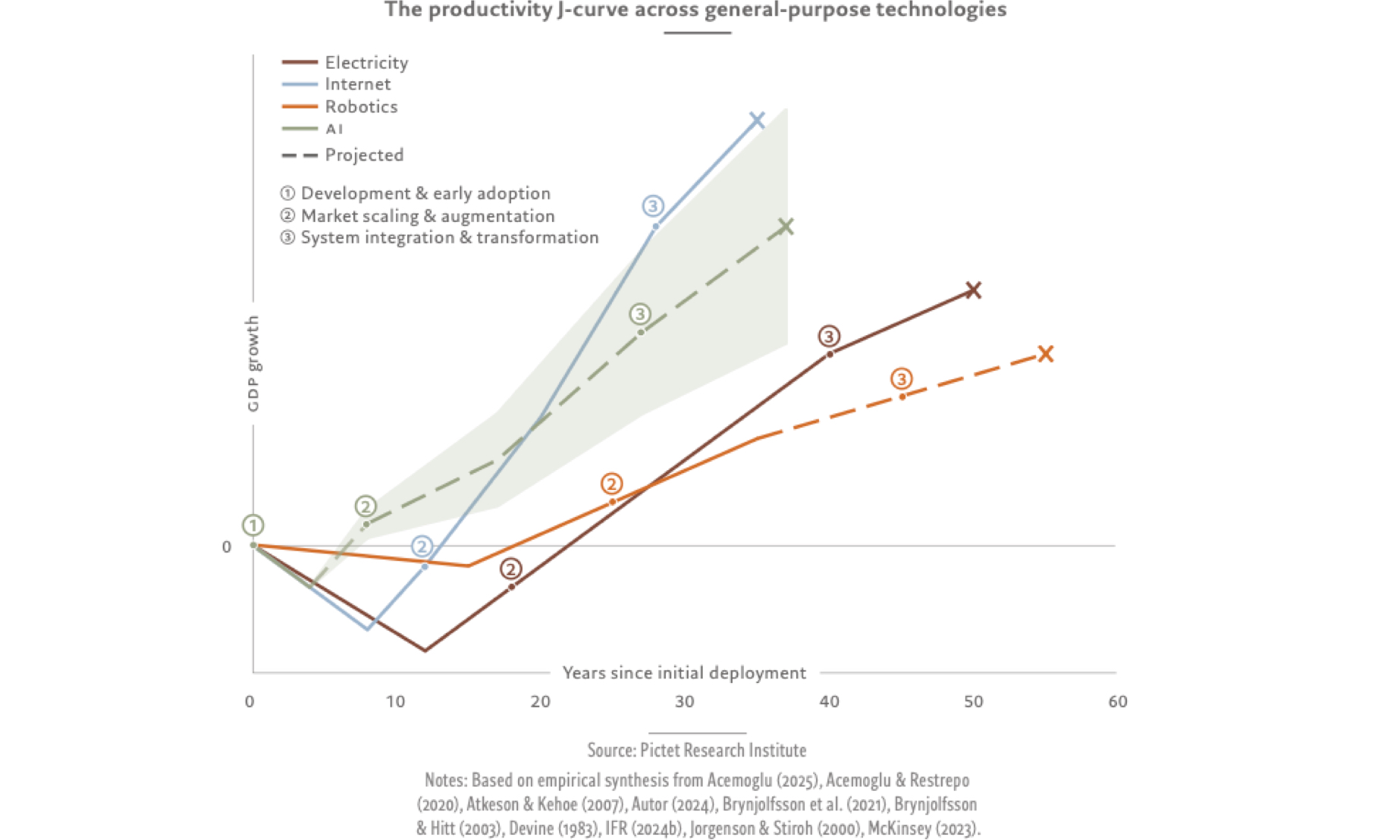
The productivity J-curve for general-purpose technologies. (Image: provided)
Balancing Longevity and Machine Intelligence
Ultimately, the study challenges conventional wisdom: demographic decline need not lead to economic stagnation. With the right strategic choices, AI and robotics can not only stabilize aging economies but also raise productivity per capita.
The winners of the future, according to the Pictet Research Institute, will be those who think not only in terms of demographics or technology alone, but in how the interaction between the two creates the most powerful opportunities—for economies and investors alike.