
Family Office Study Shows: Executive Compensation Has Risen Sharply
Competition for experienced investment managers in the family office sector is intensifying. Many firms are competing for talent with hedge funds and private equity companies, according to the experts at Heidrick & Struggles in their Compensation Study published on Thursday.
Compensation structures have increasingly moved away from a pure cash focus. Instead, the trend is towards total-reward models, long-term retention, and leadership that is values-driven and oriented towards multiple generations.
Steady Growth in the US
In the United States, compensation trends over the past three years have shown steady growth in base salaries. Average base pay rose from 471,000 dollar in 2023 to 515,000 dollar in 2024 and 541,000 dollar last year.
Bonuses increased even more sharply, rising from an average of 448,000 dollar in 2023 to 471,000 dollar in 2024 and an estimated 563,000 dollar in 2025.
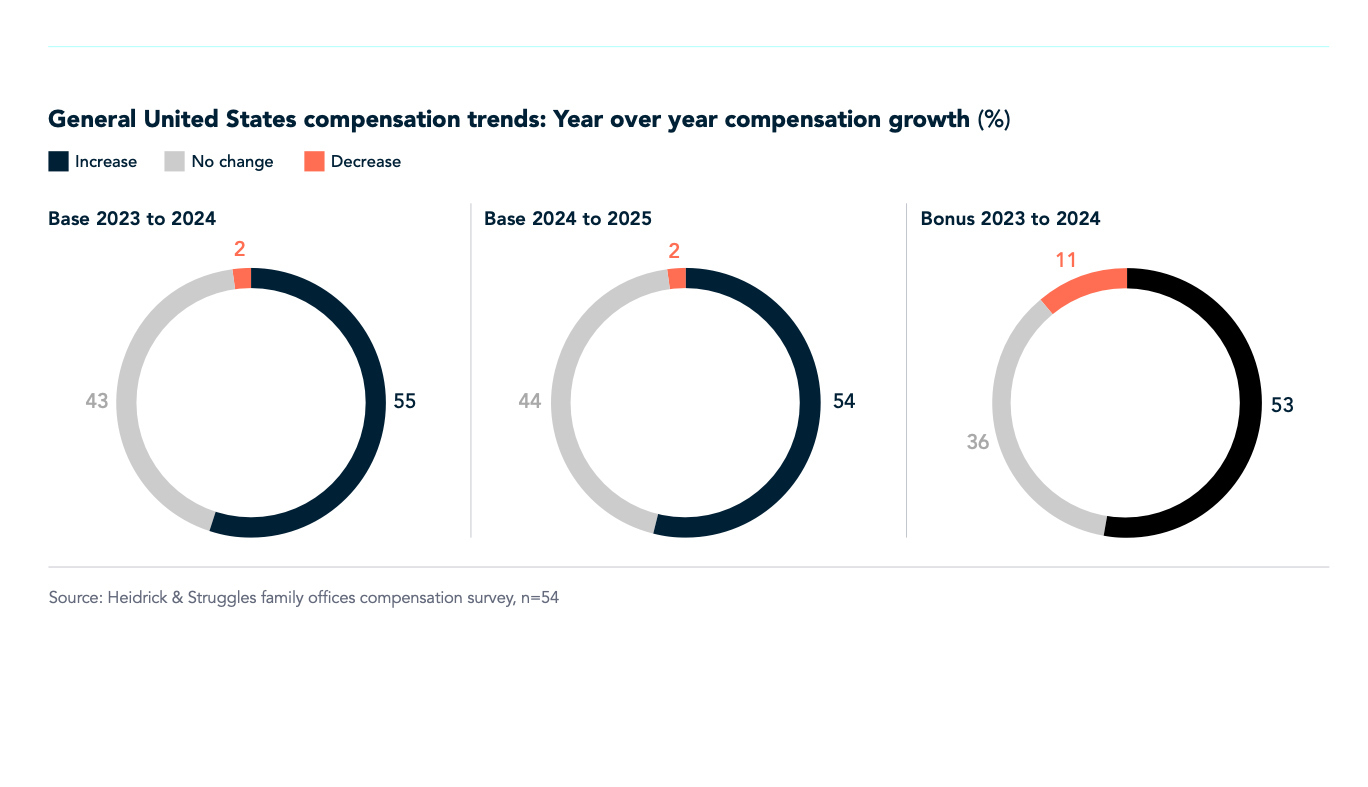
According to the study, CEO bonuses could exceed those of CIOs for the first time in 2025. In many smaller family offices with only a few employees, these roles are often combined. Around two thirds of bonuses are purely discretionary. Additional incentives include carried interest, co-investments and equity participations.
Large, well-established family offices tend to pay more in absolute terms, but show lower rates of compensation growth than smaller, expanding structures.
Long-Term Incentives
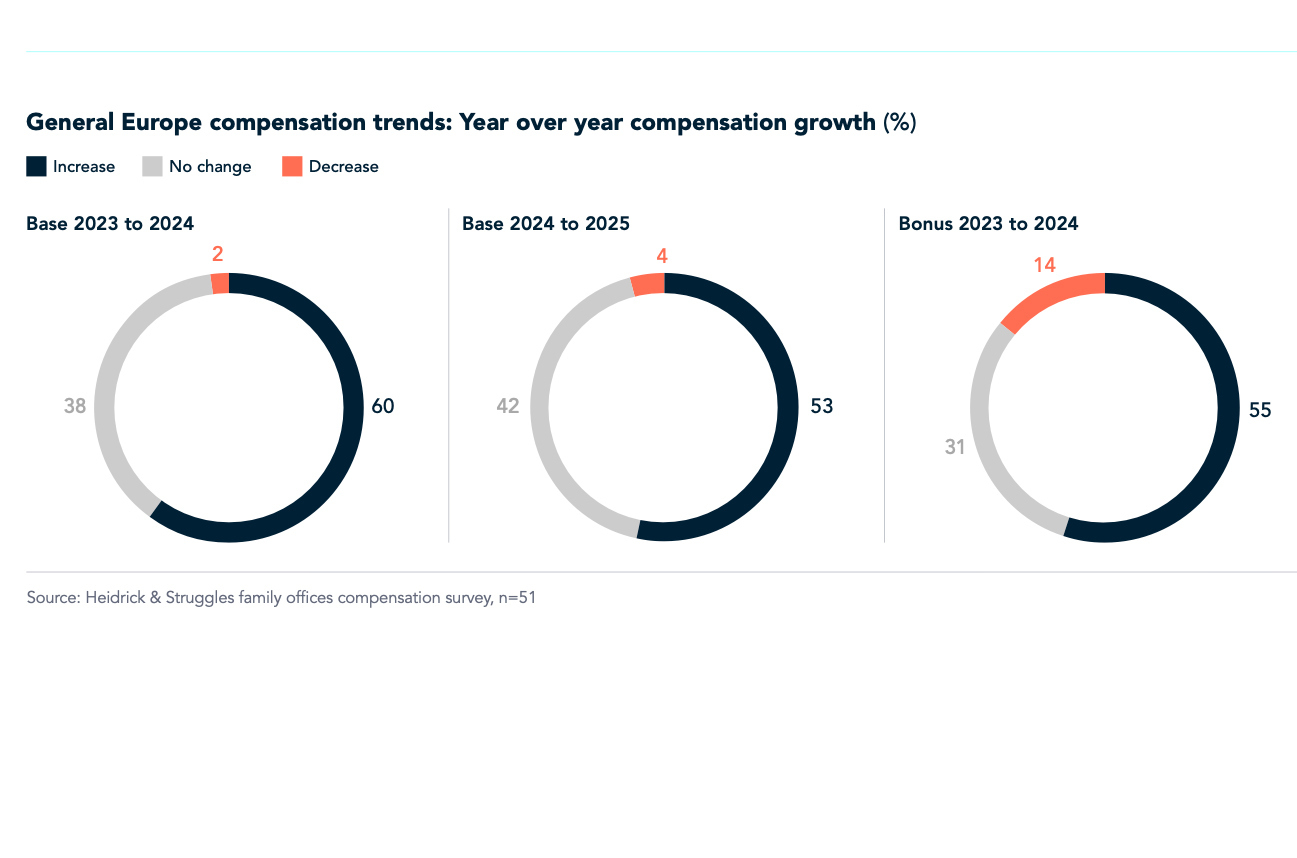
In Europe, by contrast, total compensation declined slightly, falling from 765,000 euro in 2023 to 759,000 euro in 2024. CEO/CIO dual roles remain the highest paid across the board. The authors note that long-term incentives such as carried interest and phantom equity play a more significant role in Europe than in the US. In addition, tax and cultural factors favour higher variable and long-term compensation components. Direct investments and more complex strategies have also led to higher pay levels in Europe.
The number of family offices continues to grow strongly. By 2030, there could be around 11,000 worldwide, according to the forecast. Key themes include generational change and multi-generational families. Only 13 per cent of respondents reported having no succession plans, while around one third are already in the midst of a wealth transfer.
Most investment teams are very small, consisting of up to five people. The majority of family offices manage between 1 billion dollar and 5 billion dollar in investable assets.
In Europe, the origins of wealth are primarily in the industrial sector, while in the US finance and technology dominate.
According to the study, 106 executives from family offices in the US and Europe were surveyed. The focus was on CIOs, senior investment professionals and CEO/CIO dual roles. The analysis covered base salary, bonuses, additional incentives, organisational structures and investment strategies.