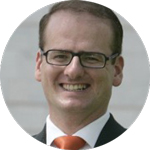
Qatar: Commercial Bank Snaps Up HSBC Veteran
Written by Gérard Al-Fil, Dubai
The news about the personnel change at CBQ was first reported by the Qatari newspaper «The Peninsula Qatar». The new Group CEO, Stephen Moss, has already updated his profile on the professional networking platform LinkedIn. The Englishman succeeds Joseph Abraham, who had led CBQ since 2016.
A Banker of the World
The seasoned banker Moss, who had been on HSBC’s payroll since 1992, advanced his career not only in his home base of London—where he oversaw markets including Canada and Latin America—but also in Hong Kong, Dubai (where he was previously HSBC CEO for the Middle East), and now in Doha, the capital of Qatar. The Gulf state, with a population of just under three million, is the world’s third-largest exporter of natural gas and one of the wealthiest countries on Earth, boasting a GDP per capita of $121,000+.
A Push for Internationalization?
The Chairman of CBQ’s Board, Sheikh Abdulla Bin Ali Al Thani, a member of the ruling family in the Gulf state, stated: «We are pleased to welcome Stephen Moss as Group CEO. His extensive international experience and proven leadership make him ideally suited to build upon the solid foundation of Commercial Bank and drive the next phase of growth.»
Unlike most top banks in the Gulf, CBQ—whose shares are traded on the Qatar Exchange in Doha—does not operate a global branch network, aside from its subsidiary Alternatifbank in Turkey and equity holdings in the UAE and Oman. Could the married father of two, Stephen Moss, be tasked with opening new markets abroad for CBQ? His résumé certainly suggests as much.
Global Citizens Beat Local Loyalists
The selection of the sharp, cosmopolitan Moss also reflects a broader trend: Corporate Arabia has increasingly favored executives with a wide geographical perspective over regionally focused «desk dwellers.» More and more business leaders in the region also have experience in East Asia—for good reason: China, not the USA, has been the largest trading partner of the Gulf states for over a decade.
Due to growing geopolitical frictions with the West (keywords: Brexit, Trump-era tariffs, Russia sanctions…), the Gulf economies are increasingly looking to deepen ties with the emerging markets along the New Silk Road.