Carsten K. Rath: «The Address Par Excellence for Gourmets and Design Lovers»
In the morning, the room also serves as the breakfast area, offering - in my view - an excellent buffet for such a small property with just 16 rooms. This is cleverly done. The two restaurants are open for lunch and dinner - the two-star Esplanade and the more casual Le petit CINQ-plus breakfast. In total, 21 dining time slots significantly increase occupancy and operational efficiency. With their fresh perspective on luxury hospitality, Tanja and Michael Zimmer skillfully turn classic hotel routines on their head.
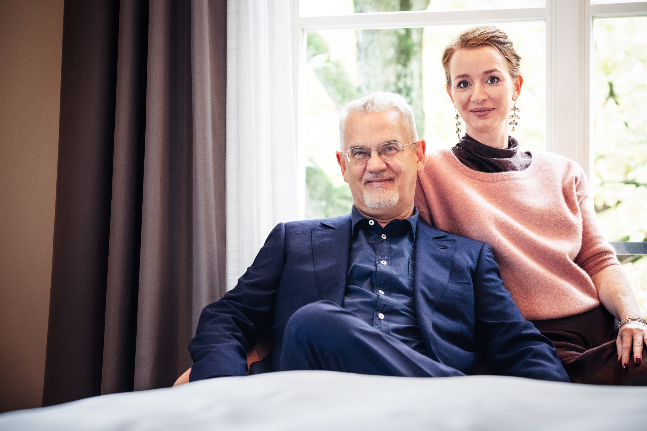
From a Gründerzeit building, Tanja and Michael Zimmer created a sought-after boutique hotel in Saarbrücken. (Image: zVg)
The best way to be different is simply to be better. They purchased the listed former school building in 2010, renovated it exclusively with regional craftsmen and developed a boutique hotel that does not stage design loudly, but curates it with precision.
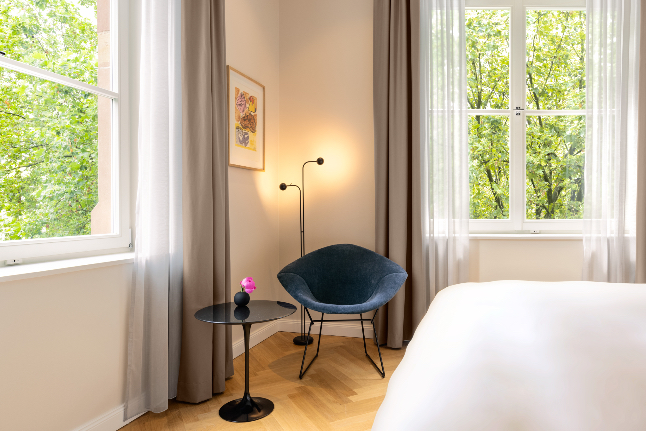
Reduced and aesthetic: Mid-century furniture by Beroia and Saarinen defines the rooms. (Image: zVg)
Townhouse-Flair in the Heart of Saarbrücken, Away from the Bustle
Reduced, clear and aesthetically timeless: the mid-century style with Bertoia and Saarinen classics defines every detail of my room. The high walls are adorned with original aquatint prints by Le Corbusier, which the Zimmer couple discovered in Paris. Large windows flood the room with daylight that glides across sandstone walls and linen curtains, casting soft shadows on the fine parquet flooring. The atmosphere reminds me more of elegant, city-adjacent townhouses than of a traditional hotel.
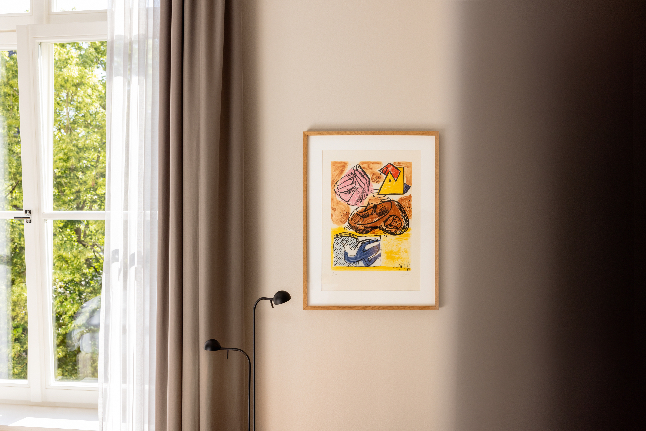
The original aquatint by Le Corbusier was discovered by the owners in Paris. (Image: zVg)
Haute Cuisine That Makes the Saarland Proud
Both in its gastronomic concept and its cuisine, the house sets benchmarks. Head chef Silio del Fabro combines French haute cuisine with Mediterranean and Japanese influences. Seasonal vegetables and herbs come from the hotel’s own biodynamic urban farm. His entrecôte with potato mille-feuille, Chablis cream, cauliflower mushroom and a touch of Kaluga caviar shows that luxury and down-to-earth cooking are not mutually exclusive, but complementary. An approach that does justice to the Saarland – a gourmet region that long stood in the shadow of France, but today shines confidently alongside it.
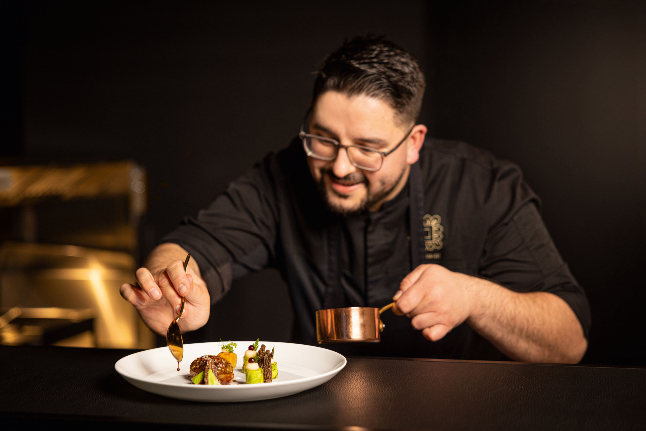
Head Chef Silio del Fabro is the creative force behind Esplanade's culinary concept. (Image: zVg)
Small Property, Great Value
In an increasingly complex luxury hospitality market, I see attractive niche opportunities for properties like the Esplanade. Large-scale hotel projects are becoming ever more difficult to finance in Germany’s metropolitan areas. By contrast, small, high-quality boutique hotels are gaining appeal.
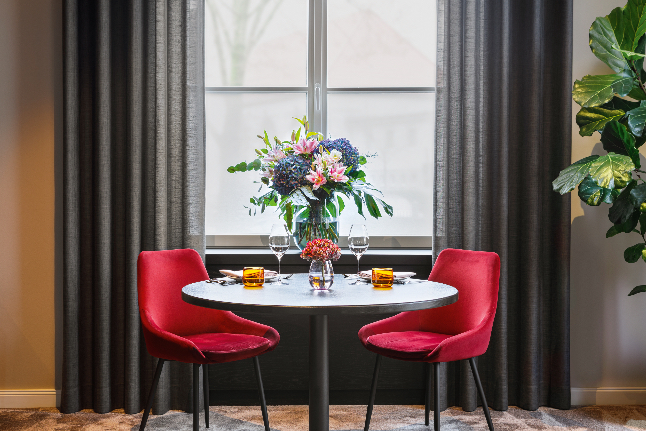
Sometimes Esplanade, sometimes «Le petit CINQ»: the venue hosts two restaurants with different culinary concepts. (Image: zVg)
The Esplanade shows how it can be done: very few rooms, each almost a one-off, individually furnished and designed with a keen eye for detail, embody luxury at a high level.
With clear positioning, a transparent pricing strategy and an operating model that keeps running costs low, the property combines exclusivity with economic efficiency – a model that benefits both guests and investors.
Boutique Hotels as a Smart Niche Opportunity for Investors
Boutique hotels like the Esplanade are regarded in many portfolios as «value-stable special assets»: their performance tends to be more stable than that of large hotels in classic tourist destinations, yet more dynamic than that of traditional office or commercial properties.
Location also plays a role: Saarbrücken may not be an international financial hub, but with SaarLB and SIKB, two strong regional banks are based locally, traditionally providing reliable financing and support for regional projects. For investors from Frankfurt or Luxembourg, such a property can therefore be an attractive portfolio addition – regionally anchored, value-stable and well positioned in terms of modern sustainability standards.
This small yet refined property in Saarbrücken is not only a destination for gourmets and design lovers, but also a model for how boutique hospitality in Germany could function in the future: precise, bold, efficient – and far more interesting for investors than one might initially assume.
As a former grand hotelier and operator of the hotel ranking «101 best Hotels», Carsten K. Rath is a globetrotter by profession. All hotels he writes about are visited at his own expense.