«We Expect a Consolidation Among External Asset Managers in Dubai»
Mr Pellet, on your website you describe external asset managers as offering «the best of both worlds». Could you explain this in more detail, please?
For our clients, it truly is the best of both worlds. On the one hand, they are looking for proximity and highly personalised service through a dedicated relationship manager. On the other hand, they want independence and, crucially, no conflicts of interest.
External asset managers (EAMs) are not tied to a single bank. This allows them to select the most appropriate custodian bank for each client, depending on individual needs. Some banks are better suited for certain customers than others. Because EAMs are independent by definition, they should always select the best products and services available—without any conflict of interest. That is precisely why I call it the best of both worlds.
They typically work with several banks. While some may argue this can be «too many», it nevertheless gives clients a meaningful range of options. This approach is also fully aligned with our group’s strategic business plan.
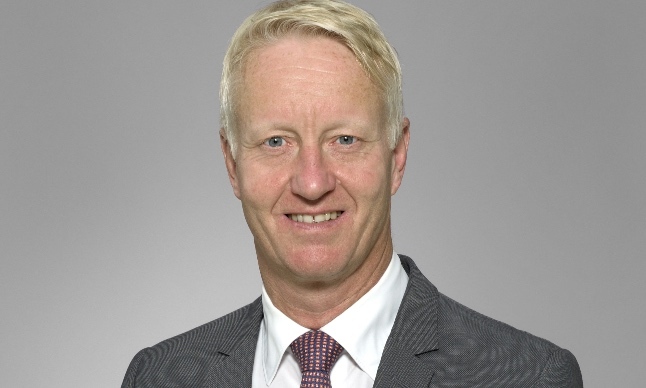
Laurent Pellet. (Image: provided)
How is your EAM business structured geographically today?
We currently have around 75 people working in the EAM business globally. Our booking centres and teams are located in Switzerland, Luxembourg, Singapore and the Bahamas. In Dubai, we have business development teams but no booking centre capability.
Is a booking centre in Dubai something you are considering?
Not really, at least not at this stage. This is a broader discussion that goes beyond EAMs and also touches private client banking. I have been active in the region for more than 15 years, and I am not fully convinced that a booking centre in Dubai is necessary for EAMs.
EAMs in the Middle East are not primarily looking for a Swiss private bank with local booking capabilities.
«Dubai today resembles Singapore about ten years ago.»
What they are seeking is access to offshore, multi-jurisdictional booking centres. If they want to book assets locally, they already have plenty of strong local banks.
Many Middle Eastern clients, however, still prefer to book assets outside their home country. That is why our strategy focuses on offering booking capabilities outside the UAE. We believe the EAM market in the region is still young and growing, and this approach fits those needs.
In your home market Switzerland, external asset management is very well established. How would you assess the EAM industry in the Middle East today?
It is still a young market, but it is approaching an inflection point. If I had to compare it, I would say Dubai today resembles Singapore about ten years ago.
The growth has been remarkable. In the DIFC alone, there are around 300 pure wealth management firms licensed. Over the past two years, about 200 new asset managers have been established. That is extremely significant growth.
This is typically what we see before a market matures. Many of these firms are still profitable, but they often lack scale, expertise, or infrastructure. Private client needs are evolving very rapidly—in terms of products, services and sophistication—while regulatory costs continue to rise.
«Saudi Arabia may become relevant in the future, but we are not there yet.»
I do not have a crystal ball, but I strongly believe we will see consolidation in the short to mid term, not in ten years’ time. Smaller players will either need to merge or join larger platforms to gain efficiency, scalability and access to expertise they cannot develop on their own.
Digital transformation will be a key driver of this consolidation. Implementing digital solutions requires both financial and human resources, which many smaller firms simply do not have.
How do you view the development of the EAM market in Saudi Arabia?
At the moment, there is no real EAM industry in Saudi Arabia. There may be a few single-family offices, but no established multi-family office or EAM ecosystem as we understand it. For now, Dubai remains the true hub for the Middle East. ADGM in Abu Dhabi has taken important steps and introduced EAM licences, but there are still fewer than 20 EAMs there. In the short to mid term, Dubai will remain the centre. Saudi Arabia may become relevant in the future, but we are not there yet.
A significant intergenerational wealth transfer is underway. How does this affect EAMs and private banks?
This is one of the major challenges ahead—for EAMs, private banks, and the industry as a whole.
The next generation has very different expectations. They want to be involved in investment discussions and decisions, not just receive reports. They expect seamless digital interaction through apps, real-time portfolio access, and the ability to execute transactions digitally.
Their investment preferences are also changing. There is greater interest in private markets, private equity, alternative assets, and—in some cases—cryptocurrencies. But more important than the asset class is their desire to participate actively in the decision-making process. If EAMs want to retain the second generation of their clients, they must adapt their business models. Otherwise, these clients will simply move on.
You are also involved in blockchain initiatives. How does blockchain fit into private banking and EAMs?
This is not about crypto. Blockchain is a technology, and one of its most promising use cases is process efficiency.
Within the Blockchain Association for Finance, we are working on streamlining KYC and onboarding processes for EAMs and their end clients. One project we are currently testing allows mandate holders onboarding through a blockchain-based platform.
«Customer needs are changing faster than ever.»
The idea is simple: the client’s KYC is completed once on a secure blockchain platform. The EAM can then grant access to multiple custodian banks without repeating the entire onboarding process each time. This significantly reduces friction and improves efficiency for everyone involved. Dubai is very advanced and open when it comes to adopting such technologies—perhaps even more so than some Asian markets.
Does the younger generation’s desire for constant involvement pose challenges for private banks?
It depends on the business model. We are a private bank focused on wealthier clients, and we provide both personal relationships and digital tools. Clients can access real-time portfolio information, execute payments, and interact securely through our mobile app. We have even implemented digital call-back solutions for enhanced cybersecurity.
Personal interaction remains essential. Clients will still want to meet their bankers face to face. What is changing is the channel and frequency of interaction—not the importance of trust.
Finally, what advice would you give to young professionals aspiring to a career in private banking or external asset management?
Continuous learning is essential. The days when one person could «do everything» are over. Nowadats, you need to work in teams, stay curious, and constantly adapt to evolving products, regulations and client expectations.
Most importantly, you must listen to your clients. Their needs are changing faster than ever.
Are foreign languages still important in an age of AI and instant translation?
Absolutely. AI is a great tool, but it cannot replace the emotional connection created by speaking a client’s language. Language builds trust and proximity—something no machine can replicate.
I personally speak four languages, and I am convinced this remains a crucial skill. Personal relationships in private banking are built over time, through real conversations and personal interaction.
Laurent Pellet is a Limited Partner and Global Head of External Asset Managers (EAM) at Lombard Odier in Geneva.