
Swiss Coca-Cola Chiefs: «Global Icon & Local Partnership Since 1936»
Some weeks ago, the two executives who steer Coca-Cola’s presence in Switzerland — Jürg Burkhalter of Coca-Cola HBC and Fabio Cella of The Coca-Cola Company — invited Swiss media representatives to the production plant in Brüttisellen.
Here, just outside Zurich, the emblematic soft drink is bottled for the Swiss market at astonishing speed: more than ten PET bottles per second roll off the new high-performance line.
The visit came at a special moment. Next year, Coca-Cola will celebrate 90 years in Switzerland — nearly a century in which the global icon has grown deeply intertwined with the country’s economy, culture and everyday rituals.
Intertwined in the economy, culture and everday rituals
Today, Coca-Cola operates in Switzerland through a hybrid structure: The Coca-Cola Company, represented by Country Manager Fabio Cella, provides the secret syrup that defines the unmistakable Coca-Cola taste and leads the brand’s marketing and innovation.
Coca-Cola HBC Switzerland, led by Country General Manager Jürg Burkhalter, is responsible for production, logistics and commercialisation. The company, also known as Coca-Cola Hellenic — moved its global headquarters from Greece to Zug in 2013, citing stronger access to capital markets and Switzerland’s stable business environment.
Coca-Cola and Switzerland: What's a fair general assessment of the relationship ahead of the 90-year-anniversary?
Jürg Burkhalter: It’s a remarkable journey. For nearly 90 years, Coca-Cola has been part of Swiss life — from family barbecues to mountain chalets, festivals, and sports arenas. What began in 1936 with a bottling line in Lausanne has grown into a deeply local partnership: today, over 80 percent of what we sell in Switzerland is produced here, and 95 percent of ingredients are sourced from Swiss suppliers. But our story goes beyond production. As we approach our 90th anniversary, we’re not just looking back. We’re reaffirming our commitment: crafting beverages for Switzerland, right here in Switzerland — while delivering first-class service to our customers.
What explains the appeal that Coca-Cola products have been able to maintain in the Swiss market (and elsewhere)?
Fabio Cella: Coca-Cola stays relevant because it combines a globally iconic brand with a very local Swiss presence — and increasingly, with a strong cultural footprint. Beyond producing over 80 percent of what we sell here in Switzerland, our brands show up where people live their passions: at more than 40 festivals across the country, in sports moments that bring communities together, and in activations like our Peace Tea urban-art activations that speak directly to younger, more urban audiences. At the same time, our portfolio has evolved significantly. Today, around 60 percent of what we offer in Switzerland is sugar-free or reduced-sugar — and innovations like Coca-Cola Zero Zero or Peace Tea show how taste, functionality and wellbeing can go hand in hand. Add high quality standards, consistent innovation and experiences that connect emotionally, and the brand remains just as relevant today as it was decades ago.
What are the key differentiators of the Swiss softdrink consumer?
Fabio Cella: Swiss consumers know what they want — and they expect brands to deliver on it consistently. Quality and transparency are non-negotiable. Consumers look for clear information, great taste and a choice that fits different lifestyles, including reduced- and zero-sugar options. Sustainability plays a defining role.
«Switzerland has one of the highest PET collection rates in the world at 84 percent.»
Switzerland has one of the highest PET collection rates in the world at 84 percent, and consumers expect companies to advance circularity. That’s why every PET bottle used for our beverages and produced in Switzerland — with the exception of the cap and the label — is made from 100 percent from rPET. We continue to invest in technology and infrastructure to further strengthen this circular approach.
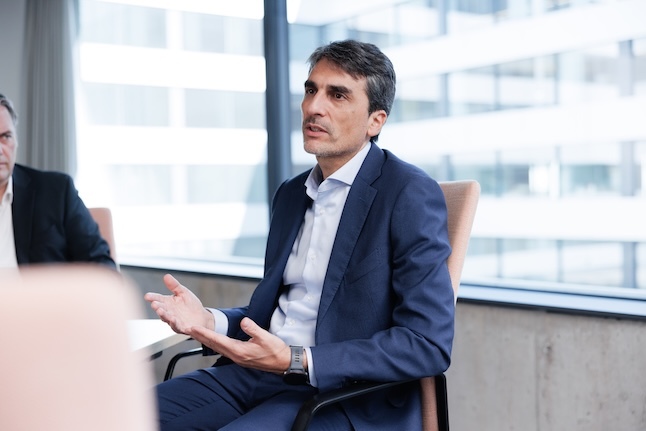
Fabio Cella, Country Manager Switzerland at The Coca-Cola Company. (Image: Courtesy)
What is rPET?
Fabio Cella: rPET stands for recycled polyethylene terephthalate (PET). It is a food-safe raw material made from empty PET packaging that has been collected and prepared for recycling. To put it simply: new bottles are made from old ones – they are part of a closed material cycle. This is what recycling is really about.
How do your brands connect with Swiss culture beyond the product itself?
Swiss consumers expect brands to be part of the country’s social fabric. With Peace Tea, for example, we’ve tapped into street culture and urban creativity — partnering with artists and creating experiences that resonate within those communities. Our brands are present at more than 40 festivals across Switzerland, creating moments of joy, music and togetherness that people look forward to every year. Finally, trust matters. Swiss consumers reward brands that operate locally, consistently and with purpose — which is why our strong Swiss footprint remains one of our biggest differentiators.
Why are zero-sugar or sugar-reduced products so successful in Switzerland?
Fabio Cella: People in Switzerland are increasingly looking to manage their sugar intake, and we’ve adapted our portfolio accordingly. Under the Milan Declaration, we reduced sugar in our drinks by 10%, and we continue to reformulate, offer portion-controlled packs and introduce more low- and no-sugar options. The taste experience has improved dramatically — Coca-Cola Zero and Sprite Zero both perform strongly in blind tastings, proving that consumers don’t have to compromise. And as functional wellness becomes more relevant — we continue innovating to offer great-tasting, smarter choices for every lifestyle. This combination of choice, taste and transparency is a key driver of the success we’re seeing in the category.
What current consumer trends is Coca-Cola witnessing in Switzerland, and how do you adapt?
We’re seeing a few clear shifts: Swiss consumers actively look for lower- and no-sugar choices. We adapt with ongoing reformulations, innovations, smaller pack sizes and clear nutritional labelling. Also, consumers look for beverages that support both body and mind — from energy to hydration and wellbeing. Peace Tea is an example of a brand that connects functionality with cultural relevance. In terms of sustainability, Swiss consumers have high expectations. They expect packaging that truly supports circularity — and the country’s 84 percent PET collection rate shows how deeply rooted this mindset is. We meet these expectations through strong use of recycled materials, local sourcing and efficient production. In fact, every PET bottle used for our locally produced beverages — with the exception of the cap and the label — is made from 100 percent rPET. Another consumer trend is convenience & out-of-home relevance: Out-of-home consumption remains a key part of Swiss beverage culture.
«We work closely with our 31,000+ local gastronomy partners.»
We work closely with our 31,000+ local gastronomy partners, offering a broad beverage portfolio, vending solutions and coffee offerings. And finally, Swiss consumers value local connections. They expect brands to be part of the social fabric. Our presence at more than 40 festivals, our collaborations with local musicians, and initiatives across art and youth culture — including the Peace Tea Urban Art Tram — are genuine expressions of that commitment. Together with our national partnership with Special Olympics Switzerland, these engagements allow us to connect with the moments, communities and values that matter in Switzerland.
In terms of the product portfolio: What are the main growth areas? What is your personal favorite "hidden gem" in the portfolio?
Fabio Cella: Growth is especially strong in low- and no-sugar beverages, still and functional drinks, including hydration and wellness formats, out-of-home consumption, driven by convenience, portion choice and strong partnerships
Jürg Burkhalter: Hidden gems include our newer innovations that tap into emerging needs — from functional beverages to culturally inspired formats like Peace Tea.

Jürg Burkhalter, Country General Manager Switzerland at Coca-Cola HBC. (Image: Courtesy)
What are your central marketing priorities in terms of consumers and gastronomy?
Jürg Burkhalter: Our marketing priorities reflect evolving consumer expectations and the unique dynamics of the Swiss market:
Private Consumers: We focus on choice and transparency. Today, around 60percent of our portfolio is sugar-free or reduced-sugar, and we continue to innovate with new flavours and formats. Campaigns such as Share a Coke and music partnerships with local musicians strengthen emotional connections and celebrate local culture. Gastronomy: Out-of-home consumption is a key growth driver in Switzerland. We maintain over 31,000 local active customer relationships and cover about 80 percent of the relevant gastronomy market. Our tailored solutions include a full-service beverage portfolio, vending systems, and coffee offerings, ensuring maximum relevance and convenience for our partners. At the heart of it: relevance and trust.
Many people perceive The Coca-Cola Company and Coca-Cola HBC as multinationals. What can you tell us about your embeddedness in the (local) Swiss economy and society?
Jürg Burkhalter: While Coca-Cola is a global brand, our Swiss operations are deeply local. At Coca-Cola HBC Switzerland, a subsidiary of Coca-Cola Hellenic Beverage Company, based in Zug, one of the bottlers of «The Coca-Cola Company, we employ 650 people directly and support over 7,700 jobs across the country through our value chain. We produce in Dietlikon and Vals, and source nearly all our ingredients from local suppliers. That alone generates over 830 million francs in added value and 240 million francs in taxes for Switzerland. Ultimately, we see ourselves as a local company with global backing. We’re deeply rooted here: in the economy, the communities, and the culture.
«That alone generates over 830 million francs in added value and 240 million francs in taxes for Switzerland.»
Where are your main touchpoints between the Coca-Cola universe and the Swiss economy?
Jürg Burkhalter: Coca-Cola in Switzerland’s contribution goes far beyond fridges in banks. Locally, we generate CHF 240 million in tax revenue along the value chain and purchase CHF 147 million worth of goods and services annually from Swiss suppliers As the local bottler, we invest in Switzerland—for example, CHF 8 million in a next-generation rPET* filling line and CHF 35 million in a state-of-the-art high-bay warehouse. These investments demonstrate our long-term commitment to the country by securing jobs, strengthening supply chain resilience, and advancing our sustainability goals.
What are key further development steps in Switzerland that you want to undertake 2026 and beyond?
Jürg Burkhalter: We are investing in sustainability and infrastructure to future-proof our operations: Our high-bay warehouse in Brüttisellen is a 35 million francs project, scheduled for completion in 2027. This state-of-the-art facility will dramatically improve logistics efficiency and strengthen local supply chain. We are also investing in a next-generation rPET Line – 8 million francs invested in cutting-edge technology that fills around 42,000 PET bottles per hour — more than 10 bottles every second. This line supports our commitment to circularity and increases the share of recycled material in our packaging. Finally, we are in the middle of the rollout of e-fleet and e-trucks for greener deliveries and smarter logistics solutions. These projects are part of our long-term strategy: build local, act sustainably, and lead with purpose. That’s the future we’re shaping — and it inspires us every day.
Fabio Cella: On the portfolio side, we will expand functionality, broaden our choice of low- and no-sugar drinks, and continue building local and cultural relevance — especially around our 90-year anniversary and new product innovations.
Jürg Burkhalter is Country General Manager of Coca-Cola HBC Switzerland. Before assuming his role in 2023, he served in various senior positions within the Coca-Cola HBC Group, including General Manager for Armenia and Member of the Operating Committee. Earlier in his career, he held leadership roles at Hero Group and 3M.
Fabio Cella is Country Manager Switzerland for The Coca-Cola Company. Before joining the Swiss organisation in 2024, he led Coca-Cola’s operations in the Adriatic region and held several commercial and marketing leadership roles within the Group across Europe. He previously worked in consulting and FMCG (fast moving consumer goods) roles in Italy and abroad.