
How Pictet Claimed the Crown in Thematic Investing
Construction cranes rise over the compound, where Pictet is adding several new stories to its main building. Some of the upper floors are already finished, bright with glass and panoramic views of the Alpine surroundings. It feels like a fitting metaphor: a venerable Swiss house reaching upward — and outward — as it continues to redefine its place in the global asset-management landscape.
The invitation had sparked wide interest. Reporters from countries such as the United Kingdom, France, Germany, Austria, and Spain filled the room. For the first time, Pictet offered an in-depth look at the strategies that have quietly made it one of the global leaders in thematic investing.
Fresh Attention
At a moment when environmental and sustainable funds are under both scrutiny and pressure, Pictet’s approach drew fresh attention.
The gathering took place in one of the group’s spacious conference rooms, the kind usually reserved for internal strategy meetings or discreet client discussions. The mood was a mix of curiosity and attentiveness as Raymond Sagayam, one of Pictet’s seven managing partners and the executive responsible for the firm’s asset management business, stepped to the front of the room.
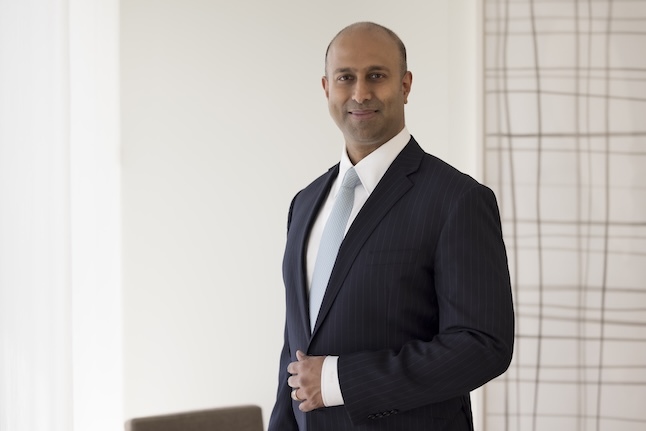
Advantage of Remaining Private: Raymond Sagayam, Managing Partner, Pictet Asset Management. (Image: Courtesy)
Sixteen Themes, 72 Billion Dollars
Sagayam began by outlining how thematic investing has evolved from a niche curiosity into a defining pillar of Pictet’s identity. What started nearly three decades ago, he explained, has grown into a comprehensive platform spanning sixteen themes and close to seventy billion dollars in assets. For Pictet, he said, these are not short-term fashion statements but enduring investment convictions rooted in long-term structural change.
He described the thematic process as an attempt to capture the world’s big transitions — from demographics and digitalization to resource scarcity and environmental adaptation. The goal, he noted, is not to chase trends but to identify forces that will shape societies and economies for decades.
A Genuinely Long Horizon
Sagayam also emphasized that Pictet’s thematic franchise has been built through patience and independence. The group’s decision to remain privately held, he said, allows it to think beyond quarterly earnings cycles and develop strategies with a genuinely long horizon. This independence, coupled with a research-driven culture, has been essential in maintaining credibility in a field that can sometimes veer into marketing excess.
He acknowledged that the current climate around environmental and sustainable investing is not without tension. With growing political polarization and investor skepticism, many asset managers are reconsidering how prominently they communicate on ESG.
The ESG Debate
At Pictet, Sagayam argued, the commitment to sustainability has never been about labels. Thematic strategies focused on water, clean energy, nutrition and biodiversity existed long before ESG became an industry acronym — and they continue to perform because they address tangible, long-term needs in the real economy.
Over the years, Pictet’s asset management arm has evolved into a global operation with remarkable reach and depth. Out of roughly 5,400 employees across the group, around 1,100 work in Asset Management. Close to forty percent of them are investment professionals, active across nine investment centers worldwide.
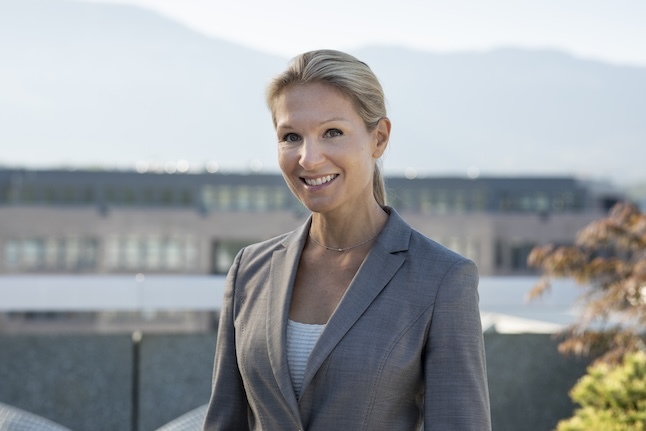
Participation in the Brunello Cuccinelli IPO: Caroline Reyl, Head of Premium Brands. (Image: Courtesy)
Global Number One
Asset Management today accounts for roughly one-third of Pictet’s total business, managing about 250 billion francs of the group’s 724 billion in client assets. Within that, approximately 70 billion — or close to a quarter of the Asset Management total — is dedicated to thematic strategies. According to «Morningstar,» this makes Pictet the global number one among asset managers in active thematic equities.
Many, though not all, of these funds are classified under the EU’s SFDR Article 9 framework for sustainable investments.
From Water to Robotics
The thematic platform spans sixteen distinct strategies, from water, clean energy and timber to digitalization, healthcare innovation, robotics and smart cities. The portfolios are actively managed and designed to capture the long-term structural forces that shape societies and economies rather than short-term market momentum. Several of the funds, such as Water or Clean Energy, have been running for more than two decades.
Inside Pictet, thematic investing is viewed not as a marketing construct but as an intellectual discipline rooted in research. Portfolio managers and analysts work across disciplines, combining insights from technology, science and social change to identify where capital can benefit from transformative trends. The approach has produced one of the most established thematic franchises in global asset management — and one that continues to expand even as others in the ESG space face political headwinds and investor fatigue.
Origins in the 1990s
The origins of this franchise reach back to the mid-1990s, when Hans Peter Portner, now head of Thematic Equities at Pictet Asset Management, launched the firm’s first thematic strategy focused on water. What was then a small experiment within a traditional Geneva partnership evolved into one of the best-known thematic equity platforms in global finance.
Today, Portner and his team oversee sixteen strategies with total assets of around 72 billion dollars, all invested exclusively in listed equities. The division counts more than 70 professionals supported by 14 external advisory boards made up of academics, scientists and former CEOs. This network, he explained, serves as a continuous source of expertise and perspective — a reminder that the future cannot be forecast by markets alone.
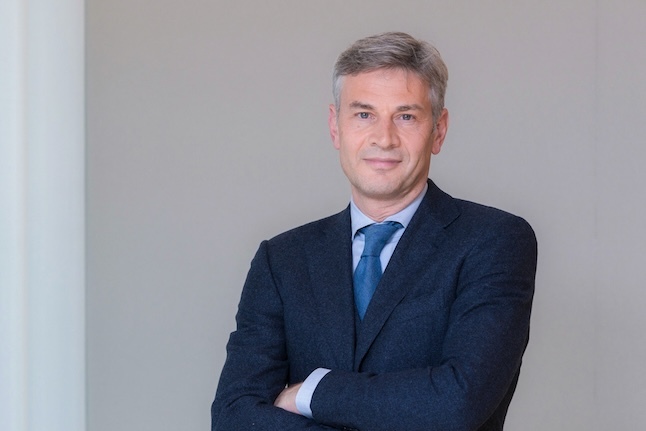
Pioneering Water Investment in the 1990s: Hans Peter Portner, Head of Thematic Equities. (Image: Courtesy)
Tracing the Rivers of Global Transformation
For Portner, thematic investing is ultimately about tracing the great rivers of global transformation — what he calls megatrends. These, he argued, are among the most reliable guides to the future, shaping industries and societies over decades. Each strategy, whether it concerns water, nutrition or robotics, is built on a time horizon of at least fifteen years, seeking long-term growth that is both focused and purposeful. The team’s guiding principle, he said, is simple: to avoid investing in misery.
The analytical framework behind this work is unusually broad. The thematic universe comprises about 1,800 stocks worldwide — public companies that, taken together, have historically outperformed the MSCI All-Country Index in both sales growth and risk-adjusted performance.
Ongoing Dialogue with Companies
The firm maintains an ongoing dialogue with these companies and exercises its voting rights at shareholder meetings, treating engagement as a central part of the process rather than a formality.
Portner also outlined how the group has expanded beyond traditional ESG reporting to measure the tangible impact of its thematic portfolios. Each strategy is assessed through a lifecycle analysis of its holdings, capturing both the «footprint» — the resources a company consumes — and the «handprint» — the positive effects of its products and services. The combination offers a more complete picture of how capital can support genuine progress.
How Megatrends Are Found
To identify societal megatrends, Pictet maintains a long-standing partnership with the Copenhagen Institute for Future Studies, whose researchers help identify the raw material for emerging themes. This collaboration feeds directly into the firm’s strategic thinking. Portner described the interaction of megatrends, trends and investment themes as less about forecasting markets and more about mapping the flow of a river system.
The event also offered a closer look at several of Pictet’s individual strategies, each introduced by the managers who run them. The presentations illustrated how broad the firm’s thematic universe has become — and how deeply its specialists are engaged in their fields.
Global Environmental Opportunities, Digital
Global Environmental Opportunities was presented by Luciano Diana and Katie Self, who explained how the strategy applies the Planetary Boundaries framework to identify companies operating within the limits of the planet’s ecosystems. They highlighted that key drivers such as demand for big data, electrification and the reshoring of industrial manufacturing remain largely unaffected by political cycles.
The Digital strategy, introduced by John Gladwyn, covers an investment universe of roughly 300 companies with a combined market capitalization exceeding 30 trillion dollars. From this, the team maintains between 30 and 50 high-conviction positions. With assets of about 6 billion dollars, Digital ranks among Pictet’s largest thematic portfolios — and one of its strongest performers, with an annualized return of 12.23 percent and an excess return of 4.25 points over the MSCI AC World Index.
Robotics, Premium Brands
Robotics, overseen by Peter Lingen and Daegal Tsang, focuses on automation and artificial intelligence. Since its launch in 2015, the strategy has generated an annualized return of 16.51 percent, outperforming the MSCI ACWI by 5.41 points. The managers noted how advances in automation continue to redefine industrial efficiency.
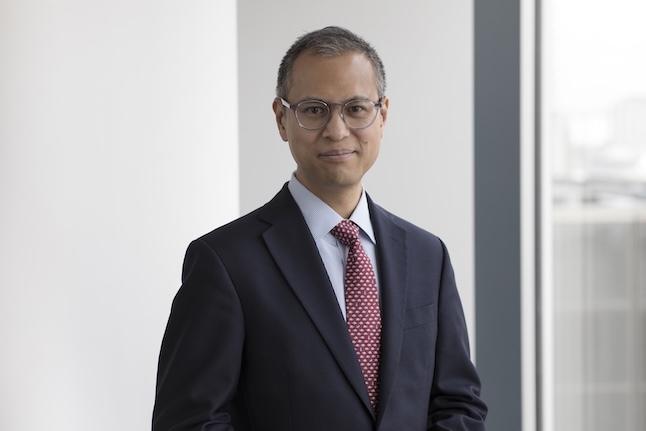
On the Robotics Frontier: Daegal Tsang, Senior Investment Manager. (Image: Courtesy)
A more unconventional entry in the line-up was Premium Brands, presented by Caroline Reyl and Gillian Diesen. The strategy seeks to capture the intersection of brand excellence and consumer aspiration. It famously invested in Brunello Cucinelli at IPO and includes Ferrari among its long-term holdings. Despite recent headwinds in the luxury sector, its long-term performance since 2005 has remained slightly positive compared with the MSCI ACWI, reflecting the cyclical nature of global consumer demand.
Swiss Financial Engineering
The firm’s thematic investing represents a refined form of Swiss financial engineering — systematic, research-driven and built for endurance. Many of its strategies will only reveal their full merit over time, through cycles of policy change, technological progress and investor mood. Yet the concept itself — to capture the great forces shaping the planet and invest with patience and purpose — has already shown substantial market appeal.
For a bank that has long prided itself on thinking in terms of generations rather than quarters, the thematic franchise reflects a conviction that long-term thinking remains relevant, and that careful design — like the new stories rising above the Geneva skyline — can quietly reshape the future.