Krug Cellar Master: «Choose Excellence Over Convenience»
Julie Cavil's usual radius of action is the Champagne region. She lives just minutes from Krug’s historic headquarters in Reims, yet her days are spent out in the vineyards — cultivating close relationships with the growers who supply the maison with its prized grapes.
At Krug Champagne, as with many great Champagne maisons, a large portion of the fruit is sourced from external growers. But unlike most, only grapes of the highest distinction make it past the gates. This selection process — meticulous and deeply personal — lies at the heart of Julie Cavil’s role as Maître de Caves, a title she inherited from longtime cellar master Eric Lebel in January 2020.
Pioneering Spirit of Johann-Joseph Krug
A few weeks ago, Krug’s tasting committee embarked on a global tour to present the maison's latest release: the 173rd Édition of its famed Grande Cuvée. This non-vintage Champagne embodies the original ambition of Johann-Joseph Krug (1800–1866): to offer uncompromising quality in every bottle, regardless of vintage variation — an ambition that shaped the Champagne industry’s move toward multi-vintage blends.
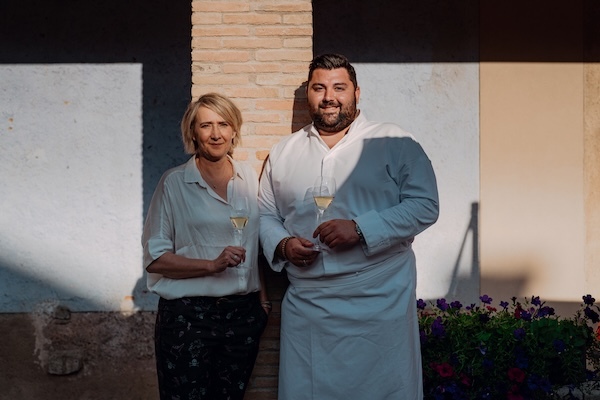
Julie Cavil with Chef Federico Palladino. (Image: LIEB.ICH Productions)
As part of the tour, Julie Cavil came to Switzerland, where she presented the new cuvée at Osteria Enoteca Cuntitt, near the country’s southernmost point. There, Krug ambassador and head chef Federico Palladino — awarded a Michelin star and named GaultMillau’s «Discovery of the Year» in 2022 and «Rising Star» in 2024 — crafted a rustic fine dining experience in perfect harmony with the Champagne.
finews.com sat down with Julie Cavil to talk about her path from advertising to Champagne, her philosophy of humility, and what it takes to create a wine worthy of the Krug name.
Ms. Cavil, you didn’t grow up in a typical wine family. What role did wine play when you were a child?
Wine was always around, but it wasn’t central. It wasn’t a daily thing — more for celebrations or dinners with friends than an everyday presence at home.
And today, do you drink wine daily?
As a Frenchwoman, the apéritif is quite important. Every day, my husband and I take an hour to unwind and share our days. But during the week, we try to keep it alcohol-free — though we don’t always succeed!
Before wine, you worked in advertising. Was your role more strategic or creative?
It was strategic. I studied at a business school in Lille and then worked in advertising agencies, focusing on strategy rather than creation.
«It’s like different musicians playing the same score each year.»
Has that management background helped you at Krug?
Absolutely. Especially in team management. I often say: you hold on to a guiding cable — everyone clips on and moves autonomously, but no one drifts from the direction. My job is to provide the vision, inspire, and keep things moving smoothly. I don’t need to be the most technically expert; that’s what my brilliant colleagues are for. My strength is to motivate, clarify, and make sure each person understands their role in the bigger picture.
Tell us about your team.
We’re six people — men and women, some long-time colleagues, some newer. We each bring different characters and perspectives. It would be terrible if decisions rested on one person alone. We’re very close. Every morning, we start together before moving into our individual roles, then regroup at 11 a.m. for tasting sessions.
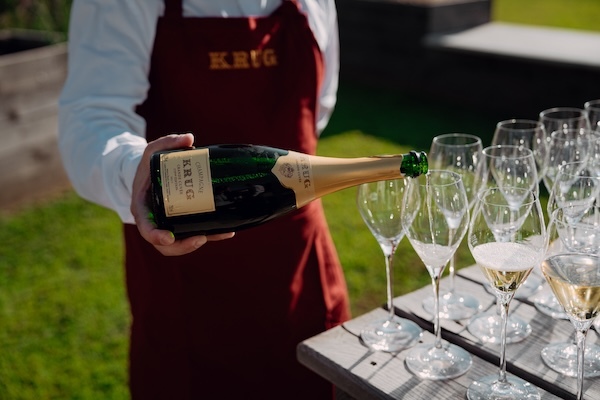
The 173. Vintage of Krug Grande Cuvée. (Image: LIEB.ICH Productions)
Daily tastings sound intense. Doesn’t it get repetitive?
Not at all. Tasting is where everything comes together — all the work in the vineyards, the harvest decisions, it all culminates in that glass. It’s the moment when we start orchestrating the blend, bringing the cuvée to life. It’s extraordinary, not repetitive at all.
You didn’t come from a winemaking region. How did you pivot from advertising to Krug?
I started discovering wine at 17. In Paris, there was a wine shop near my apartment that held tastings. I was fascinated that neighboring plots could produce such different wines. It sparked a passion, combined with a family plan to leave Paris, find more balance, a garden, a concrete life. Advertising is about tight deadlines and constant turnover — what you create can disappear instantly. At Krug, decisions are judged ten years later; you feel the wine on your hands after harvest. It’s the exact opposite, and I love this long timeframe.
«My job is to provide the vision, inspire, and keep things moving smoothly.»
Joining Krug directly is a big leap. How did that happen?
I wouldn’t have believed it myself 20 years ago. I didn’t enter Krug thinking I’d one day be Chef de Caves. After returning to study oenology, I interned at Moët & Chandon and Dom Pérignon. Usually, you do one harvest and move on — I stayed for two, then a third, because it went so well. Then a position opened at Krug. I seized opportunities, suggested new ideas, gradually took on more responsibility. My predecessor Eric and I realized early on that we were starting a long transition. It felt like he was on stage while I learned in the wings — then one day, I was on stage and he had stepped back. The transition was so natural; there was no pressure. Even now, I don’t feel pressure — because of that long handover, because of our talented team, and because at Krug, the Chef de Caves only places the final flag at the summit. The real climb is the collective effort before that.
In advertising, it’s often about ego. Is it different at Krug?
Completely. We’re here for the maison, not for ourselves. We aren’t chasing the next job; we want to stay until the end. That changes everything.
You need an exceptional palate. Did you always have a special nose?
No! Tasting ability isn’t the most important quality; humility is. Our sense of taste is primal — we all have it. But today’s society is visual; we stop paying attention. I taught my daughters to identify scents from a young age — just to be curious. It’s not about talent but training and openness. In Champagne, I learned that nothing is ever truly known. Practices change. You must stay humble and curious. Our former president Rémi Krug once told me: «Never compare yourself to others; compare yourself to your last creation.» That idea of always striving for better is central here.
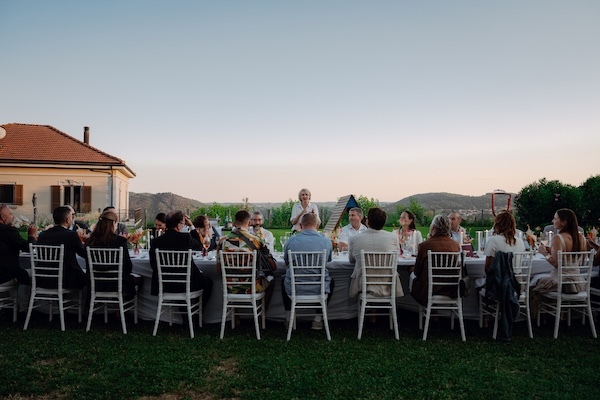
Krug Event at Osteria Enoteca Cuntitt. (Image: LIEB.ICH Productions)
Are your cuvées different from your predecessor’s?
Our inspiration remains the same — it’s like different musicians playing the same score each year. Continuity doesn’t mean doing nothing. We evolve without compromising the final wine. For example, our new winery was designed to preserve the essence of Krug while improving working conditions. We developed prototypes so the outcome stays identical, but the process is easier and safer for the team.
«The spirit of the founder is ever-present.»
What are Krug’s core fundamentals?
Details. A single compromise drops a wine from exceptional to merely good. Second, always choose excellence over convenience, even when it’s tempting to take shortcuts. Third, embrace diversity — Krug’s art of blending relies on individual character and differences. We vinify each plot separately, working closely with 100 growers across Champagne. They taste the results of their own parcels. We also spend endless time in the vineyard — for example, harvest dates are determined by tasting grapes, not just by sugar levels. Finally, the spirit of the founder is ever-present. You don’t wait for a «good year» to make a great Champagne — that’s in Krug’s DNA. Olivier Krug embodies this, tirelessly sharing the maison’s philosophy. Despite being a small maison with little hierarchy, everyone contributes to strategy and upholding the maison’s values.
How do you adapt to climate change?
We clearly see the impact, especially extreme weather swings. Old decision tools aren’t enough anymore; now, every harvest date is set by tasting, not just analytics. We also manage canopies for shade and adjust cover crops. Long-term, we experiment with new varietals and practices, collaborating with the broader Champagne community. There’s no miracle fix — it’s about humility and continuous learning.
Finally, Champagne faces market challenges today. How does that affect Krug?
I stay deliberately removed from commercial fluctuations. There have always been crises — 2008, Covid — and Krug must stay focused on decisions judged a decade later.
Julie Cavil is Chef de Caves, Director of Oenology and Vineyard Relations at Krug Champagne, where she has worked since 2006. After starting her career in advertising, she transitioned into winemaking, studying at CFPPA Avize and Université de Reims Champagne-Ardenne. Known for her humility and collaborative leadership, Cavil continues to shape Krug’s signature style with precision and vision.