
Startup Funding: A Lot for a Few, Little for Many
At first glance, the latest Swiss Venture Capital Report Update is impressive: in the first half of 2025, Swiss start-ups attracted 1,474 billion francs in risk capital, a 36 percent jump from the previous year and the third-best result ever. However, the number of financing rounds fell from 138 to 124.
Biotech Leads the Way
By volume, biotech ruled the scene, raising 705 million francs in equity. After a weak spell, the ICT and fintech sectors also showed signs of life, securing 247 million (+86 percent) and 153 million francs (+93 percent) respectively. Three start-ups completed transactions of more than 100 million francs each during the semester.
No Real Turnaround
Yet the report—published on Tuesday by the online portal Startupticker.ch and the Swiss Private Equity & Corporate Finance Association (SECA) in cooperation with the startup.ch register—warns against drawing the wrong conclusions. «The positive figures do not reflect a broad-based upturn in investment, but rather a few very large financing rounds. For the majority of start-ups, obtaining venture capital is still challenging, as evidenced by the declining number of deals.»
On the bright side, the large rounds «demonstrate the Swiss ecosystem’s ability to produce high-flyers that can convince international investors even in times of economic uncertainty.»
Rising Star: Sygnum Bank
One company singled out is Sygnum Bank, which specializes in crypto assets. In its latest round, the bank was valued at over USD 1 billion, earning it a place among the so-called unicorns. It raised 52,9 million francs—the 10th-largest deal.
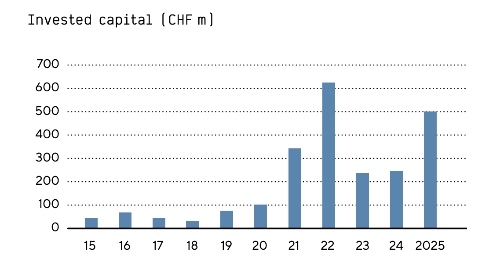
US investors contribute a large proportion of venture capital for Swiss start-ups. (Graphic: Swiss Venture Capital Report 2025 Update)
U.S. Investors Still Key
U.S. investors continue to supply a significant share of the venture capital flowing into Swiss start-ups.
The outlook for the next 12 months, however, offers little cause for optimism. A broad survey of Swiss venture-capital investors shows they are «more pessimistic than last summer,» particularly regarding their own fundraising prospects and opportunities to exit portfolio companies.
Still, the investors are «not overly concerned about additional trade barriers being introduced by the U.S. administration.» It is both reassuring and troubling that U.S. investors remain heavily involved in financing Swiss fintechs despite trans-Atlantic tensions.
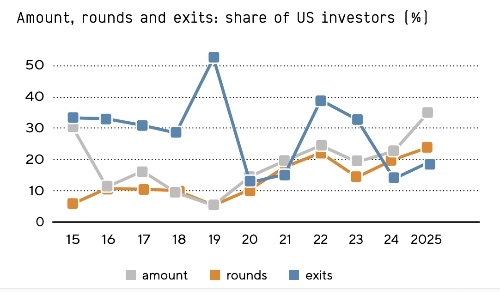
Capital, financing rounds and exits by US players: there is no recognisable Trump effect. (Graphic: Swiss Venture Capital Report 2025 Update).
Reassuring, because American investors traditionally dominate the venture-capital scene and their withdrawal would make funding Swiss start-ups even harder. Troubling, because it underscores the unflattering reality that—despite the large sums of capital managed in Switzerland and the oft-lamented shortage of investment opportunities—the domestic financial sector still struggles to bankroll innovative early-stage ideas with sufficient resources.