
How the U.S. Tariff Rate Slows Down the Economy
At the time of Donald Trump's inauguration on January 20, the effective tariff rate in the U.S. stood at around 2,5 percent. Even the mere prospect of tariffs had already increased investor uncertainty regarding trade policy.
Just this past Tuesday, asset manager Pimco had emphasized at a media event that its base case anticipated an increase in the U.S. tariff rate to around 12 percent, with a maximum projected rate of 20 percent. But just a few hours later, those figures were obsolete.
According to calculations by the rating agency Fitch, the newly imposed tariffs are expected to raise the rate to around 25 percent—clearly surpassing the levels predicted by economists. «U.S. tariffs have reached a magnitude that alters global economic prospects, significantly increases the risk of a recession in the U.S., and limits the Federal Reserve’s room for further interest rate cuts,» Fitch wrote in a commentary. Previously, the agency had projected a tariff rate of 18 percent for 2025.
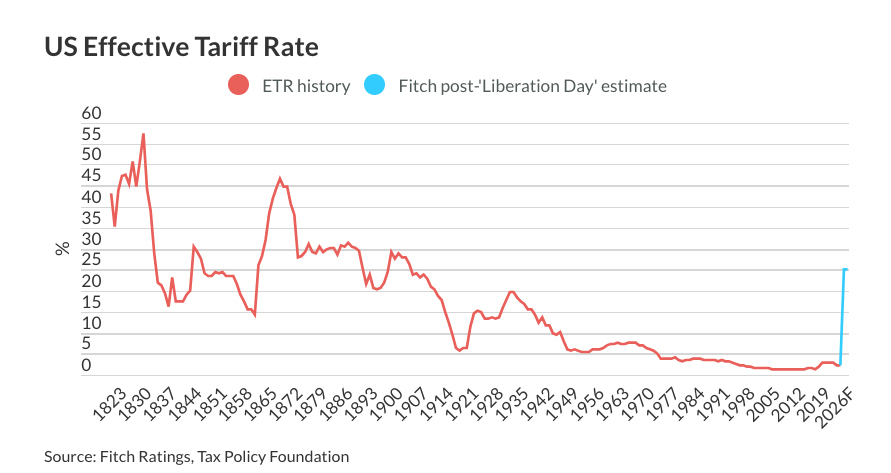
(Graphic: Fitch Ratings)
According to Libby Cantrill (photo below), Head of Public Policy at Pimco, tariffs are a central element of Donald Trump's policy agenda. The expert from the fixed income-focused asset manager estimates that each additional percentage point in the effective tariff rate will impact GDP growth by about 10 basis points.

Trump has been fixated on the issue since the 1980s. He views the U.S. trade deficit as a fundamental problem and sees tariffs as the appropriate tool to address it. Other factors such as currencies, taxes, or subsidies take a back seat in his view.
While Trump may be open to deals and use tariffs to some extent as bargaining chips, his primary goal remains reducing trade deficits.
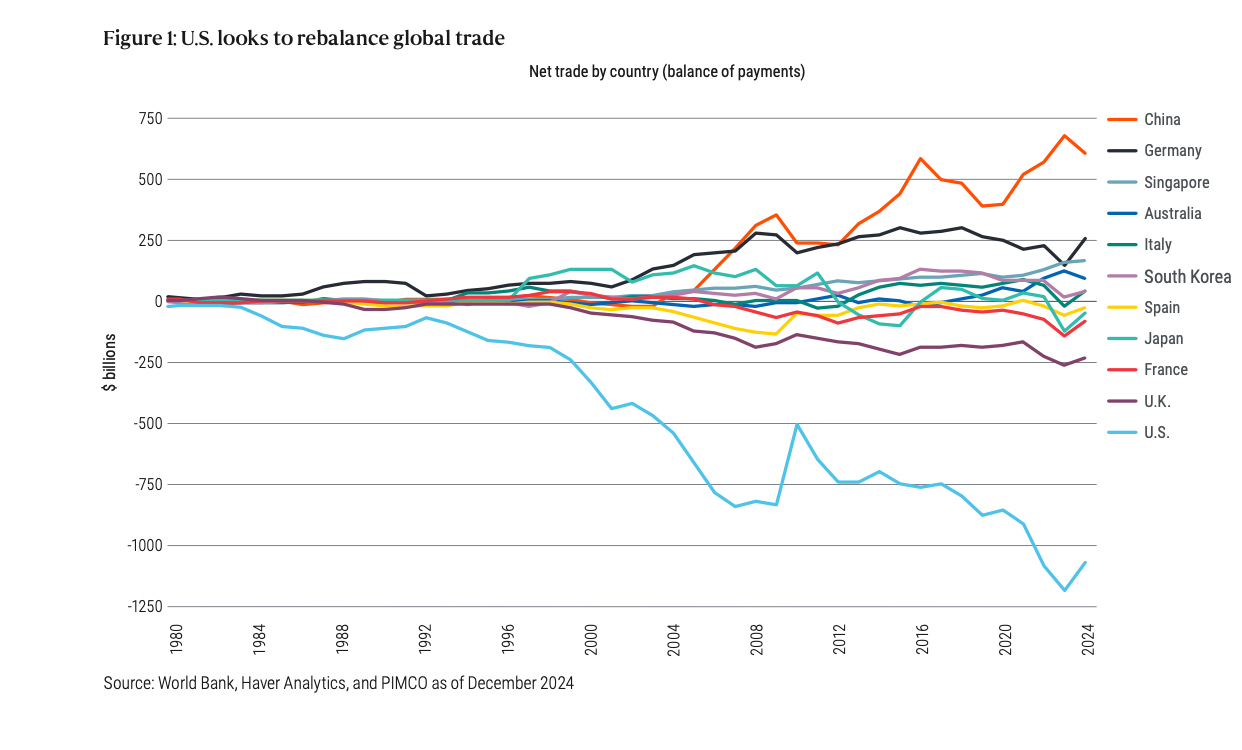
(Graohic: Pimco)
There are signs that Trump would prefer a weaker dollar. However, his signals on this issue have been contradictory.
Cantrill also sees the focus on goods trade as problematic. This neglects the fact that, when services are included, the U.S. has a positive trade balance with many countries.
Overall, the policy expert expects five dominant themes during Trump’s term, which she summarizes as the «five Ds»: Deglobalization, Deportation, Deficit-financed tax cuts, Doge, and Deregulation.
The new administration is significantly better prepared than it was during Trump’s first presidency. Of the more than 90 executive orders issued so far, about half are currently under judicial review, have already been rejected, or have been suspended. «That is intentional. The pushbacks were factored in.» The administration is strongly focused on legal aspects and intends to shift the goalposts through court rulings.