
The Future of Asset Management: What the Experts Say
Martin Rees, Country Head Switzerland at BNY Investments
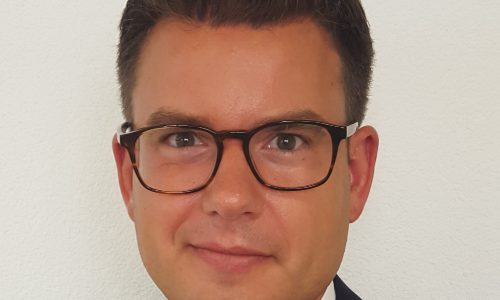
Martin Rees (Image: zVg)
How do you see the role of asset management in an environment of persistently low interest rates?
Yields have risen in most major markets over the last year, showing us that there are more opportunities in fixed income than there have been in 20 years. Coupled with ongoing market volatility and several decades-long trends, we are finding that customers are increasingly looking to work with fewer, yet more trustworthy, and scaled vendors.
Against this background, asset managers must continue to develop. To become increasingly relevant to investors, we focus on providing differentiated investment solutions, leveraging our global scale and prioritizing our engagement with clients.
Which new investment strategies are gaining in importance?
In the current environment, we are seeing client demand for both the flagship strategies and newer funds managed by our investment firms.
«Interest in actively managed fixed-income securities is growing again»
Now that interest rates have peaked, many investors see opportunities in fixed income, especially in investment-grade loans and cross-sector investing. Traditional building block strategies are back in high demand, as are some newer strategies in the impact space such as Euro or EMD Impact.
To what extent are technological developments, especially artificial intelligence and blockchain, changing the asset management industry?
The wealth management industry is changing rapidly, and technology continues to be an enabler of progress. Technology and artificial intelligence offer asset managers the opportunity to achieve better results for their clients. A good example of this is our model portfolio analysis service, PinPoint, a tool that uses asset class research, risk factor analysis, market stress testing, goal-oriented investing, and tactical insights to help clients make more informed investment decisions and build more resilient, refined model portfolios.
What opportunities and risks do you see in the increasing importance of passive investments compared to active investment strategies?
We continue to see a back-and-forth between active and passive investments as clients negotiate risk assets. In our view, both active and passive investment solutions play an important role in client portfolios.
«Many are looking for opportunities to expand their capacities in the private markets sector»
While the «liability» of investments is a predominant trend in equities, it is less dominant in bonds, and it is also quite difficult to invest exclusively in passive instruments in alternative investments. Furthermore, interest in actively managed fixed income securities and traditional equity strategies is growing again. For example, emerging markets and smaller companies are two areas that traditionally offer many opportunities for active managers.
How does the regulatory landscape – such as MiFID II and other regulations – influence the development of asset management?
There is no doubt that the increasing complexity of regulatory requirements, data and reporting is having an impact on the evolution of the wealth management industry. For both asset managers and our end clients, it can be difficult to keep up with the increasing complexity of regulations and dispersion between markets.
How do you assess the trend towards alternative investments, especially in the areas of private equity, real estate and infrastructure?
Globally, institutional investors and asset managers are increasing their shares in alternative investments, with European investors being particularly under-represented. In response, asset managers are looking for opportunities to expand and deepen their private markets capabilities. In fact, according to our data, 42 percent of asset managers worldwide expect their personal loan supply to grow over the next two years.
What role will portfolio personalization and the use of robo-advisors play in the future of asset management?
The technology significantly improves the ability to create personalized end-customer portfolios and more customized direct indexing and tax administration solutions. However, it is becoming increasingly important for asset managers to focus on building the scale, technology investments and expertise needed to deliver these personalized solutions to clients.
- << Back
- Page 4 of 4