The Future of Asset Management: What the Experts Say
Sven Württemberger, Head Client Coverage Division Schweiz at DWS
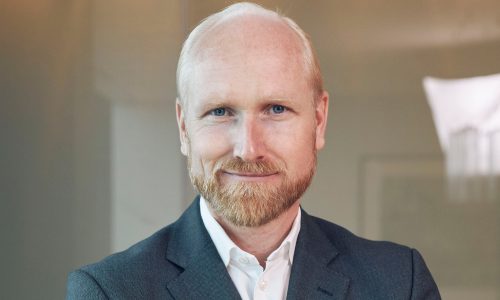
Sven Württemberger (Image: zVg)
How do you see the role of asset management in an environment of persistently low interest rates?
Positive, as investment products continue to be a valid alternative to classic fixed-term deposit products due to the higher return potential. With these toolsets, the industry enables both existing and new investors to act strategically in the market in the long term and tactically in the short term. Incidentally, this also applies to markets that have a higher interest rate, such as Germany – here, among other things, we see high demand for cash-equivalent solutions such as our Xtrackers Overnight Swap ETF, which now has assets under management of over €10 billion.
Which new investment strategies are gaining in importance?
Alternative investments or illiquid funds, once primarily reserved for institutional investors, are now increasingly popular among private investors. Access is provided through a retail range of funds characterized by lower minimum investment amounts. Infrastructure and private equity in particular, but also increasingly private credit and, most recently, cyclical real estate investments are finding favour here.
«The scaling of these tokenization use cases is still pending»
We see another trend in active ETFs – these are ETFs that are based on an active investment strategy and do not have to adhere to the benchmark of a classic index product. In the U.S., these hybrid products already account for a sizable portion of ETFs traded – about $800 billion, with a 20 percent growth share of the ETF market this year. This trend could also continue in Europe, especially among portfolio managers, and private investors.
To what extent are technological developments, especially artificial intelligence and blockchain, changing the asset management industry?
We observe developments in the field of artificial intelligence closely and try to derive appropriate use cases — operational and procedural efficiency is the focus here. However, exciting examples of use can also be derived in portfolio management and sales management; we are still at the beginning here, but the first impulses are emerging, especially for the optimization of the value chain.
Blockchain technology also offers many opportunities for asset owners and asset managers. Financial intermediaries that manage central databases today could lose relevance due to blockchain technology. The potential for disruption is great, but the big breakthrough is still missing today for blockchain technology to become firmly established in the financial sector. While there are many innovative proofs of concepts, such as tokenized bonds or funds, the scaling of these tokenization use cases is still pending.
In contrast, cryptocurrencies already have a significant market capitalization of more than two trillion dollars. Our digital asset strategy takes into account these different market maturity: We have prioritized three use cases, cryptocurrencies, stablecoins and tokenization.
What opportunities and risks do you see in the increasing importance of passive investments compared to active investment strategies?
In addition to active and alternative investments, we place a strong emphasis on passive investments, such as ETFs and mandates, leveraging our ETF brand, Xtrackers. This focus supports industry growth across both institutional and private client sectors, with particularly high growth among private clients. This growth is driven by new digital and online banking channels and the increasing popularity of one-off and savings plan investments in Switzerland. We benefit from extensive experience through numerous partnerships.
«Regulation is becoming more elaborate and complex»
With a total of 28 partners for digital collaboration, we are broadly positioned throughout Europe. In Switzerland, we recently won Postfinance as a partner. In this way, we are also taking into account the growing demand for savings plans in Switzerland. At the end of last year, there were nearly 7.6 million savings plans in Europe. This number is projected to grow to 32 million over the next five years.
How does the regulatory landscape – such as MiFID II and other regulations – influence the development of asset management?
When it comes to Europe as a financial centre, the question is how we can remain competitive in the long term. The crypto regulation MiCA, for example, is generally viewed positively and should enable further innovation with the necessary investor protection. UCITS is also considered the gold standard made possible by the EU, which, in combination with the individual investor protection of the MiFID rules, helps to cover the broad financial needs of investors.
At the same time, as a fiduciary asset manager, we are also noticing that regulation is becoming more elaborate complex. Therefore, the report by former ECB chief Mario Draghi, proposing more efficient regulation and improved access to financial assets to increase capital for the EU economy, is a welcome development.
«We are at the beginning of a new cycle on the real estate markets»
In short, if we have an annual investment requirement of between €750 billion and €800 billion, as Mario Draghi reports, we need very targeted and balanced supervisory rules for asset managers so that we can concentrate on closing these investment gaps. There is great potential in this.
How do you assess the trend towards alternative investments, especially in the areas of private equity, real estate and infrastructure?
We are at the beginning of a new cycle in the real estate markets. The severe turbulence after the interest rate turnaround is coming to an end, and in some areas we are even seeing rising real estate values. These investments are primarily supported by strong rental markets, and we are also beginning to see favorable conditions from interest rates. Infrastructure investments are regarded as a relatively defensive option, offering stable returns and being largely insulated from economic cycles. This stability minimizes unexpected outcomes, leading us to anticipate high growth rates.
What role will portfolio personalization and the use of robo-advisors play in the future of asset management?
Tailor-made investment solutions play a major role, especially within the increasing digital investment offering. Self-decision-makers, as well as wealth managers and banks, offer a wide range of corresponding model portfolios, allowing investors to put together portfolios in a modular way using the Baukastenprinz digital. Asset managers support the conceptual design and digital implementation and thus play an important role along the value chain. Asset managers are thus increasingly developing into solution providers instead of pure product providers.