LGT: Taxes, Always a Pleasant Surprise
For the majority of the population, taxes are a major fixed expense. «In this world, nothing can be said to be certain, other than death and taxes,» said Benjamin Franklin.
But it appears that many Swiss do not to find paying taxes to their government all that bad. A full 58 percent of the wealthy Swiss individuals surveyed as part of the LGT Private Banking Report are glad to pay taxes in their country. The situation is very different in neighboring Austria, where only 27 percent are pleased to pay taxes. At 35 percent, the situation in Germany is a somewhat better.
The results are similar – albeit at a lower overall level – for the question regarding the use of taxpayer money. 38 percent of Swiss are satisfied with how their taxes are used, while in Germany the number is 21 percent, and in Austria only 7 percent.
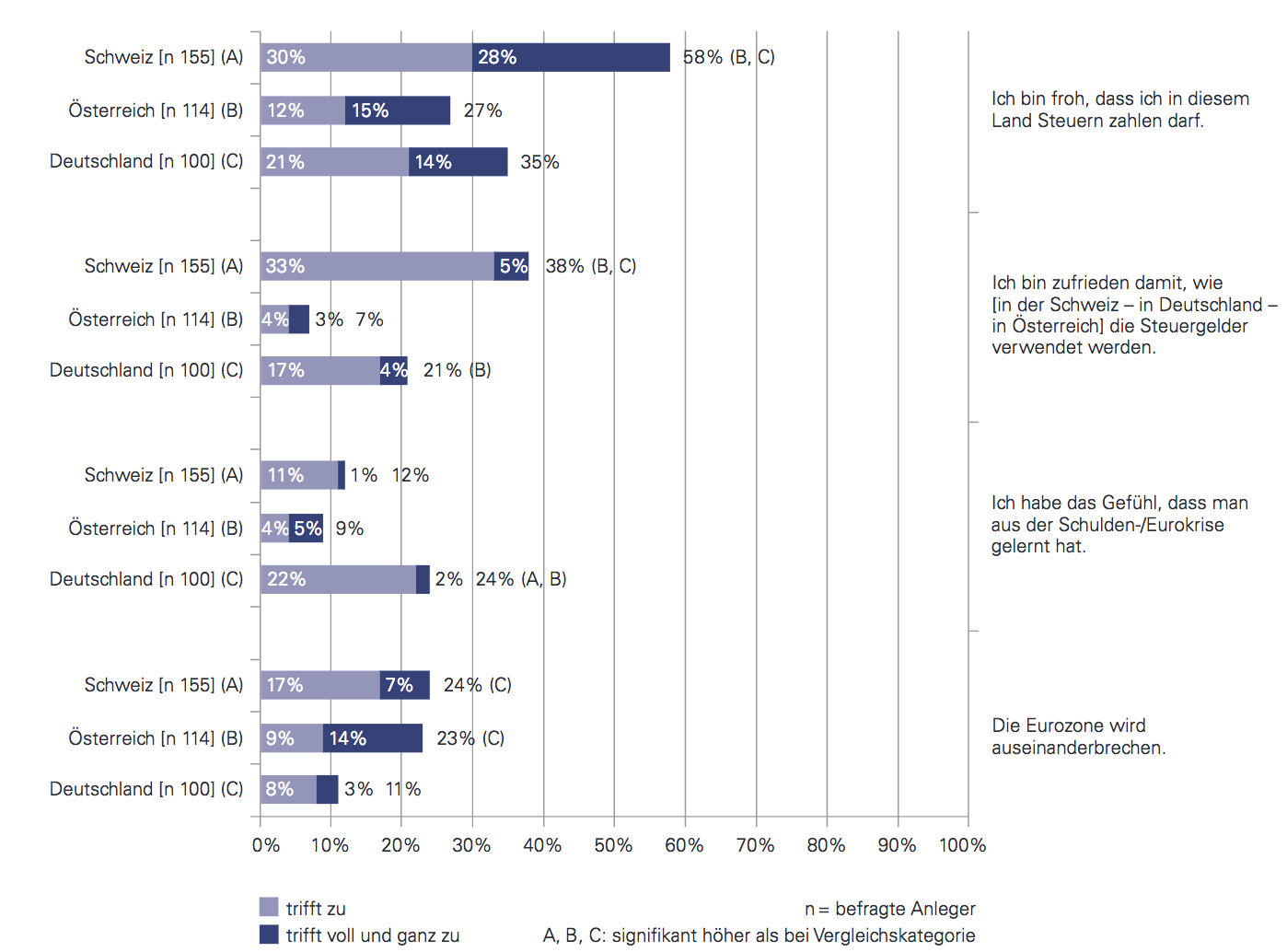
Also sobering are the statements of respondents regarding the debt and euro crises. Only 12 percent of the Swiss feel that lessons have been learned from these crises, and in Austria, only 9 percent share this view. Somewhat more optimistic are the German respondents at 24 percent.
Notwithstanding these views, the majority of the study participants do not expect the eurozone to break up: only 24 percent of Swiss believe there will be an end to the eurozone and just 23 percent of Austrians and 11 percent of Germans are of this view.
Lack of Trust in Austria
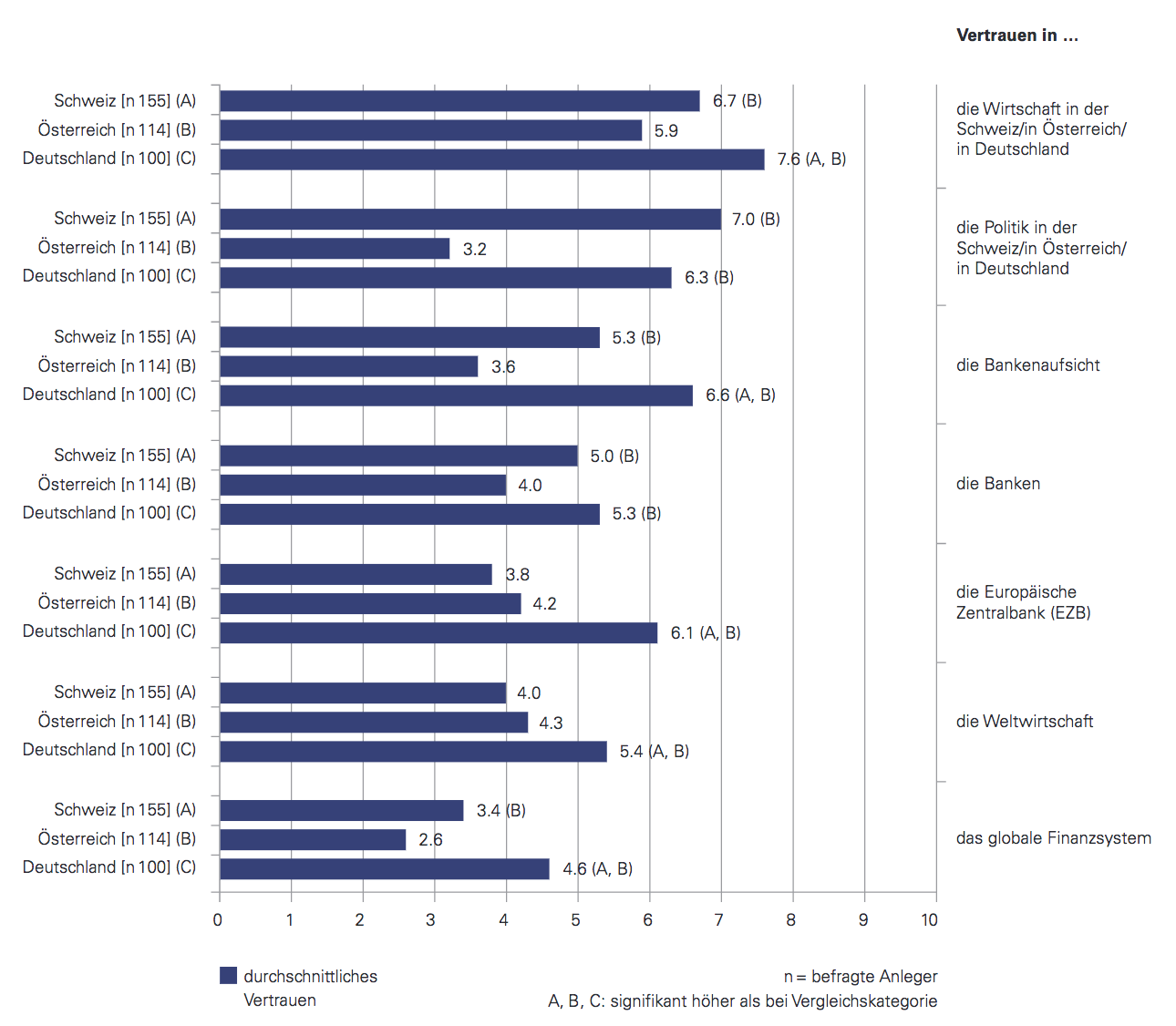
Overall, the Austrians indicate a particularly high level of skepticism and mistrust. This is also confirmed by the level of trust in systems and organizations. While the Swiss and Germans place a high level of trust in their respective political systems – on a scale of 0 to 10, these receive an average score of 7 and 6.3 respectively – the Austrians downright punish their government with an average score of 3.2.
The situation looks somewhat better in terms of the trust placed in the domestic economy, where the Austrians give a score of 5.9. The scores for Switzerland and Germany are also significantly higher in this area at 6.7 and 7.6. The global economy, on the other hand, scored lower.
With an average score of 5.4, the Germans report the highest level of trust in the global economy, while the scores of the Swiss (4.0) and the Austrians (4.3), are significantly lower.
Austrian Skepticism and German Optimism
The Austrians are also significantly more pessimistic than their neighbors when it comes to the world of finance. They place substantially less trust in the global financial system, as well as in the banks in general and in banking supervision than do the Swiss or Germans.
The latter view the world of finance with significantly more optimism, and have a particularly high level of trust in banking supervision and the global financial system. They also place a quite remarkable level of trust in in the European Central Bank, while the Swiss and Austrians are skeptical about the institution.
The results of last year’s LGT Private Banking Report provide interesting information on the views of wealthy private individuals in Germany, Austria and Switzerland. Every two years, LGT commissions a broad and scientifically-based representative study with the aim of gaining important insights into the investment behavior and the attitudes of private banking clients.
One of the primary reasons for this is the conviction that a financial institution can only serve and advise its clients optimally if it knows and understands their expectations, needs and objectives. Last year’s report also included a number of general questions about financial matters and the trust placed in institutions.
The LGT Private Banking Report 2016 was compiled by Professor Teodoro D. Cocca of the Johannes Kepler Universtität in Linz, and is based on a representative survey of 370 private banking clients in German-speaking countries. The complete study (German only) can be downloaded at this link or ordered free of charge.