
Audi’s Comeback Hinges on a New Generation of Models
It is a grey, rainy morning in Ingolstadt. At first glance, the city is inseparably linked to a single carmaker: Audi employs around 40,000 people here.
At the Audi Museum, where the press conference takes place, the mood appears noticeably brighter than just a week earlier at parent company Volkswagen in Wolfsburg, which had presented a rather sobering set of results.
Numbers and a plan
On stage are CEO Gernot Döllner and CFO Jürgen Rittersberger. They present the figures for the 2025 financial year – and, above all, a plan.
The numbers themselves paint a picture of stabilization: revenue rises to 65.5 billion euros, operating profit declines by around half a billion to 3.4 billion euros, while the margin drops from 6.0 to 5.1 percent.
Costly special effects
External and one-off factors weigh on profitability: most notably U.S. tariffs of around 1.2 billion euros, a restructuring program including job cuts, as well as provisions for CO₂ regulation. The fact that a «mid three-digit million euro amount» has been set aside for potential CO₂ penalties in Europe shows that uncertainties remain.
At the same time, the group’s profitability continues to rely heavily on its specialty brands: Lamborghini achieved an operating margin of 24 percent in 2025 on revenues of 3.2 billion euros, while Bentley reached 8.3 percent on revenues of 2.6 billion euros. Together with the – albeit smaller – contributions from Ducati, they play a key role in supporting the comparatively modest margins of Audi’s core brand.
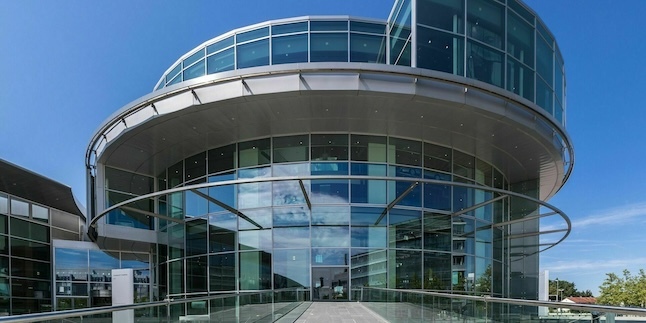
Audi Museum Mobile in Ingolstadt. (Image: Audi)
Mission Vorsprung: Roadmap to 2030
«2025 was a year in which Audi took bold steps», says Döllner. Indeed, much within the group currently points to a repositioning – both strategically and operationally. Internally, this is framed under the programmatic title «Mission Vorsprung». The goal: a leaner, faster, and more profitable Audi by 2030.
The path is ambitious. Audi aims to bring its operating margin back into the double-digit range in the medium term while significantly reducing complexity. Numerous internal committees and management layers are set to be eliminated.
Model offensive
At the center of this effort is one of the largest product offensives in the company’s history: Audi has launched more than 20 new models in 2024 and 2025 alone. The portfolio is now considered one of the youngest in the competitive landscape.
And the pace remains high. As early as February, Audi announced the new RS 5 Avant, which has been widely praised by industry experts. At the media conference, the company unveiled two further innovations for this year, representing opposite ends of its product spectrum.
New models: Audi A2 e-tron, Audi Q9
At the lower end of the portfolio, Audi positions the new A2 e-tron – a fully electric compact model aimed at urban drivers, consciously referencing the iconic A2. The car stands for «electric mobility that convinces in everyday use», according to Döllner. It is designed to appeal to a younger, urban customer base and lower the entry barrier to the brand.
At the other end, the Q9 is set to launch later this year. It is a large SUV, tailored primarily to the U.S. market. It is intended to define the top end of the portfolio and strengthen Audi’s position in one of the most profitable segments.
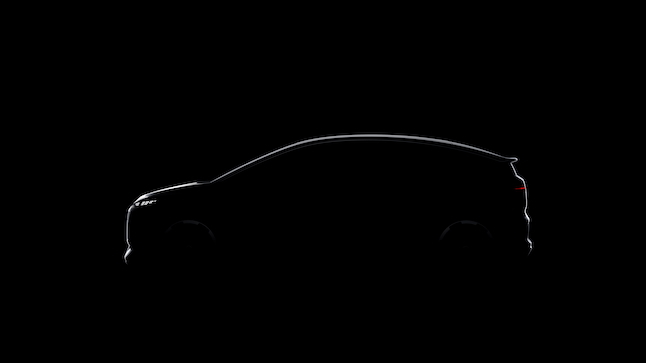
Silhouette of the Audi A2 e-tron. (Image: Audi)
What about the A8?
Despite all this momentum, a gap remains in the product portfolio. This year, the current generation of the A8 luxury sedan is being phased out in Europe. Döllner acknowledged that such a gap is painful, while also explaining how it came about: originally, a fully electric model was intended to replace the A8, but demand for this drivetrain in the luxury segment has proven significantly weaker than expected.
Until Audi presents a successor – reportedly around 2030 – the new Q9 is set to fill the gap. With six «Captain Chairs» – individual rear seats, generous space concepts, and a lounge-like feel – it is particularly well suited as a chauffeur-driven vehicle.
A U.S. factory on the horizon?
Audi is aligning its strategy clearly along its three core markets: Europe, the United States, and China.
In the U.S., the company is exploring greater localization, potentially including its own production facilities. However, Döllner emphasized that decisions on new plants are taken at the highest level in Wolfsburg.
Two-brand strategy in China
In China, Audi is pursuing a dual-track strategy with its partners FAW and SAIC, alongside a new sub-brand featuring the spelled-out «Audi» name instead of the four rings. This approach is intended to target tech-savvy customers and accelerate development speed.
In Europe, pressure remains high – regulatory and technological – and increasingly driven by competition from Chinese manufacturers entering the market with speed and aggressive pricing.
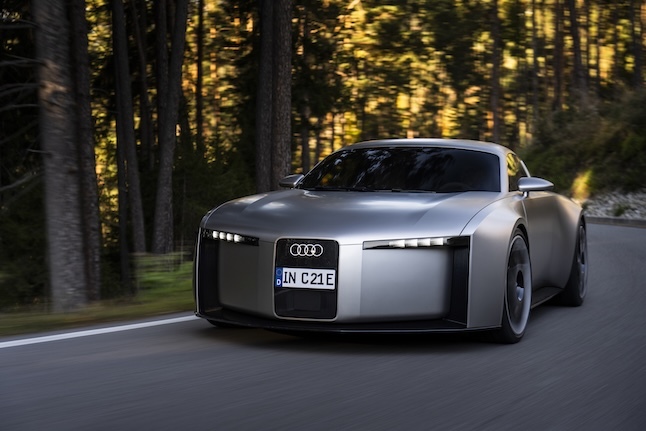
Concept C: Audi’s vision for the future. (Image: Audi)
Internal streamlining
Beyond products, significant changes are also underway within the company. Audi is reducing complexity, streamlining processes, and seeking to drastically shorten decision-making paths.
Overall, the company presents itself in transition. Much is in motion, some elements remain unfinished – but the direction is clear.
Audi’s vision of the future
From a Swiss perspective, the product offensive is also likely to resonate: with the RS5 and Q9, Audi is bringing exactly the type of vehicles to market that reliably generate demand in the premium segment. At the same time, the A2 e-tron introduces an accessible entry point into electric mobility.
How far Audi’s transformation will go should become clearer as early as next year. That is when the radically modern «Concept C» is set to enter series production. It will be built at the Böllinger Höfe facility, where the brand’s flagship models – including the A8 and the Audi RS e-tron GT – are currently produced. Döllner describes it as a «visualized target picture» that anticipates the future design and brand identity across the entire model range.