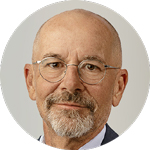
The Goals of the New Raiffeisen CEO
The former LLB chief presented the «encouraging» results for the 2025 financial year at the Circle. At Zurich Airport, the Raiffeisen Group also serves larger corporate clients, while traditional SME loans are granted on a decentralized basis, Gabriel Brenna said in response to a journalist’s question. The bank had grown disproportionately in the corporate client business, even more strongly than in private banking, the new CEO explained.
«Around one third of all SMEs in Switzerland are already Raiffeisen clients. The corporate business generates around 20 percent of operating income, and we still see considerable potential here,» said the engineer and former McKinsey consultant.
Many New Depots
The development in new money was also encouraging. Client deposits increased by 5 percent to a total of 226 billion francs, with growth broadly supported across regions. A large portion of the inflow of new money into custody accounts is being invested in discretionary asset management mandates. More than a quarter of the total investment volume is now managed through such mandates. Through fund savings plans and similar products, Raiffeisen opened 56,000 new custody accounts last year, according to CFO Christian Poerschke.
«Almost every second private individual has a banking relationship with us. In investments, however, the share is significantly lower, and accordingly we see good opportunities here as well,» Brenna explained.
Increasing Share of Saron Mortgages
In the important mortgage business, the market share increased slightly again to 18,4 percent, the bank said during the presentation of the results. Given the low interest rates, the trend towards Saron mortgages continues. Year on year, the share of Saron mortgages rose from 23 to 28 percent.
Net interest income fell by just over 7 percent to 2,6 billion francs, compared with 3,0 billion francs in the record year of 2023. The bottom line was a net profit of 1,0 billion francs. This is almost 10 percent less than in the previous year but, according to CFO Poerschke, still the fourth-best result in the bank’s 125-year history. «Given the difficult environment of zero interest rates, this is certainly a good result,» Brenna commented on the outcome.
250 Additional Jobs
At the same time, the cost-income ratio has increased over the past two years from 51,9 to 59,4 percent. This key metric must fall again, Brenna said in response to a question. This should primarily be achieved through higher revenues.
Among other measures, Raiffeisen created 252 additional full-time positions last year. «Not at the headquarters in St. Gallen, but locally,» Brenna emphasized. «The starting position is excellent. Now we must make better use of the potential, particularly in the investment business,» the new chief executive added.
Loss on Leonteq
Raiffeisen was less pleased with its stake in Leonteq. «At the annual general meeting we had demanded a special dividend, but we were unsuccessful,» CFO Poerschke explained. After the shareholder agreement expired, the bank reacted and significantly reduced its stake in «short negotiations». Earlier this month, the cooperative bank announced that it had sold a 22,7 percent stake to a company owned by investor Rainer-Marc Frey. Raiffeisen now holds a 7,0 percent stake in Leonteq. This resulted in a write-down of 41,2 million francs. The shares of the derivatives specialist will now be valued at market prices. «This means that further write-downs could occur in 2026, although the impact on the result is likely to be marginal,» the CFO explained.
Search for a New Chairman
For Switzerland’s second-largest banking group, the current year also marks the start of a «new strategic period». For chairman Thomas A. Müller, this is «the right time to hand over the position to new hands», the bank announced last September. A successor is expected to be presented by the annual general meeting in June. At the same time, according to Brenna, «the joint search for the right strategy» is under way. The key cornerstones should be defined by summer so that the board of directors can deal directly with the proposals, Brenna explained.