
Jauch’s Selection: A Darjeeling for Every Day
More than a year ago, I stopped drinking coffee. Not for health reasons. Our coffee machine had simply given up the ghost — and we were too lazy to buy a new one.
While my partner remained perfectly content with coffee brewed in a Bialetti, I took the opportunity to see whether focusing entirely on tea could provide everything my body needed. I used to drink up to seven cups of coffee a day. That meant a fair amount of caffeine to replace.
Classic Coffee Withdrawal
The effects showed up promptly: five days of headaches after quitting coffee — classic withdrawal symptoms. Not dramatic, just uncomfortable.
I have enjoyed tea for years. At home, around 50 varieties now line the shelves. What once were mostly herbal and fruit blends have gradually given way to black and green teas. These days, I drink about two liters of tea daily. Rarely is one cup the same as the one before.
No Afternoon Slump
I noticed that a cup of black tea after lunch carries me through the afternoon without the familiar crash I once experienced with coffee.
But let us turn to the core of today’s column. In black tea, I am increasingly drawn to lighter, more precise styles. As spring approaches, I appreciate qualities that emphasize freshness, clarity, and a certain natural ease in the cup rather than density and weight.
My Relationship with Darjeeling
My relationship with Darjeeling began years ago by chance. A neighbor originally from India brought back a high-quality tea from a visit to his hometown. Unfortunately, that particular Darjeeling cannot be purchased in Switzerland.
The amusing part is that Darjeeling is often described as the champagne of black teas — and my fondness for champagne requires no further explanation here. Since then, Darjeeling has held a firm place in my daily routine, not least because this origin demonstrates how much tension and finesse black tea can offer.
Discovering a First Flush
A few weeks ago, I visited the Bisang family at London Tea in Basel. After our conversation, they kindly gave me several teas to taste. The selection, however, did not fully satisfy me. That evening, I worked my way through their comprehensive online catalog and ordered several promising varieties.
Among them was the Top First Flush Darjeeling 2025 — a tea from which I now drink at least one cup daily.
From the Slopes of the Himalayas
This is the first harvest of the year from Darjeeling, specifically from the renowned Tukdah tea garden on the slopes of the Himalayas. Tea is harvested several times annually. In Darjeeling, four harvest periods are distinguished from March to November. The First Flush — the first picking after winter dormancy — is particularly sought after.
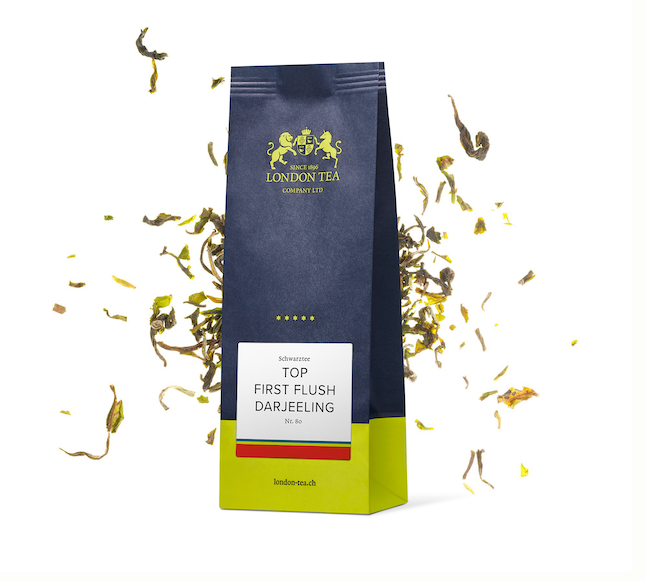
Freshness. A precise line. (Image: courtesy)
In the cup, the Top First Flush 2025 appears bright golden-yellow, clear, and refined. Aromatically, it presents a fresh, precise profile with hints of young blossoms and a delicate muscat note. The defining element, however, is the texture: light, elegant, and marked by the finesse that distinguishes high-quality First Flush Darjeelings.
Balance and Freshness
What appeals to me are the subtle nuances. Many products today are marketed through intensity — more aroma, more power, more impact. This Darjeeling takes a different path. It thrives on balance, freshness, and stylistic restraint that feels deliberate and carefully crafted rather than arbitrary.
That, for me, is its quality. This tea requires no special occasion. It works in everyday life precisely because it is so clear and finely structured. The fact that I have drunk it daily since purchasing it is more than habit; it signals a product that not only impresses at first sip but convinces over time.
Not All Darjeeling Is Equal
Darjeeling is often cited as a prestigious origin without closer examination of what the region can truly produce in strong years and with careful selection. A First Flush like this demonstrates what matters: freshness, contour, elegance, and an aromatic interplay built on precision rather than sheer volume.
My first recommendation is simple: steep this tea in boiling water for three minutes.
Champagne Next Time
This First Flush Darjeeling pairs particularly well with light pastries, delicate butter cakes, madeleines, or understated brunch components. Anything that complements its floral, fresh, and light style without overpowering it works beautifully.
But do not worry — I will not be taking you to a cake shop next time, though I do appreciate good cake. Champagne will soon return to the program.
«Jauch entdeckt»: The biweekly finews column in which Peter Jauch precisely classifies champagne and other beverages for connoisseurs and supplements them with practical advice.