
Housing Market: Relief Looks Different
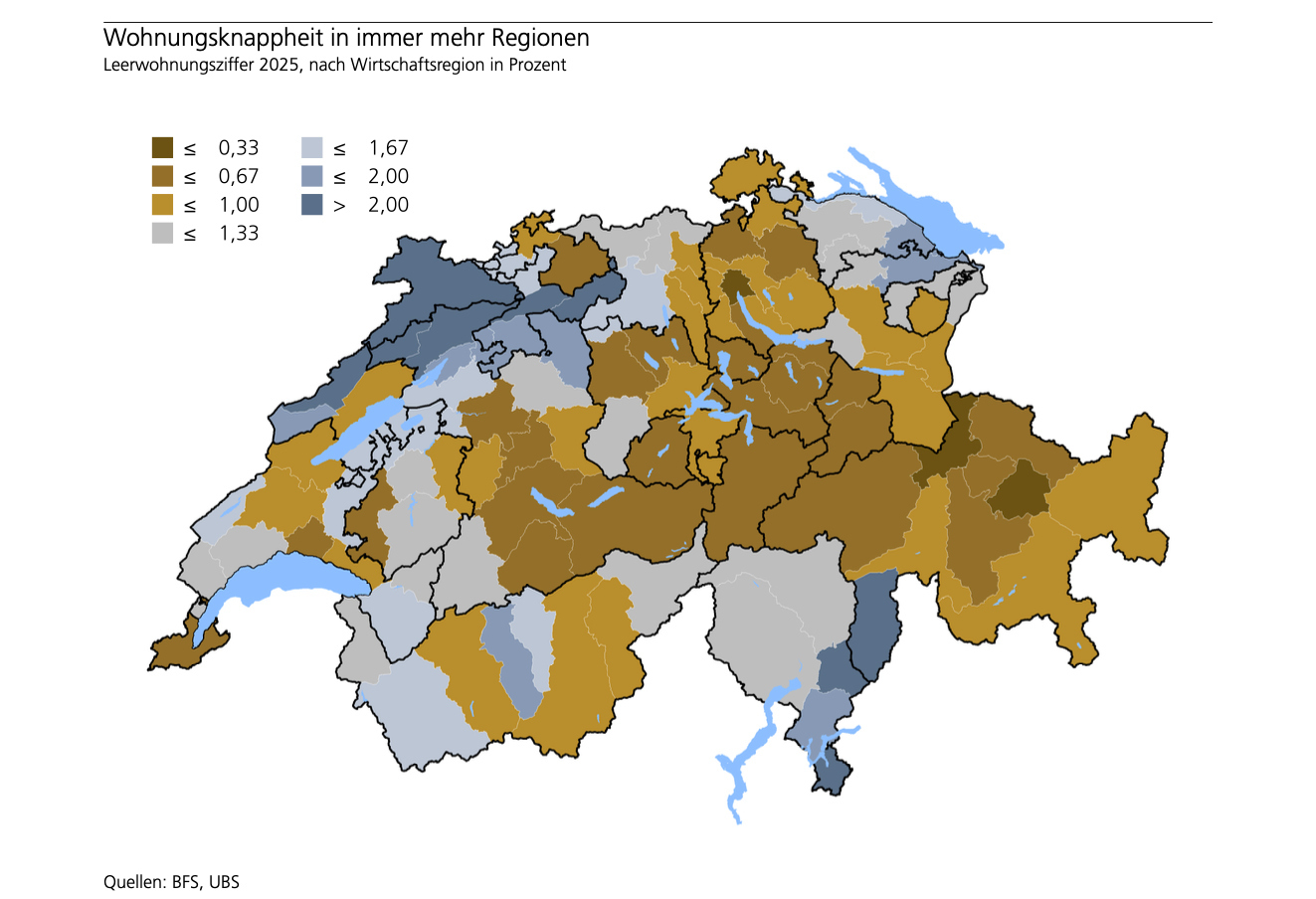
In 2025, the vacancy rate fell to 1,00 percent from 1,08 percent previously, reaching its lowest level in 12 years. This was reported by UBS in its latest study on the Swiss housing market, citing data from the Federal Statistical Office (FSO). As of June 1, 2025, 48'455 apartments stood vacant across Switzerland — 3'500 fewer than a year earlier.
The decline was somewhat sharper than in the previous year and affected both rental apartments and owner-occupied housing.
New housing supply continues to lag behind demand — despite slower population growth. Between June 1, 2024, and June 1, 2025, net immigration to Switzerland fell by 13'000 people compared with the previous period.
Although a turnaround in building permits has been evident since mid-2024, this has not yet translated into a higher number of completed apartments. In 2024, the housing stock grew by just 0,95 percent according to the FSO — the lowest rate in more than 20 years, the experts emphasize.
Rental Apartments at Historic Lows
The vacancy rate for rental apartments has now fallen to a historically low 1,4 percent. For owner-occupied homes, it stands at an even lower 0,5 percent.
UBS cites low interest rates as a key factor. «Those who can overcome the high affordability hurdles benefit from significantly lower usage costs when buying a home compared with renting. The average cost advantage is around 23 percent.» This has fueled rising demand. The number of active search subscriptions for single-family homes and condominiums on property platforms has increased by 11 percent within one year.
Small and Medium-Sized Apartments in Highest Demand
A striking development has been the difference by apartment size. The number of vacant small and medium-sized apartments fell by around 8 percent each year-on-year. In contrast, vacancies for larger apartments with five or more rooms declined by only 1 percent. The only exception was very large owner-occupied homes with six or more rooms, where vacancies increased by 6 percent.
According to the authors, this is because households more often compromise on size when moving. Couples moving in together or young adults moving out of their parents’ homes, in turn, drive strong demand for medium-sized apartments.
The cantons with the lowest vacancy rates are Geneva (0,34 percent), Zug (0,42 percent), and Zurich (0,48 percent).
Against the trend, vacancy rates rose in four out of the five major urban centers compared with the previous year. Geneva was the only exception. The cities are losing residents to the surrounding areas due to rent differentials. At the same time, immigration from abroad remains strong.
Outlook: Vacancy Rate to Decline Further
Looking ahead, UBS expects the vacancy rate to fall further in the coming months, albeit at a slower pace. For next year, a vacancy rate of 0,95 percent is projected.
Slower employment growth is expected to dampen immigration, while the rising number of building permits will not translate into additional supply before the end of next year at the earliest.
Shortage Continues to Drive Up Rents
The housing shortage continues to push asking rents higher. Between 2002 and 2014, the vacancy rate consistently hovered around 1 percent, while asking rents rose by an average of 3 percent per year.
«By the end of 2026, we expect asking rents to increase by between 3 and 4 percent. However, if the economy weakens significantly, rent growth is likely to slow noticeably.»