
Antoine Martin: Swiss Credit Market Holds Up Amid Turbulence
«It is remarkable how well the Swiss banking sector has adapted to such a massive shock,» Antoine Martin told the Branchentalk Banken event.
The most visible change came with UBS’s takeover of Credit Suisse. «Switzerland now has only one globally active bank, and clients have forged new relationships,» Martin noted. Some of these moves were driven by diversification, others by tougher lending conditions for former CS clients. Overall, UBS/CS loan volumes have fallen sharply.
Domestic banks step in
The decline at the big banks has been offset by growth among domestic institutions. Liquidity surpluses in the sector remain comfortably above capital surpluses. «Aggregated, the Swiss banking system has been able to meet demand at all times,» Martin said.
Interest rate moves also played a role. Lending growth slowed during the SNB’s tightening phase, before rates were cut back to zero. The finalization of Basel III rules has further reshaped the market, especially through tougher risk weightings for investment property loans.
Selective lending on the rise
Higher financing costs also stem from global forces. Rising sovereign debt in major economies has pushed up spreads since 2023, spilling over into Switzerland. «It is still unclear how international and domestic factors will interact,» Martin cautioned.
In the panel discussion that followed, Bank WIR CEO Matthias Pfeifer and Clientis CFO Christian Egli pointed to a more selective market.
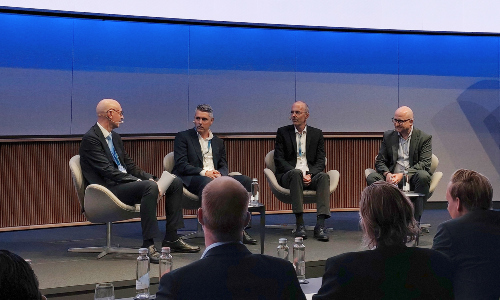
Antoine Martin, Matthias Pfeifer, Christian Egli and Dominik Buholzer (Image: finews.com)
«Banks have to use capital more effectively. Growth alone is no longer enough — it has to be sustainable,» Egli stressed.
Pfeifer added that long maturities in real estate make adjustment slow. «We have never seen so many requests — and we have to turn many away.» Egli criticized that overly detailed regulation drives up costs.
Martin countered that regulation was not meant to stifle growth, but to curb unnecessary risks and ensure sustainable expansion.
The discussion was moderated by finews.ch editor-in-chief Dominik Buholzer.