
How Switzerland Lost a 900,000 Bitcoin Bank
Founded in Silicon Valley by Argentinian entrepreneur Wences Casares, Xapo started in 2013 as a bitcoin vault service designed to make crypto safer for early adopters. Casares, driven by a belief in Bitcoin’s potential to stabilize global economies, set up ultra-secure cold storage vaults — even using a former army fortress in the Swiss Alps.
By 2015, Xapo shifted its headquarters to Switzerland’s Crypto Valley in Zug, hoping to secure a banking license, and also hired former UBS and Barclays banker Olga Feldmeier.
«Felt Like Going Back in Time»
However, the Swiss dream soon collided with regulatory reality. «Switzerland was promoting itself as crypto-friendly, but the reality was different when dealing with regulators,» Xapo Bank’s CEO Seamus Rocca told finews.com in an exclusive interview.
Swiss authorities required all servers to be physically on Swiss soil and demanded a local-heavy board structure — «nine directors, seven in Switzerland,» Rocca recalled. «The need for onsite servers felt like going back in time,» he said, emphasizing that 99 percent of tech firms rely on global cloud setups.
Retreat from Switzerland and the U.S.
Meanwhile, the U.S. became increasingly hostile to crypto, with complex licensing pushing Xapo to reconsider its global strategy. In 2019, Xapo sold its institutional custody business to Coinbase, streamlined operations, and pulled back from both Switzerland and the U.S. «We decided to simplify our operational, regulatory, legal infrastructure,» Rocca explained.
The company did not want to expose its customers to the increasing regulatory costs in the U.S. (Coinbase later charged the high fees Xapo hoped to avoid, Rocca mused, «so maybe we should have kept it...»).
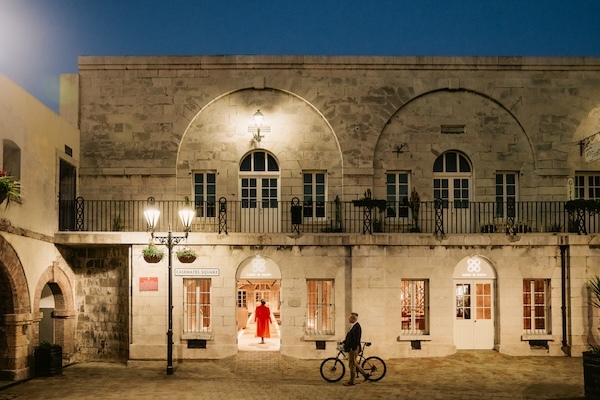
From Silicon Valley to Crypto Valley to Rock: Xapo Bank's Headquarters in Gibraltar. (Image: Courtesy)
Pivot to Gibraltar
With its U.S. and Swiss plans frustrated, Xapo chose to hit reset on friendlier soil. In 2021, Xapo pivoted to Gibraltar, a small but forward-thinking jurisdiction that had already welcomed blockchain businesses. Rocca described the move as «making Gibraltar like a new Switzerland: private banking in the realm of crypto.»
Unlike Swiss regulators, Gibraltar allowed Xapo to maintain a global, remote-first structure and embrace cloud infrastructure — key for a fintech-driven bank. «At the end of the day, we’re more tech than fin,» Rocca said. «You’re in an environment that’s not technology-friendly [in Switzerland], so we needed a jurisdiction that fits us.»
Over 200 Employees
Today, Xapo Bank holds both a full banking license and a distributed ledger technology license as a virtual asset service provider (VASP) in Gibraltar. The bank serves clients worldwide, but does not serve U.S. clients due to regulatory caution.
With about 200 employees, Xapo is one of the most significant crypto-based banks globally. This is comparable to its Swiss peers Sygnum and Amina Bank (formerly SEBA), which received their banking licenses in 2019.
Focus on B2C
However, Xapo’s business model stands apart: while Sygnum and Amina target institutional and B2B clients, Xapo is 100 percent retail-focused, modeled after a traditional private bank but aimed at crypto holders. Clients must pay a $1,000 onboarding fee — deliberately used as a filter. «If that fee feels expensive, you probably don’t have enough bitcoin,» Rocca said.
What those members get is a suite of banking products that mirror traditional private banking, but built around Bitcoin. Xapo offers five key services: deposit accounts, payment cards, savings, loans, and investment access — in both fiat and crypto form.
Crypto-Based Traditional Private Banking
In practice, this means a Xapo client can hold a U.S. dollar account with an International Bank Account Number (IBAN) for wire transfers, earn interest on dollar deposits, and use a debit card worldwide. At the same time, clients can securely store their bitcoins in Xapo’s vault, earn yield on their holdings, and even spend or borrow against their bitcoin — all through one integrated mobile app.
Rocca describes it as «whatever you can do with your dollar money, you can do with Bitcoin» at Xapo. For example, the debit card is linked to USD accounts but can seamlessly debit a client’s bitcoin balance. «Every time you use your card on Bitcoin, we are buying the Bitcoin off you, selling it into dollars, and settling with the merchant in dollars,» Rocca explained. «So the merchant doesn’t see Bitcoin… but you’ve spent your Bitcoin from your account.»
New S&P 500 Product Coming
Similarly, Xapo offers a Bitcoin savings account where users can deposit BTC and earn interest. Behind the scenes, it functions as a fund that generates yield, but to customers it appears as a straightforward interest-bearing crypto account. On the lending side, Xapo provides bitcoin-backed loans: clients can post BTC as collateral and borrow cash against it. The bitcoin stays in Xapo’s vault and is only sold if the borrower fails to maintain collateral. «It’s a secured loan… whatever you have in your vault in the Swiss mountains, you are borrowing against those bitcoin as collateral,» said Rocca.
To tie it all together, Xapo has integrated the Bitcoin Lightning Network for faster transactions and plans to roll out new features, such as allowing members to invest in stock indices using bitcoin as funding currency. «The new product we’re coming up with now: you can already buy stocks in the S&P 500 with dollars. We’re going to allow you to do that with Bitcoin,» Rocca revealed.
«We’re Not in the Mass Market»
All of these offerings are delivered through a sleek digital interface — an app that feels like a fintech neobank, even as Xapo operates with the prudence of a private bank behind the scenes. «We try and recreate those five [banking] products on the Bitcoin side in a way that appears seamless,» Rocca said. Legally, dollars are held as bank deposits and bitcoin as custodial assets, but Xapo’s engineering makes it feel unified to the user.
Xapo’s client base is broad: Latin America (notably Argentina, Chile, Brazil), the UK, parts of Europe, South Africa, and Asia. Rocca describes Bitcoin as «digital gold,» a tool for protecting savings in unstable economies — a lifeline rather than a speculative asset. «We prefer a smaller number of good-quality customers,» Rocca noted. «We’re not in the mass market; we’re in the premium banking business, pretty much like a Swiss private bank.»
AuM Peak at 900,000 Bitcoins
In terms of client assets, Xapo’s scale is roughly comparable to Sygnum and Amina, which declared assets under management (AuM) of 3.5 billion francs (Amina) and 4.5 billion francs (Sygnum) as of end-2024. Rocca declined to give a precise figure for Xapo but indicated that before selling its institutional custody business, its assets had peaked at around 900,000 bitcoins — close to 90 billion francs at today’s prices. Xapo has also achieved profitability, posting its first profit in 2023. «Our goal is to remain profitable. That’s the challenge,» Rocca said.
While Sygnum and — to a smaller extent — Amina are expanding institutional partnerships, Xapo’s bet is on high-net-worth retail clients, particularly in markets where trust in local banking is low.
First Profit in 2023
Xapo Bank’s odyssey underscores how critical regulatory arbitrage has been in crypto finance. Gibraltar’s agility in embracing crypto contrasts sharply with the stricter stance Xapo encountered in Switzerland and the U.S.
«We simplified all of our operational, regulatory, legal infrastructure by saying, ‹Let’s shut down Switzerland, shut down the U.S., and make Gibraltar our new base,›» Rocca recounted.
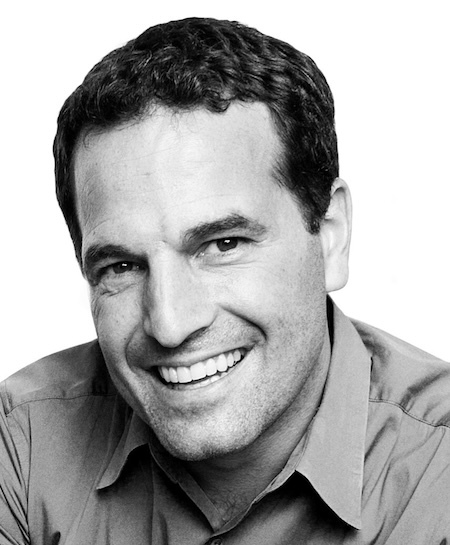
Early Vision: Xapo Founder Wences Casares. (Image: Courtesy)
The Great Regulatory Schism
Meanwhile, the global regulatory climate for crypto banks remains in flux — something Rocca watches closely. In a twist, he argues that the United States is now turning more crypto-friendly just as Europe grows more cautious. «Interestingly, now it’s the opposite in Europe and the UK. My personal view is the U.S. is very crypto positive… whilst the UK and Europe have gone very, very negative,» Rocca said.
He points to recent U.S. moves suggesting openness in stark contrast to Europe’s tightening approach. «We never quite seem to strike that balance where the main economic superpowers are all aligned,» he said. «The U.S. was practically killing the industry by killing all the [crypto] banks, and now all of a sudden they’re super positive, while the UK and Europe are going in reverse.»
Looking at a U.S. Presence
This uneven landscape explains why Xapo still doesn’t onboard American clients — but it is re-evaluating. Rocca revealed that Xapo is «looking at a U.S. presence» again, doing research on whether it makes sense to return to the States if the environment truly improves. That could mean seeking access to U.S. dollar payment networks or even serving U.S. customers eventually, though no decisions have been made.
One thing Xapo won’t abandon is its Swiss bunker: a nuclear-blast-proof facility carved into granite, with six-ton steel doors and biometric scanners guarding its servers. Even as the bank now runs from Gibraltar, it continues to leverage the legendary security of Switzerland for cold storage. Xapo has upgraded its custody tech from classic «deep cold» storage to multi-party computation (MPC) — a way to secure crypto keys by splitting them into shards — but it still houses one of its key server nodes in a secret alpine vault for maximal protection.
Old World Security, Fintech Convenience
Combining such Old World security with modern fintech convenience is Xapo’s key value proposition: clients get both peace of mind and cutting-edge functionality. As for the crypto market’s future, Rocca is bullish but battle-hardened. He has witnessed multiple boom-and-bust cycles since Bitcoin’s early days.
Right now, «if you’re in the Bitcoin space, we’re riding high,» he said of the current upswing. Bitcoin’s price has climbed significantly in the past year, fueling optimism across the industry. But «we know it’s all fairly cyclical,» Rocca cautioned — winter will come again. «It’s a matter of when, not if,» he said. His best guess: the rally could run through 2025, especially if macroeconomic or geopolitical news stays positive, but by 2026 the cycle may lose steam.
Crypto Winter in 2026?
«At some point next year, this cycle starts to lose steam and we go into a crypto winter — maybe at [Bitcoin] 90,000,» Rocca said, noting that even a pullback from $110,000 to $90,000 would feel like a winter for those who bought at the top.
For long-term believers like him, of course, «it’s all relative… Bitcoin has always been cyclical. Why would it be different now?» In the meantime, Xapo Bank is «riding the wave» of the current market.