
Competitiveness: How Switzerland Scores Internationally
Switzerland has once again moved to the top of the «World Competitiveness Ranking» published by the Lausanne Institute for Management Development (IMD). In the two previous years, it was ranked second (2024) and third (2023).
The city states of Singapore and Hong Kong follow in second and third place this year. The top 10 from Europe also includes Denmark (4th place), Ireland (7th place), Sweden (8th place) and the Netherlands (10th place). Taiwan (6th place) from Asia and the United Arab Emirates (5th place) and Qatar (9th place) from the Middle East make it into the top group.
The USA is ranked 13th, China 16th and Germany 19th.
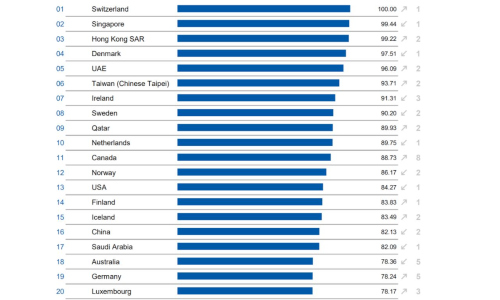
(Graphic: IMD)
The USA's drop of four places compared to the previous year is explained by polarization and fragmentation, which was rated negatively by the executives surveyed. Qatar's rise by three places is explained by labor market reforms and a strong financial infrastructure. Ireland and the Netherlands lost some ground due to falling productivity and declining investment.
Not the Leader in Economic Competitiveness
In the assessment for Switzerland, the top positions in the criteria infrastructure and political environment stand out. However, the results for economic competitiveness are worse. Switzerland is ranked 6th for business efficiency and only 13th for macroeconomic competitiveness.
The survey results for managers are also revealing. In addition to the political environment and good infrastructure, the qualified workforce and high standards of education, a strong R&D culture and the competitive tax system are mentioned here. The survey delivers low results for the items costs, the question of an «open and positive attitude» and the quality of company management.
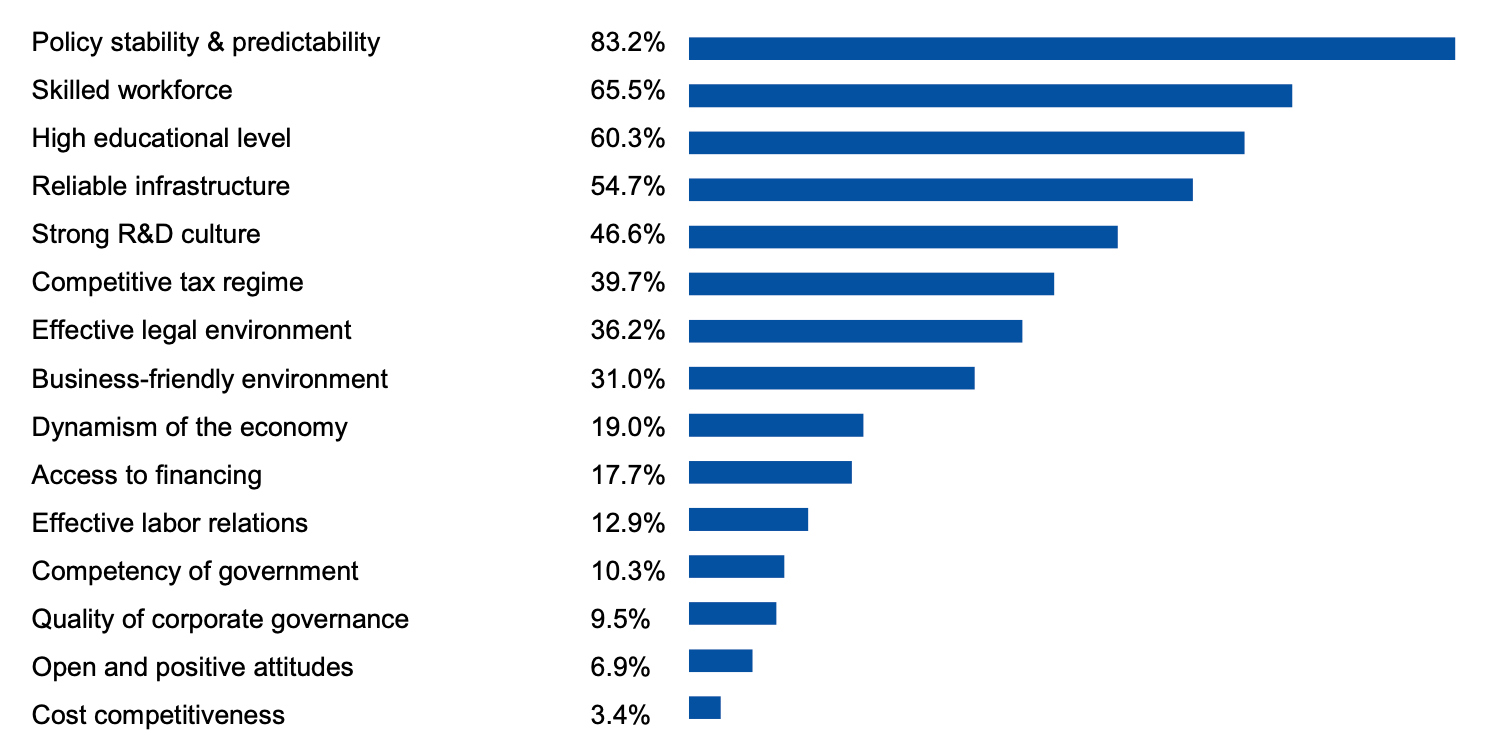
(Graphic: IMD)
However, Switzerland also faces challenges looking to the future: Sustainable GDP growth against the backdrop of protectionist tendencies and a weakening of the multilateral trading system is cited as a factor. In addition, there is a need to strengthen and diversify access to foreign markets, ensure efficient and business-friendly regulation, strengthen competition in domestic sectors and improve the sustainability of public finances and pension systems.
«Countries that combine institutional strength with inclusive development are able to withstand external shocks without succumbing to internal fragmentation,» is one of the lessons that the authors of the study draw from the results.
Since 1989
The IMD ranking of international location competitiveness has been published annually since 1989. This comparison between countries is based on economic data and insights from a management survey. In the latest edition, over 6,000 decision-makers from around the world were surveyed.
The ranking is an overall score made up of the four disciplines of economic performance, government efficiency, business efficiency and infrastructure. Each category in turn comprises a large number of sub-criteria.