
Chef Paul Stradner: «Our Guests Are Expecting a Touch of Luxury»
Since 2017, Austrian-born Paul Stradner has been the creative force behind the kitchen at the «Villa René Lalique». His culinary style blends French classicism with regional discoveries, earning the restaurant two Michelin stars.
After a lengthy culinary journey through his tasting menu, we met Stradner at the hotel’s bar — a space that embodies the unique Lalique aesthetic, where crystal, light, and design merge into a cultivated atmosphere of French elegance and craftsmanship.
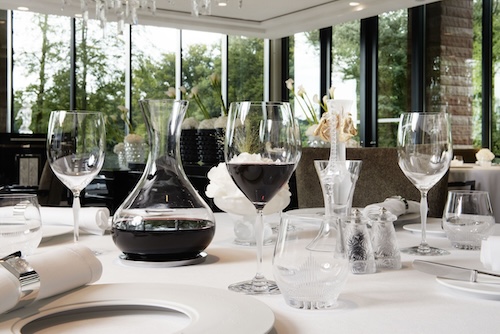
Crystal, light, and design at play: Restaurant «Villa René Lalique» (Image: Gilles Pernet, Courtesy)
The house's standout treasure is its vast wine cellar, overseen by sommelier Romain Iltis. Featuring 2,000 labels, it draws wine lovers from around the world.
Stradner proves to be an engaging and down-to-earth conversationalist — unusually approachable for a chef of his caliber. With Austrian ease and precision, he shares what defines his cuisine, which products excite him, and why luxury and regionality are a perfect match.
Chef Stradner, we sampled your menu… and one surprise stood out: the carp from Sparsbach. Not exactly a staple in two-star kitchens, is it?
True, it’s definitely an unconventional choice for fine dining. But that’s what I find exciting — reinterpreting nearly forgotten ingredients. Carp has deep roots in this region, yet many now think of it as a thing of the past. We use a technique that makes the bones almost unnoticeable and pair it with top-tier ingredients like truffles or caviar. I had my doubts when we first introduced it, but the guests were thrilled. Today, it’s a staple on our menu.
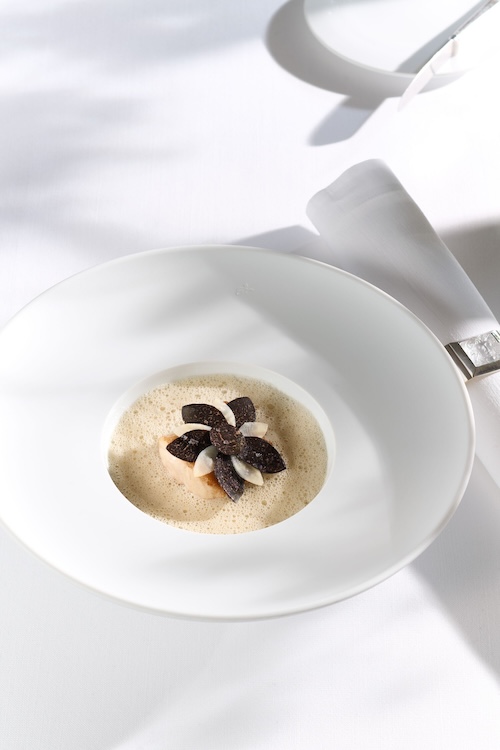
Sparsbach carp reimagined by Paul Stradner (Image: Hirmance Production, Courtesy)
You emphasize regionality — but not dogmatically?
Exactly. We’re guided by local products but don’t restrict ourselves to, say, a 100-kilometer radius. We are a luxury hotel, so you’ll also find caviar and fish like brill on the menu.
«Our biggest find was Cédric Daussmann, a passionate forager who supplies us with wild herbs, mushrooms — even saffron — from Alsace.»
What matters most is finding producers who share our philosophy and deliver exceptional quality. Our most exciting discovery was Cédric Daussmann, a true woodsman and collector who brings us rare regional treasures.
Any other producers worth mentioning?
During the pandemic, we had time to expand our network. We found an excellent lamb farmer in Mietersheim and a game supplier who hunts just ten kilometers from here. That allows us to guarantee that our game comes from the local forests. We also work with a chickpea grower — a true rarity in this region. Our menu reflects that diversity.
How often do you change the menu?
We’ve moved away from fixed seasonal menus. Nature doesn’t follow a strict calendar. Instead, we adapt continuously — when asparagus season ends, tomatoes come in. We swap out one or two dishes each week, around four per month. Some creations, like our snail-filled potato dumplings, remain as signature dishes.
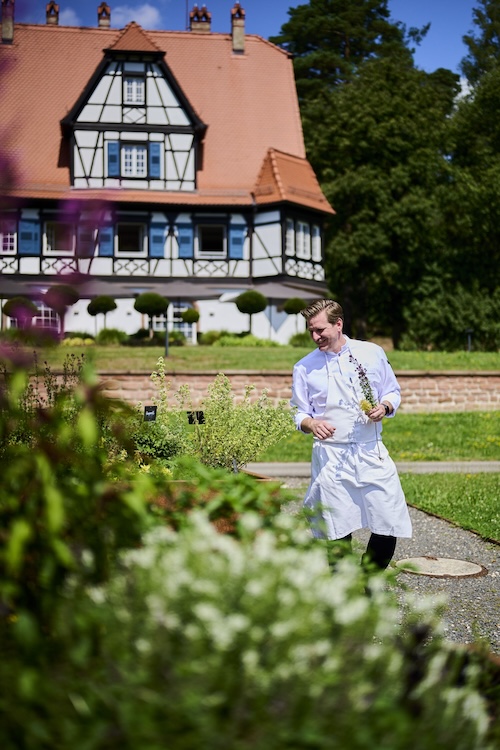
Chef Paul Stradner in the herb garden (Image: Hirmance Production, Courtesy)
You’re originally from Styria. How does that influence your cooking?
It’s a subtle influence. We’re in France, so the base is Alsatian and French classical. But dishes like my snails with horseradish — instead of the usual garlic — are inspired by Austrian recipes. I got the idea from an old Sacher cookbook. I also grew up on a farm, with our own vegetables and livestock. That deep connection to ingredients shaped my understanding of quality and maturation.
|
** 10 Years of «Villa René Lalique» ** May
June
July
September
October
November
|
Many top chefs have made a name for themselves through deconstruction and pushing the technical envelope — presenting something that looks and feels like a raspberry but tastes like oysters.
I think the product itself should always be at the forefront. It was fascinating to see what was technically possible, but if I have an outstanding product, I don’t want to break it down just to reassemble it.
«The current trend toward purity and product quality aligns perfectly with my philosophy.»
I prefer three or four distinct flavor components on the plate over 37. The minimalist trend suits me well.
We noticed your clever use of acidity.
Yes, acidity brings freshness and keeps a long menu exciting. I use it deliberately in the early courses to stimulate the appetite. One example is our onsen egg with a fermented rice vinegar jelly and bonito flakes — a mix of acidity and umami.
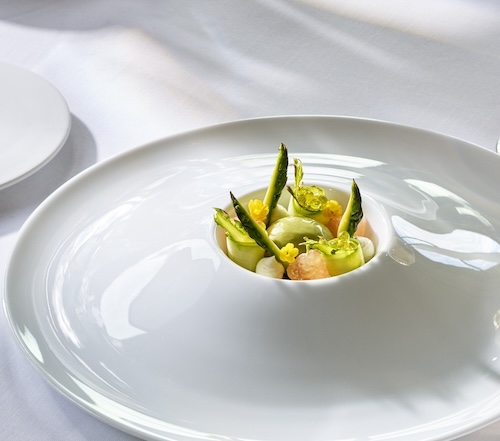
Spring on a plate: Green asparagus (Image: Hirmance Production)
You trained under Harald Wohlfahrt at the legendary Schwarzwaldstube. What was your most important takeaway?
Discipline. Wohlfahrt was in the kitchen every day, punctual and consistently perfect — or better. That left a lasting impression on me. I may not have three stars yet, but the pursuit of perfection has stayed with me.
Leadership in fine dining used to be very authoritarian. How do you lead your team?
Authority still matters. A kitchen works like a football team — without coordination, there’s no result. But you have to adapt. Back in the day, top restaurants had waiting lists for applicants. Today, good chefs can find a job anywhere. Poor leadership means you end up alone.
The Villa René Lalique isn’t in a major city. What’s behind its success in this remote setting?
Alsace has a deep culinary culture. People here don’t mind driving an hour for a great meal. And our location — close to Germany, Luxembourg, Switzerland, and France — attracts an international crowd. On weekends, we get visitors from far away; on weekdays, more local guests. We also offer special menus at adjusted prices to remain attractive to locals. International gourmet tourists are important to us — but we can’t rely on them alone.
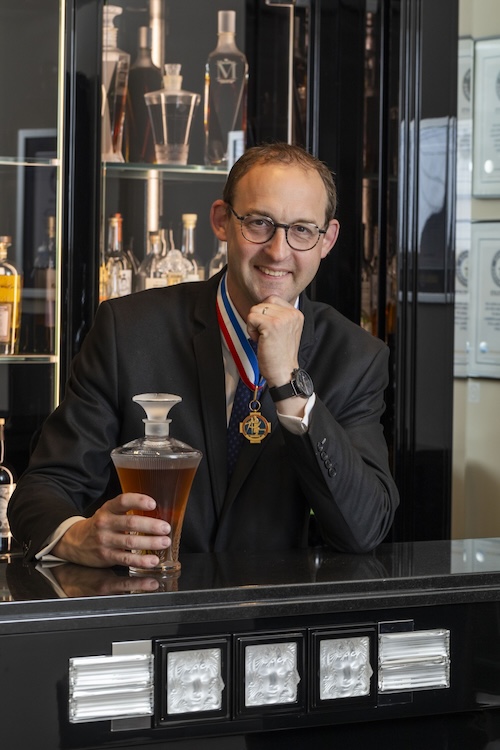
Wine cellar maestro: Sommelier Romain Iltis, Meilleur Ouvrier de France (Image: Karine Faby, Courtesy)
The Lalique brand adds a certain aura to your restaurant. How do you see that?
Lalique stands for elegance and craftsmanship — and that’s reflected in our culinary experience. Guests come here not just to eat but for a touch of luxury.
«We could open this restaurant in Paris and it would work just as well.»
They expect l’art de la table — fine porcelain, silver cutlery, and exquisite glassware. That luxurious experience is part of our concept and sets us apart from strictly regional restaurants. We could open this place in Paris and it would thrive just the same.
The Lalique Group currently operates three two-star restaurants. Next year, the Villa Florhof in Zurich is set to open. Is there friendly competition for that third Michelin star?
Absolutely! We all want to be the first to earn that third star. But it’s a healthy rivalry — we respect one another. I’m convinced we have everything it takes here at the «Villa René Lalique» to reach that next level. Except the star itself…
And what matters most to you right now?
Our ten-year anniversary on September 18, 2025. We’ll be celebrating with several special events. Since day one, the Villa René Lalique has been a success, and we’re proud to continue evolving the experience.
Paul Stradner was born on June 23, 1981, in Graz, Austria. He began his culinary training at the age of 15 and went on to work at top establishments, including the Schwarzwaldstube under Harald Wohlfahrt and L'Arnsbourg in Baerenthal, where he met chef Jean-Georges Klein. In 2012, he became head chef at Brenners Park-Hotel & Spa in Baden-Baden, earning two Michelin stars. Since 2017, Stradner has shaped the culinary direction of the «Villa René Lalique» in Alsace. After three years co-leading the kitchen with Klein, he has been the sole executive chef since 2020.