
Mortgage Rates Indicate More Cuts to Come
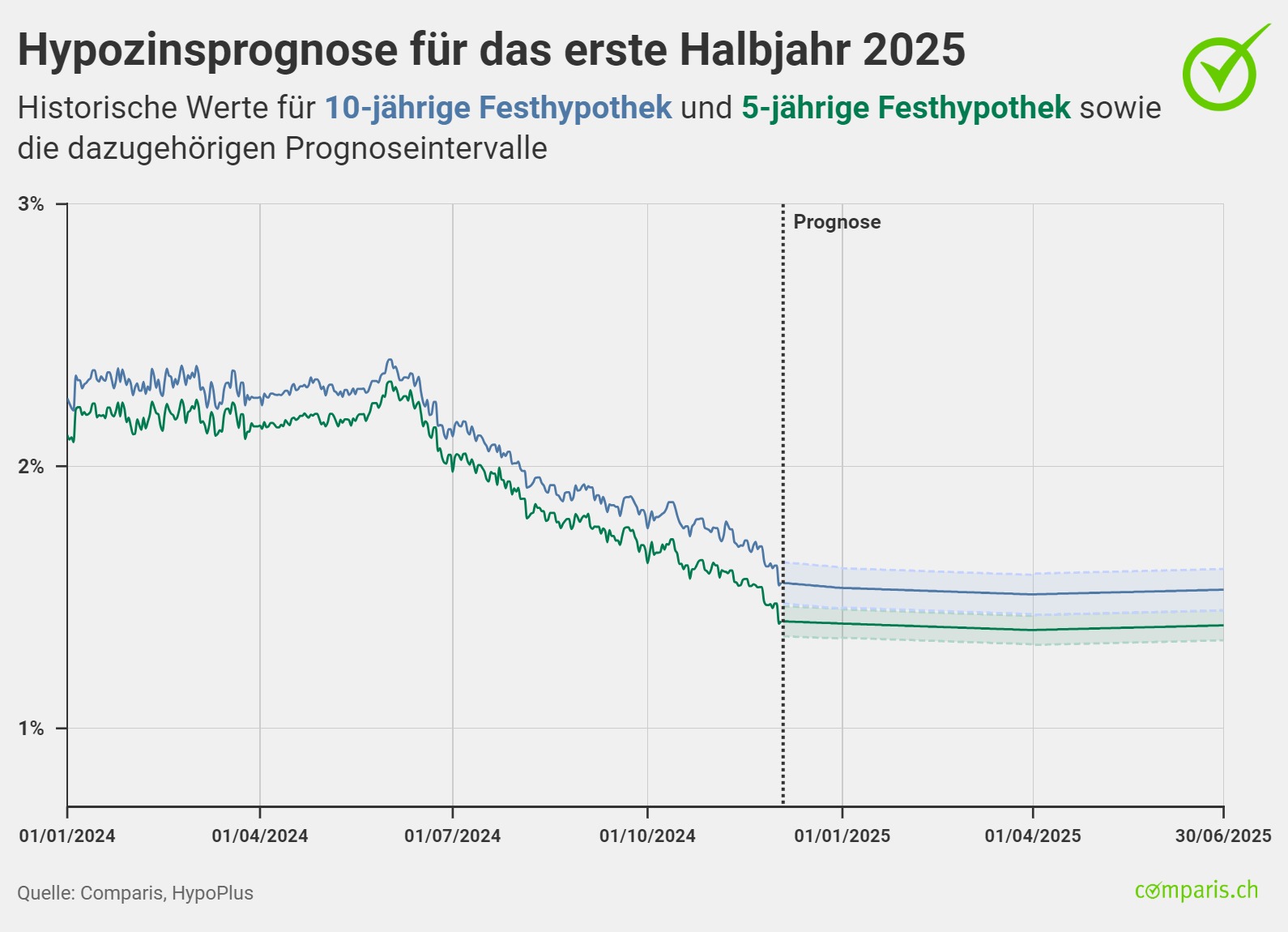
The published reference rates for ten-year fixed-rate mortgages stood at 1.55% as of December 6, according to the latest interest rate forecast from the comparison portal Comparis. At the end of September, the benchmark rate was 1.81%. Compared to the beginning of the year, the rates for ten-year mortgages have dropped by 0.71 percentage points.
Comparis tracks the average interest rates published by around 30 mortgage institutions. According to the data, bank refinancing costs have also decreased. Since the beginning of the year, the ten-year swap rate has fallen by 0.83 percentage points to 0.33%. At the same time, the yield on ten-year government bonds has dropped by 0.44 percentage points to 0.24%.
Inflation Falling Faster Than Expected
"The inflation rate is falling faster than initially expected," says Comparis financial expert Dirk Renkert. "Further interest rate cuts are already priced into the significantly lower reference rates." He expects the reference rates for medium- and long-term fixed-rate mortgages to remain stable through to the end of June next year.
The rates for shorter-term mortgages have also been steadily falling over the past six months. The Swiss National Bank (SNB) has lowered its key interest rate three times since March, each by 25 basis points, to the current level of 1%. "The sharp drop in reference rates for fixed-rate mortgages suggests that the SNB will continue its interest rate cut cycle," the report states. "At least two more interest rate cuts are already factored into the current rates." The next interest rate decision is scheduled for Thursday.
Forecast for June 2025
The experts forecast the reference rates to be in the range of 1.45% to 1.65% by the end of June 2025. For five-year mortgages, the expected range is between 1.30% and 1.45%, compared to the current reference rate of 1.40%.
Pressure on the Reference Rate
The mortgage reference rate for apartment rentals is also expected to fall next year, according to Comparis. In December, the average rate was just within the reference rate range of 1.75%.
"The significant rent increases resulting from the two hikes in the reference rate have only had a modest impact on inflation," says the expert. Therefore, only minimal inflation effects are expected if tenants make claims following a reduction in the reference rate.
However, higher rents due to supply shortages will primarily affect new tenants. "Overall, rising rents will continue to be a major driver of inflation in the future."