
GZO Creditor Group Appeals to Minicipal Presidents
The calm after the bondholder meeting of GZO Spital Wetzikon, which is in debt-restructuring moratorium, was short-lived. On 25 October, a large majority of the bondholders present approved the GZO Creditor Group's proposals to amend the terms of the bond. These included an extension of the term of the 170 million Swiss francs bond to avoid a haircut. In addition, Gregor Greber, the strongman of the creditor group, was elected as a representative of the bondholders, meaning that he now sits on the GZO Board of Directors as an observer.
The bondholders - including many institutional investors - thus sent a strong signal that they will not accept the reorganization concept presented by the debtor at the meeting. Among other things, this envisages a severe haircut, with creditors having to waive around two thirds (65 to 70 percent) of their claims.
Municipalities Assess Capital Needs
Another element of the debt reduction is that the twelve shareholder municipalities are injecting additional equity. On 31 October, the shareholder municipalities confirmed that the Board of Directors had submitted a corresponding proposal on 24 October. It is asking the municipalities to provide capital which amounts to 45 to 55 million francs.
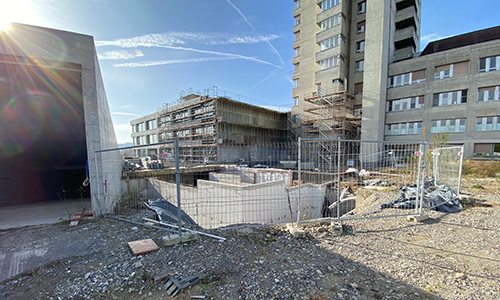
«hospital wasteland» in Wetzikon (Image: finews.ch)
The municipalities are not yet able to assess the capital requirements, according to the joint statement. «An investment of this magnitude must be able to be comprehensively analyzed. As the necessary key figures and documents are submitted on an ongoing basis, this review by the financial and legal experts mandated by the shareholder municipalities is still in progress.»
«No Taxpayers' Money for Debt Reduction»
In the matter itself, however, the shareholder communities are already taking a hard line: «The shareholder communities are united in their position that the balance sheet restructuring of GZO AG and the necessary debt reduction must be calculated on the basis of the existing assets. The funds to be contributed by the shareholder communities can only be used to finance the payments under the debt haircut and the continuation of hospital operations after the balance sheet restructuring has been completed. No taxpayers' money may be used for a further reduction of the haircut in the interests of the creditors.»
However, the municipalities also believe that an agreement with the creditors is a key prerequisite for «considering a capital increase by the shareholder municipalities in the form of start-up financing». The municipalities also emphasise the demanding political process that is necessary for a share capital increase. The votes in the individual municipalities are scheduled for the end of 2025 or the beginning of 2026.
Creditors See Debt Haircut as One-Sided — Rejection Predictable
But how can an agreement be reached with the creditors if the vast majority of bondholders reject the reorganisation concept with the debt haircut, which they view as extremely one-sided?
The GZO Creditor Group also points out this pitfall in a letter sent this week to the presidents of all shareholder communities and submitted to finews.ch.
Keeping Assets and Not Paying Debts?
It challenges the united stance adopted by the «shareholder municipalities'» mentioned above. The municipalities obviously assumed that the debt restructuring agreement would find the necessary majority of creditors. «To avoid the costly process of asking taxpayers for funds at the ballot box in vain, we want to make it very clear that, under the conditions made public, you should under no circumstances expect the debt restructuring agreement to be supported by the required majority of creditors!», the GZO Creditor Group states urgently.
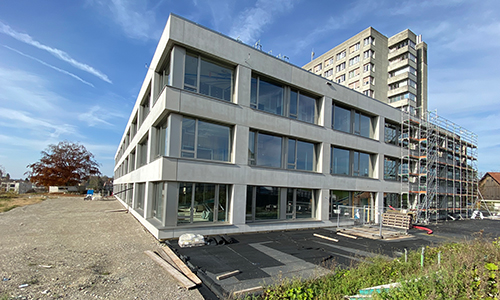
«hospital wasteland» in Wetzikon (Image: finews.ch)
In a state governed by the rule of law, it is not acceptable for the municipalities to keep all of the GZO's assets but only want to return a third of their claims to the creditors. The creditor group's assets include «a profitable hospital with a turnover of 150 million Swiss francs, a new building 70 percent completed with a value of 25 to 50 million and 58,000 square metres of land in a prime location».
Contiuation of Hospital Operations Possible even in the Event of Bankruptcy
In the valtuation of the hospital property— commissioned by the GZO and prepared by property specialists at Wuest Partner as part of the reorganization concept—a new term has been coined for the unfinished building where work has been stalled for some time: «hospital wasteland».
The GZO Creditor Group has proposed two possible solutions to the challenging situation: either renegotiate terms with the creditors or allow the hospital to go bankrupt. «This second option may not be as bad as you think,» the creditor group advises the mayor, despite having previously stated its preference to avoid bankruptcy. The assets would then simply be sold to the highest bidders. However, the threat of closing the hospital is ‘ridiculous’ because a profitable business like Wetzikon Hospital is never liquidated, but continues to operate under a new owner.
Time for and Agreement is Running Out
Even though the creditor group—understandably—paints an optimistic picture of Wetzikon Hospital's economic future, despite the thin margins across Switzerland and the financial constraints hospitals face, its core assertion remains valid: the restructuring plan with the substantial debt reduction is unlikely to achieve the required majority support.
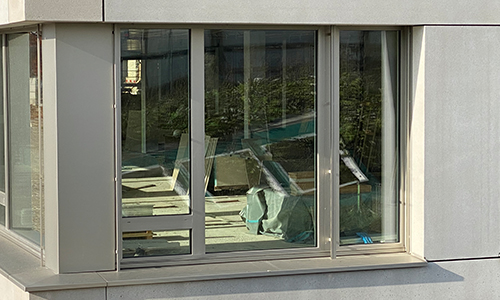
«hospital wasteland» in Wetzikon (Image: finews.ch)
It is also interesting to note that the GZO Creditor Group points out that the shareholders (i.e. the municipalities) would lose their investment in the event of bankruptcy. De facto, the creditors would then take over as the new owners of the company - although GZO is not a typical company with private shareholders.
There is little time to improve the offer to the bondholders. The two trustees, who are legally obliged to protect the interests of creditors, have until the end of the year to decide whether to apply to the Hinwil District Court for the GZO to switch from provisional to definitive debt-restructuring moratorium. This step would be necessary for creditors to vote on the reorganization plan, including the proposed debt haircut, as part of a debt restructuring agreement.