
Swiss Federal Treasury Names New Head
There will be a change at the top of the Federal Treasury starting in 2025. Co-leaders Urs Eggenberger and Daniel Wittwer will retire and hand over the leadership to Adrian Martinez, who has led the front office (Treasury section, which is the operational market-facing area) of the unit since 2018. The Federal Treasury is part of the Federal Finance Administration (EFA), which is under the Federal Department of Finance (FDF). The communication from the EFA confirmed the leadership transition upon inquiry by finews.com.
This marks the end of an era in which the unit was managed by a dual leadership team. The handover was already communicated internally in September. The main business partners of the Federal Treasury have also been informed.
Quiet and Efficient
Before joining the now roughly 30-person Federal Treasury, Martinez worked for about ten years in the Financial Policy, Financial Equalization, and Financial Statistics Department (or FP for short) of the EFA, and also spent two years at UBS. As a result, he is well acquainted with both the theoretical aspects and the practical mechanics of the federal financial policy and guarantees that the unit will continue to perform its duties quietly and efficiently.
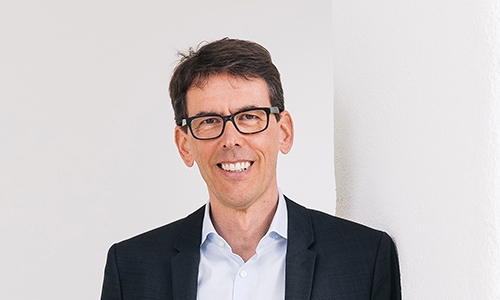
Urs Eggenberger (Image: Swiss Federal Treasury)
The Federal Treasury is responsible for ensuring that the federal government always has sufficient liquidity and for managing these funds (Treasury investments) as well as the Confederation's debt. It is therefore tasked with securing the government's funding. On the money market, it uses money market claims and on the capital markets, it issues Confederation bonds, with the Swiss National Bank handling the issuances on behalf of the federal government via the SIX Swiss Exchange platform. Furthermore, since 2019, the Federal Treasury has been participating in the repo market, actively using it for short-term liquidity management since the interest rate shift.
Still the Benchmark in the Market, Even as Only the Third Largest Debtor
At the end of October, Confederation bonds with a nominal value of 73 billion Swiss francs were outstanding. Although the Confederation has not been the largest issuer for some years – it has been overtaken by the Swiss Mortgage Bank and the Swiss Cantonal Banks' Mortgage Bond Central (Pfandbriefzentrale) – these two institutions also issue bonds, like the Confederation’s bonds, which are rated with the top Triple-A rating by the agencies. Nevertheless, Confederation bonds are still considered the benchmark in the Swiss capital market.
At the end of November, the Federal Treasury will, as it does every year, present its issuance calendar. This document provides the market with guidance on the amount of funding it plans to raise through Confederation bonds and money market claims in the upcoming year. It will also announce the dates on which the respective auctions will take place.
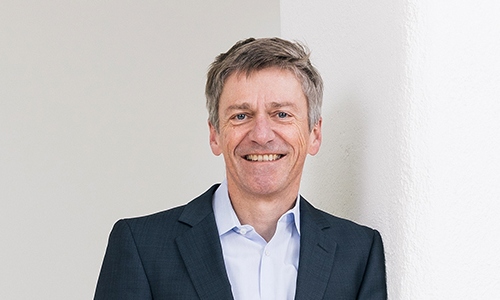
Daniel Wittwer (Image: Swiss Federal Treasury)
The Many «Side Tasks» of the Federal Treasury
The Federal Treasury is also responsible for the central procurement and management of foreign currencies required by the federal government for its tasks. Additionally, it manages accounts for the decentralized federal administration and oversees and manages the Confederation's holdings in federal-related companies. The Federal Treasury also operates the «employee bank» of the federal government, the Federal Personnel Savings Bank, with around 22'000 account holders and deposits of nearly 3 billion francs.
Previously, the leadership of the Federal Treasury also represented the interests of the EFA in various boards. These include the board of Compenswiss (the AHV/IV/EO compensation funds), the investment committee of Publica (the Federal Pensions Fund), the supervisory committee and investment committee of the Decommissioning and Disposal Fund for nuclear facilities, and the board of the BVG Security Fund (second pillar).
Dual Leadership – A Successful Experiment
Urs Eggenberger took over the leadership of the Federal Treasury in November 2007. Since April 2015, he has shared this role with Daniel Wittwer, who joined the unit in early 2010 as head of the front office. Before joining the federal government, Eggenberger worked in senior roles at Mathys Medizintechnik and Synthes in finance/treasury and pensions, and he had also worked at UBS (capital markets and structured financing). Wittwer was previously the deputy director of the Emissions Center for Swiss Municipalities (ESG). Prior to that, he worked at a consulting firm specializing in environmental economics and at the Swiss Federal Statistical Office.
The dual leadership with two 60 percent roles caused a stir in 2015. At this hierarchical level, such a division of labor had not been common in the federal government or in the financial world up to that point. With the leadership transition to Martinez, a successful experiment comes to its organic conclusion – an approach that can certainly be recommended for replication.