
This Is What the Star Economist Learned from the CS Collapse
Beatrice Weder di Mauro's fascination with banking and financial crises began early. Today, the professor of international economics at the University of Geneva is considered one of the leading experts in this field.
She was a member of the German Council of Economic Experts (2004 to 2012) and served on UBS's board of directors for nine years, stepping down in 2021. Her views, therefore, carry significant weight.
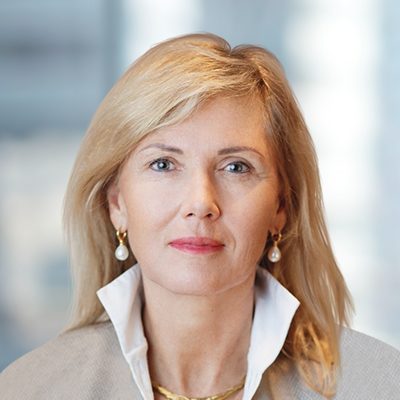
Beatrice Weder di Mauro (Image: zVg)
Markets Lost Trust in CS's Business Model
On Tuesday evening, during a lecture organized by the Institute for Swiss Economic Policy at the University of Lucerne, the topic discussed was «A Decade of Too-big-to-fail Reforms: What Have We Learned?»
For Weder di Mauro, one thing is clear: unlike UBS, Credit Suisse did not collapse due to solvency issues. Instead, it was due the markets increasingly lost faith in the business model of the once-mighty Swiss bank. «At the time of its downfall, CS still had around 100 billion francs in equity, which doesn't follow the typical pattern of a solvency crisis,» she explained.
Why, then, was there no bail-in, a standard rescue measure orchestrated by the Swiss financial regulator Finma? «At the time of its downfall, CS still had around 100 billion francs in equity. This does not align with the typical pattern of a solvency crisis,» Weder di Mauro clarified.
Finma Needs to Intervene Sooner
From her perspective, the too-big-to-fail system has not failed. However, Weder di Mauro sees a need for corrections:
- The government and regulators need more options. Not every crisis will have a solution like the UBS takeover of CS, where another large bank is available to absorb the troubled institution.
- Finma must be able to intervene earlier. Earlier intervention would promote a more credible stabilization phase. «This doesn't necessarily mean that management should immediately hand over the keys,» Weder di Mauro emphasized.
- Weder di Mauro is also skeptical of AT1 bonds. She questions whether the system truly works and whether it effectively calms the market or provides the bank with breathing room.
- A crucial issue is the question of equity capital. However, according to Weder di Mauro, simply raising capital levels is not enough. The collapse of CS revealed that the U.S. and Swiss business units were well-capitalized, but the group as a whole was not. The distribution of risk across various countries needs further scrutiny, she noted.
The Bank for International Settlements (BIS) must address this last point. Thus, not only the Swiss regulator Finma in Bern but also the BIS in Basel must ensure that a situation like the CS collapse is less likely to occur in the future. According to Weder di Mauro, such events cannot be completely avoided: «Banking crises are nothing new. They have occurred often and tend to cluster.»