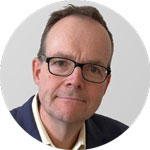
Franz Bergmüller: «We Have a Waiting List for Crypto Startups»
This year has seen several established banks entering the cryptocurrency space, Postfinance and Zürcher Kantonalbank. Additionally, the EU's upcoming Markets in Crypto-Assets Regulation (MiCAR) will require anyone offering crypto services in the EU to obtain a license from a member state (or in Liechtenstein) which will be valid across Europe (passporting).
In Switzerland, the recent FINMA guidance on stablecoins has criticism from the Swiss Blockchain Federation (SBF) prompting the authority to respond to finews.ch. How is Amina Bank, one of the few Swiss crypto banks alongside Sygnum, positioning itself in this challenging environment?
Mr. Bergmüller, is the Bitcoin-Dollar price, which is known to fluctuate wildly, still the ultimate barometer for the entire crypto industry?
The price is an important indicator but only reflects part of the reality. Capital inflows into cryptocurrencies and investments in crypto projects are also relevant.
How do your clients fare?
Our clients are completely convinced of cryptocurrencies and are invested long-term. They do not sell even when prices fluctuate significantly.
Isn′t that irrational?
No. Our clients have often been invested in this asset class for more than ten years. They know the cycles and have weathered several crypto winters. This gives them the necessary composure.
Have you been successful in attracting new clients as well?
Yes, the number of our clients is steadily increasing month by month.
«Our assets under management have grown by 150 percent in the last twelve months, and revenues by 80 percent.»
If things are going so well, why doesn’t Amina publish financial figures like most other banks?
That has been our business policy from the beginning. However, in recent years, development has been very positive. Assets under management have grown by 150 percent in the past twelve months, revenues by 80 percent, and we are seeing significant new capital inflows.
It is surprising that as a crypto bank you don’t disclose these numbers. Wouldn’t that also be a positive signal for the industry?
We are comfortable with this communication policy. It′s important to understand that as a startup operating in a highly regulated environment, we face significant costs. Additionally, we invest a lot in growth, which further impacts short-term profitability. In the past two years, we have expanded internationally to Abu Dhabi and Hong Kong. Europe is our next focus, and we are funding this expansion through ongoing operations rather than additional capital raises.
«We are approaching break-even, but we have decided that investments in growth are currently a priority.»
Does this mean you will apply for a MiCAR license?
Yes. We are currently in the application process with the Austrian Financial Market Authority (FMA) for a local license as a Virtual Asset Services Provider. Here we are dealing with a different regulator and need to build a new team before we can conclude any business or generate revenue. As a bank, we are approaching break-even but have intentionally prioritized investments in growth for the time being.
Which business areas are performing particularly well right now?
There is strong demand for crypto-backed loans, which allow clients to invest even more, similar to a Lombard loan.
Given the price volatility of cryptocurrencies, isn’t this a highly risky business for you as a bank?
No. The limits are set very cautiously. If a margin call occurs, clients must either provide more collateral or sell – they almost always choose the first option.
Why should I come to your bank for such a loan?
Other banks don’t offer these services; but the issue starts much earlier. For instance, I have a client who inadvertently became wealthy through Bitcoin mining while working as a software technician. He couldn’t even open an account with other banks. We understand individuals like him and are equipped to serve them.
Are there other business areas that are booming?
It largely depends on the timing. At the end of 2023, cryptocurrency options were popular. Today we have a waiting list for crypto startups that need a regular bank account but cannot afford high fees.
«Today we have a waiting list for crypto startups that need a regular bank account.»
Many other banks are currently starting to offer more crypto services. Will the competition for Amina increase significantly?
It’s good that other banks want to do more. However, we have built a specialized bank that places a strong emphasis on compliance, particularly in the area of Know Your Customer, and we invest significant effort in it. Our expertise in crypto forensics is difficult to replicate, which is why some ambitious banks, such as St. Galler Kantonalbank, Julius Baer, and LGT, have chosen us as partners.
What are your focal points for the coming years?
We will continue our course of geographical diversification with the entry into Europe. In general, we aim to become the leading bank for the entire crypto ecosystem, including miners, foundations, and crypto funds.
You have mentioned the finely detailed and costly regulation. What is your relationship with the FINMA?
The two Swiss crypto banks are classified in Category 5. We are in close communication with FINMA, much more so than is typically the case with small banks. This means a lot of effort for us but is also part of our justification for existence because we want to be a well-regulated bank.
But you have only financially savvy clients, whose need for protection should be smaller than that of clients of other small banks.
We are closely supervised because there is still concern that services related to cryptocurrencies could be misused for fraud, money laundering, or even terrorism financing. Both crypto banks take their responsibilities very seriously and are closely monitored.
How do you assess the new European MiCAR regulation?
In many areas, it is really good, and I was positively surprised that the EU was able to reach an agreement.
«My plea to Switzerland: Don’t squander the competitive advantage.»
What does MiCAR mean for Switzerland?
Switzerland was a pioneer in the crypto space and has also had clever regulation with an authority that has the expertise. However, other regions are catching up rapidly. My plea to Switzerland: Don’t squander the competitive advantage, especially in the stablecoin area.
The recent supervisory notice from FINMA has been highly controversial. The Swiss Blockchain Federation fears that the new practice could spell the end for stablecoin issuance from Switzerland. FINMA, on the other hand, claims it has merely clarified existing practices.
Finma views cryptocurrencies differently depending on their use. For stablecoins, i.e., crypto assets pegged to official currencies, FINMA sees several obligations on the part of the issuers. For example, issuers would need to thoroughly check the holders of stablecoins and their transactions. This would require substantial effort and likely create a significant barrier for the stablecoin industry in Switzerland.
And why does FINMA not mind if stablecoins are sold in Switzerland that are issued abroad?
I can't assess that directly. However, stablecoins are a crucial component of the entire industry, and I genuinely hope for clear and constructive discussions between regulators and all stakeholders to prevent the stablecoin business from moving abroad. There, the regulatory conditions are continuously improving as many states seek to attract a part of this booming industry.
Franz Bergmüller has been CEO of Amina Bank, based in Crypto Valley Zug since April 2022. The bank, formerly known as Seba Bank, received its banking license in 2019. In 2023, Seba Bank was renamed Amina Bank. Before joining Amina, Bergmüller worked as a partner at Accenture, advising international clients in financial services, technology, and strategy. After his consulting career, he led various companies in the financial services and IT sectors and built two fintech companies in Germany.