
KPMG Study: Small Private Banks Fortunate With Interest Rates
Those following the development of Swiss private banks can gather substantial, specific evidence from the 2023 annual reports indicating a positive sentiment in Swiss private banking.
This view is supported by the latest edition of KPMG Switzerland's study «Clarity on Swiss Private Banks,» just published. For nearly twenty years, the audit and consulting firm has diligently compiled data from bank annual reports.
73 Private Banks in Scope
The study, conducted in collaboration with the Institute of Management & Strategy at the University of St. Gallen, covers annual reports from 73 private banks managing a total of 2.955 trillion Swiss francs in assets under management (AuM). Notably absent from the study is UBS, whose AuM alone surpasses that of all 73 institutions included in the study combined.
On Wednesday morning, Philipp Rickert, Head of Financial Services and member of the executive management at KPMG Switzerland, along with Christian Hintermann, Partner Financial Services, presented the study's findings.
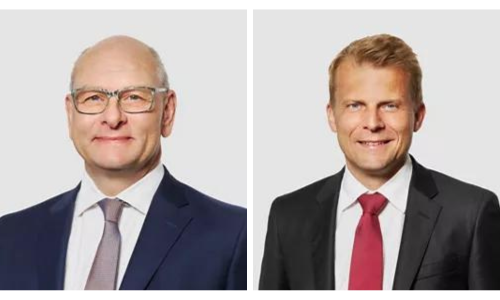
KPMG experts Rickert (l), Hintermann. (Image: KPMG Switzerland)
Overall, the study reveals that revenues of Swiss private banks increased from 19.9 billion to 20.5 billion francs compared to the previous year. This revenue growth is attributed «particularly to higher interest income, which increased by 26.5 percent compared to the previous year.» In contrast, commission business saw a slight decline of 4 percent.
The strong annual results, however, were not driven by significant inflows of new money or cost savings. On the contrary, according to Christian Hintermann, the aggregated net new money of 67 billion francs was considered «mediocre,» and operating costs continued to rise. Additionally, managed assets per full-time equivalent decreased due to a significant increase in personnel costs.
Riding the Interest Wave
An important finding is that small and medium-sized institutes, which represent the majority in terms of number (65 out of 73) in the study, benefited significantly from interest-related activities. The «Top 8» institutions, however, did not fare as well collectively. KPMG identifies these as Pictet, Julius Baer, Vontobel, J. Safra Sarasin, Lombar Odier, Edmond de Rothschild, UBP, and EFG.
Philipp Rickert describes riding the interest wave as «playing with assets and liabilities.» The smaller banks managed this aspect better, as larger private banks with more institutional clients demanded that increased interest rates be passed on, demonstrating «a more institutional behavior.»
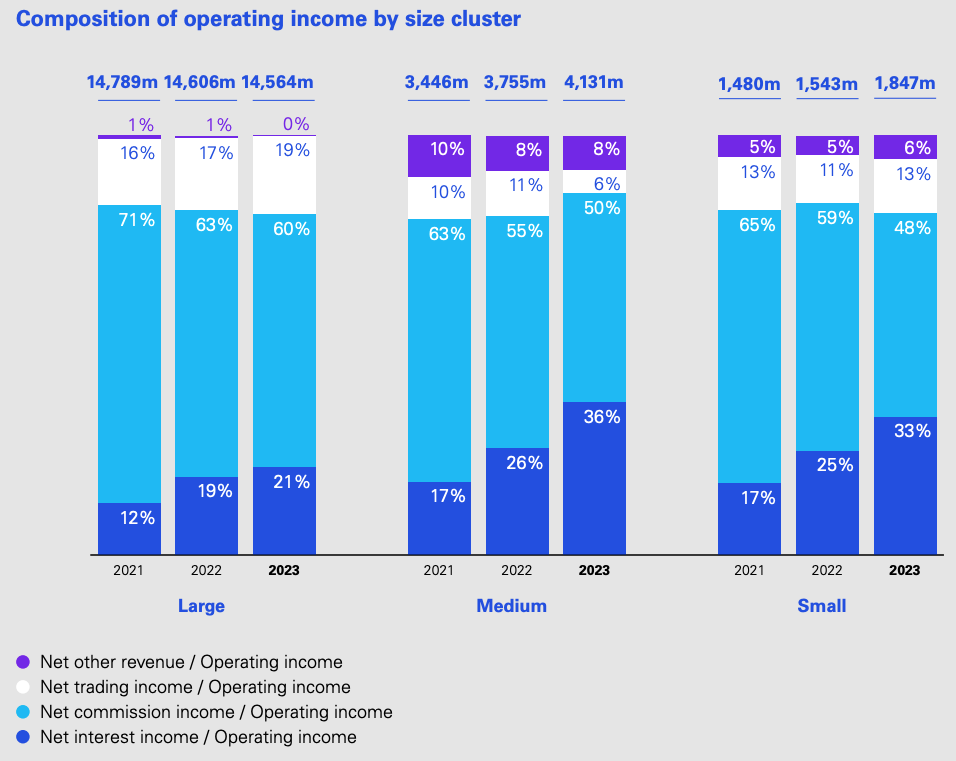
Breakdown of income between trading, commission and interest business at large, medium-sized and small private banks. Click on image to enlarge. (Image: KPMG Switzerland)
As illustrated by the graphic above, the strong year of 2023 stands out as an anomaly. Hintermann anticipates that interest income will substantially decline already in 2024, with additional revenues from this source tapering off by 2025. «The interest rate environment in 2023 was unique,» he remarks.
Philipp Rickert adds, «Small banks exhibit an atypical revenue mix. One would typically expect private banks to generate their income primarily from commission business.»
Recruitment of Client Advisors Instead of M&A
The study shows little movement in terms of mergers and acquisitions. There were no substantial transactions last year.
Hintermann attributes this to reduced pressure from smaller banks to sell. «Due to exceptionally high (interest) earnings, small private banks have been able to take a breather.» Moreover, potential acquisition targets are scrutinized carefully due to concerns about legacy risks.
Hundreds of Relationship Manager Switches
«We worked on deals, but the deals didn't materialize,» Christian Hintermann notes. Recruiting client advisors is relatively low-risk. Rickert adds, «Following UBS's forced acquisition of Credit Suisse, we observed significant dynamics with probably hundreds of switches.»
From the study's perspective, 2023 represents a positive snapshot. However, the long-term cost development coupled with modest gains in net new money is problematic. «Switzerland is losing market share in private banking as a financial center,» the study concludes.
Net New Money Remains a Challenge
To improve this situation, Hintermann primarily challenges banks themselves. «They need to excel in their core business,» he says. The pressure on client advisors to attract new funds is increasing, necessitating the discovery of compelling, unique investment opportunities for clients and specialization in specific customer segments.
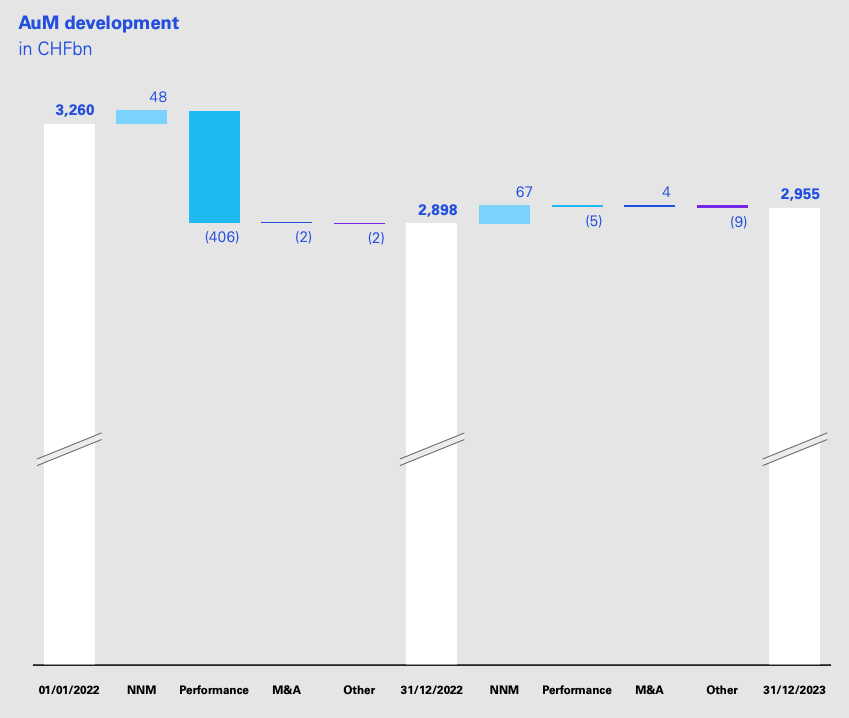
Development of assets under management of 73 private banks between 1.1.2022 and 31.12.2023. Click on image to enlarge. (Image: KPMG Switzerland)
«Long-term, the question arises as to where growth will come from,» concludes Hintermann. He anticipates that the pull towards mergers and acquisitions will soon increase again. In his view, the number of institutions should decrease long-term from the current 90 to about 70 to bring overall industry profitability to a good level.