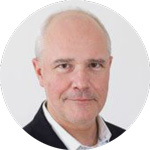
Loïc Paquotte: «The Impact Will be Enormous»
Mr. Paquotte, why are assets growing faster in some regions of the world than in others?
In a year like 2023, marked by a complex macroeconomic scenario, persistent inflation, and high interest rates, asset performance varied by region. For example, stocks in the US market achieved high returns, driven by the growth of technology stocks. Conversely, the stock markets of the UK and China performed worse due to macroeconomic slowdowns.
According to your latest World Wealth Report, nearly 500,000 people in Switzerland have investable assets of more than one million francs – so-called High-Net-Worth Individuals (HNWIs). What were the drivers for this wealth increase last year?
Various factors played a role in this improvement. First, the comparatively better market performance: The market capitalization of the Swiss stock market rose by 10 percent in 2023, after falling by 20 percent in 2022. Second, macroeconomic conditions improved, with nominal private consumption in 2023 amounting to 456.8 billion francs, an increase of 11 percent.
«Switzerland ranks 4th in Europe»
Furthermore, changes in monetary policy played a role: The Swiss National Bank (SNB) raised its key interest rate to 1.75 percent in June 2023. Since inflation fell below 2 percent, which was in line with the SNB's target from June onwards, the SNB did not implement another increase in 2023.
The subsequent decision to lower the key interest rate by 25 basis points to 1.5 percent in March 2024 demonstrated the SNB's impressively proactive approach to managing economic dynamics.
Where does Switzerland stand in a European comparison in terms of the number of millionaires?
With 494,000 HNWIs, Switzerland ranks 7th worldwide and 4th in Europe, behind Germany, France, and the United Kingdom in terms of the HNWI population.
A global wealth transfer has begun in recent years. What does that mean?
The wealth management industry is facing an epochal transformation. According to an estimate by the research firm Cerulli Associates, assets worth 72.6 trillion dollars will be transferred to «children and successors» in the USA alone by 2045.
Wealth managers must therefore adapt their strategies and services to the changing needs and preferences of the next generation.
What does that mean?
The next generation of wealthy individuals will have different wealth priorities and preferences, such as sustainability. This requires wealth managers to offer investment options and services that meet these needs.
«Private banks are already rethinking their approach to serving different wealth tiers»
The next generation of HNWIs prioritizes digital channels for financial advice and communication. They expect private banks to offer the same level of digital experience found in other industries. This underscores the need for wealth managers to accelerate their digital transformation.
What do financial institutions need to offer to serve the next generation of wealthy individuals?
Wealth managers must proactively engage with the heirs of their HNW clients. This requires a focus on serving multi-generational families rather than just individual clients. Additionally, it is essential to offer financial education and networking programs to efficiently prepare heirs for the wealth transfer.
Individuals with investable assets of one million francs are not attractive to private banks. Does this not expose clients to the risk of losing their millions?
Private banks are already rethinking their approach to serving different wealth tiers within the HNWI segment. While current business models and regulations deter interest in serving lower wealth levels, technological advances and broader access to financial products make it more attractive to serve lower wealth levels as well.
«This allows for nuanced customer profiles that are continuously updated.»
Moreover, in times of currency, macroeconomic, and geopolitical uncertainty, private banks focus on the highly concentrated ultra-HNW segment (UHNWI), which accounts for only 1 percent of the population but holds 34 percent of the wealth. This presents lucrative business opportunities.
Additionally, artificial intelligence (AI) will significantly enhance the customer experience and the productivity of client advisors.
How can AI be used in serving millionaires?
AI has several applications along the wealth management value chain. For example, AI can summarize meetings, support risk assessments and controls, automate routine tasks, and personalize communication.
AI can generate personalized messages for HNWIs by analyzing customer profiles and investment preferences. This adds significant value for the client advisor by relieving them of some non-client-related tasks, yet they still need to spend time with clients and give them individual attention.
Do we need to rewrite or redefine the customer profiles that banks use?
No, it is more about supplementing existing customer profiles with behavioral and psychographic data. This allows for the creation of nuanced customer profiles that are continuously updated.
«UHNWIs often turn to family offices for their non-financial needs»
Understanding investors' emotions is particularly important during volatile market phases. AI will help integrate data from alternative sources, update profiles in real time, analyze customer sentiments, and learn from current behavior to enable personalized recommendations and communication.
According to the Capgemini study, the super-rich today want to work with up to seven different wealth managers simultaneously. Why?
The UHNW wealth segment has diverse needs, ranging from financial to non-financial.
With such a diverse set of investment needs and preferences spanning different jurisdictions and generations, UHNWIs turn to various providers specializing in their respective areas to meet different requirements. It is increasingly observed that UHNWIs turn to family offices for their non-financial needs as well.
Loïc Paquotte has been working for the consulting firm Capgemini for a year and a half, where he is responsible for the financial sector in Switzerland and the Wealth & Asset Management division of Capgemini Invent in the country. He has around 15 years of experience in strategy and management consulting. Most recently, he was a director at Chappuis Halder, a company that became part of the Capgemini Group in Switzerland in January 2023; previously, he held similar positions at KPMG in Geneva until 2020. In his current role, he supports financial institutions in transforming their business models with the aim of improving sales efficiency and the customer experience – based on the latest technologies available on the market.