
Credit Suisse: The Dark Side of the One Bank Approach
Greensill's plan to list back then is well established. Greensill Capital was going to make an IPO in 2021. To get there, the company needed a bridge loan of $140 million, with a related capital increase around the same time supposedly being a prelude to the eventual IPO. The loan was approved by the then bank's risk and compliance head Lara Warner after a risk manager had recommended it be rejected.
In March 2021, the insurance contracts for the investments in Greensill funds were set to expire, something that Warner was supposedly not aware of at the time. Credit Suisse subsequently blocked over $10 billion in assets in the funds, triggering the whole debacle.
Dumping Softbank
Credit Suisse's Greensill funds were already making headlines in 2020. There was a complicated network of relationships between the funds, Greensill Capital, and Japanese tech company Softbank, including the latter's colorful founder Masayoshi Son (image below). When it came to the conflicts of interest, they seemed to be acting in tandem despite the circular nature of many of the transactions, as finews.com reported then. Softbank subsequently pulled out of the Credit Suisse Greensill vehicle it was involved in.
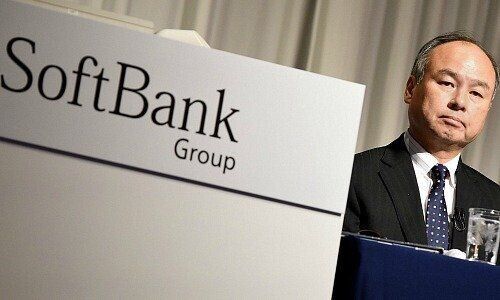
(Image: Keystone)
Debtors were left with Softbank's venture capital investments in the Greensill fund and with Greensill Capital itself. Son was also allegedly a private banking client, one that former Credit Suisse CEO Thomas Gottstein had even personally met, as finews.com has reported.
Clients and Lawsuits
Son and Credit Suisse have become deep enemies in the meantime. At the end of 2022, the bank got the go-ahead to press charges against Softbank. It is part of a bid to recoup $440 million from Katerra, a now-defunct construction firm that was backed by the Japanese investor.
Specifically, Katerra drew $440 million from Greensill, a now-insolvent UK supply chain financier. The debt was sold to Credit Suisse's funds as low-risk investments.
Another case of a complicated web of relationships and very significant conflicts of interest.
Shareholder Knowledge
Credit Suisse faced tough questions from investors related to Softbank at its annual general meeting in 2022, particularly related to events that happened over a year before the funds were closed.
The bank responded to the surprisingly well-informed interrogators that the supply chain funds were already suffering from liquidity issues in March 2020. At the time, Softbank had been willing to contribute an additional $1.5 billion in funding to keep them above water. In return, they asked the bank to sign a so-called «side letter». In it, the bank had to commit to purchasing any new debt from Greensill Capital only.
At that point in time, Softbank held a large stake in Greensill. Its Vision Fund also held shares in companies that refinanced themselves through Credit Suisse's Greensill supply chain funds. At times, Softbank was directly invested in the fund.
Finma Alarmed
The heads of Credit Suisse Asset Management (CSAM) agreed to the deal even though it clearly would not be treating all debt investors equally. When bankers at the group level learned of this they promptly escalated the matter over the course of 2020. The side letter was canceled and an internal investigation started. Finma was alerted and those responsible for it at CSAM were reprimanded.
But the supply chain funds never recovered from all of this. Once again, a complicated tangle of supposedly special relationships and conflicts of interest.
The current Credit Suisse CEO Ulrich Koerner reacted to Finma's enforcement action by reaffirming the importance of the measures the bank has instituted to strengthen its risk and compliance culture. There was no talk of it becoming any less of an «entrepreneur's bank». In essence, that means there is still a clear risk that bankers will become prone to extenuating circumstances and conflicts of interest in the future.
- << Back
- Page 2 of 2