
Rothschild & Co Asset Management: Growth, Value or Quality?
Investors are getting ready for 2023 after the prolonged spate of market turbulence. Many of them are looking at the new year with anticipation, even trepidation, given the radical changes seen in the past 12 months.
It is by no means an exaggeration to say that equities have experienced a complete paradigm shift. Central banks worldwide pivoted on interest rates, and rising inflation became a significant concern, prompting broad price declines. Russia's invasion of Ukraine and China's zero-covid policy served to exacerbate the negative trends, and many parts of the world are still expected to see continued recessionary developments well into 2023.
The main question right now is whether shares are attractive in the current context. Until recently, something like that was not even up for discussion given that equities have ranked as the pre-eminent investment class in the minds of investors for decades now.
Getting Convinced
Rothschild & Co Asset Management Europe discussed all of this recently at two events in Zurich and Geneva together with finews.com. The theme at the outset of both was: «Are we at the start of a new cycle? Or will there be a hard landing, more inflation and further de-globalization?» Each of the three attending portfolio managers from Rothschild had massively different takes.
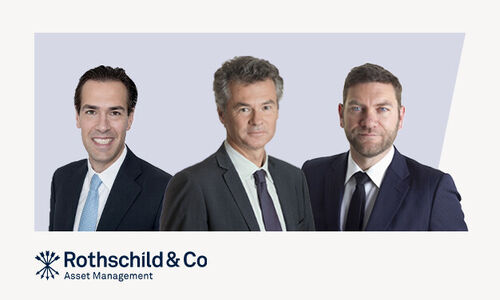
Gianluca Ricci (image above, on the left) concentrated his focus on quality titles, while Anthony Bailly (above right) preferred value or undervalued shares. Yoann Ignatiew (middle) had what the industry calls an unconstrained approach by not keeping to a specific investment style or strategy, but instead having a top-down, opportunistic approach that also looks at short-term market developments. All three did have one thing in common. They all followed a high-conviction investment approach specifically tailored for Rothschild & Co Asset Management Europe.
Good Perspectives
Bailly believes there are great opportunities in the market given that many small and mid-cap shares experienced massive corrections this year even though the companies themselves are financially stable. He also sees opportunities in the banking sector given the continued strong increase in interest rates, particularly in Europe. Many financial institutions have successfully weathered the COVID-19 pandemic and are in great shape, even in face of an impending recession.
Bailly expects interest rates to stabilize at higher levels than they were between 2010 and 2020. «This is a paradigm change that will lead to a new inflationary environment. It also means value-related variables will no longer underperform growth ones», the portfolio manager said. Economies will be significantly challenged over the next decade, and that will be a big determinant when it comes to investment styles. «I am convinced that inflationary pressures will become entrenched. That is why positioning yourself with a value investment style absolutely makes sense now», Bailly said.
Good Business Models
Gianluca Ricci had the opposite view, instead preferring to emphasize quality titles, many of which were also impacted by the massive correction this year. In the long term, he believed the success of such a strategy is dependent on being able to identify extraordinary business models. According to him, they would be able to increase profit sustainably in the difficult economic environment expected over the next few years. Those companies would also be able to benefit from their pricing power, something that will also help them produce very good results in 2023, even during an economic cycle with an extended period of high inflation, which is something he is predicting.
«We prefer to analyze and invest in fewer companies, and fully understand the ones we are in. In other words, we don't see much point in constantly looking for cheaper names. It simply distracts us from our belief in quality», Ricci says.
The China Question
The question as to whether China was still investable prompted a great deal of discussion. Yoann Ignatiew, with his top-down approach, sees a great deal of potential in the country despite its current restrictive zero-Covid policy and the geopolitical tensions with the west. «We should not forget that China will soon become the largest economy in the world», he emphasized.
Ricci said that investing in China right now was challenging due to the country's Covid policies and sluggish domestic growth. Still, his main concern was geopolitical risk. «We are keeping to our long-term investment convictions and have only needed to make marginal adjustments to our portfolio despite the uncertainty,» he said.
Healthy Skepticism
Ignatiew indicated that certain individual Chinese companies were sensitive to matters of sustainability. According to him, it was no longer possible to ignore the issues of climate change and pollution, even in China. He also expected further measures from the government to support the economy in 2023.
Despite his positive vote for China, more than half of Ignatiew's client portfolio was in North America, followed by a third in Europe while his quotient for China was under 15 percent. And even though he remains optimistic about 2023, he warned about becoming overly exuberant. He emphasized that this would not be appropriate for any serious wealth or asset manager and that there had to be a measure of healthy skepticism related to any future developments.
More Events
There was some common ground between all three. Despite their differing perspectives, all three portfolio managers did believe there were opportunities for investors in 2023 despite the muted, unclear outlook ahead. In fact, they all seemed to take a page from legendary US investor Warren Buffett's book: «Be fearful when others are greedy and greedy when others are fearful».
Gil Platteau, Country Head Switzerland at Rothschild & Co Asset Management Europe, said that at least two similar events were planned for next year given the high interest shown in Geneva and Zurich. According to him, the differing perspectives and arguments were an ideal opportunity to provide Swiss investors with a concise picture of the market.