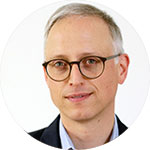
Michel Degen: «Don't Underestimate the Egos in Our Industry»
Consolidation is already happening, isn’t it? We've seen mergers of Aberdeen, Henderson, Janus as well as speculation of Swiss house GAM.
Our sector has bucked the pressure thanks to buoyant capital markets since 2009. But since more than a year, the external support is eroding, which has accelerated mergers and acquisitions. We see various asset managers on the lookout for deals – but I don’t believe in the sustainability of such a measure in every case.
Why not?
Fund managers are like artists – only a minority is really unique and can generate added value over a long period of time. It is more important to look for the right talents, because in an increasingly digitized industry, money is even more moveable and «money follows performance».
«Mergers often extract high cost, and synergies are inflated»
In addition, don’t underestimate the strong egos and various cultures of our industry. It’s often difficult to find a common denominator after a merger. In other words: mergers often extract a high transformation cost, and synergy estimates are often considerably inflated.
Credit Suisse also needs to think about where it wants to go in asset management. The unit was transferred into its own legal structure last year – much like Deutsche Bank’s DWS. What does Credit Suisse plan for it?
Asset management is and remains central to Credit Suisse. Our funds business can demonstrate steady growth in the last three years – unlike some of our competitors. We already exceeded last year’s net new money in the first nine months of 2018. More than half of our growth is from Switzerland, which is key for the Swiss financial center.
But the question was about the legal entity...
The structure was set up to give the Swiss asset management unit in particular its own identity, which is very important for our credibility with clients. You are correct that the legal entity gives up more strategic options, but those aren’t up for debate.
You talk about growth but early into your current role in 2016, you cut jobs. Is that finished?
Our headcount is stable. We have made targeted investments and created countless jobs, especially in distribution and in various investment teams. We also named a chief digital officer for asset management, Pascal Naegeli, at the beginning of this year and hired various digitization experts, including in real estate.
«Credit Suisse's wealth management is an important client»
We’re also launching an innovation lab shortly which will support the digitization of asset management.
This must be in response to a demand from Credit Suisse. How important is the bank as a client of your funds?
Credit Suisse is committed to open architecture. We’re one of many Credit Suisse suppliers and subject to the same selection criteria and external providers. About 55 billion francs of Credit Suisse’s asset management funds come from our own wealth management, which underscores their importance for our division.
An acquisition would give you an immense asset boost. Is a big merger or acquisition on the cards?
We’ve looked at various options in the last three years, but only actually followed through on smaller deals. There is considerable potential in partnerships between asset managers in specific areas. Those aren’t always as easy to implement as they look on paper. The important thing with partnerships is to clearly outline each side’s competence, otherwise it is simply confusing for clients.
Michel Degen is a ten-year veteran of Credit Suisse and in charge of the Swiss bank's asset management business in Switzerland, Europe, and the Middle East since 2016. Previously, he ran a core and specialized fixed income franchise. Degen studied economics in Basel and holds an executive MBA from St. Gallen University. He began his banking career in foreign exchange trading and treasury at BNP Paribas. He was with UBS in fixed income from 2000 to 2004 before moving to Credit Suisse.
- << Back
- Page 3 of 3